Authored by John Haughey via The Epoch Times,
Operation Epic Fury presents Russia and China with a “mixed bag” of potential opportunities, but neither appear poised to take advantage of the United States’ “distraction” with Iran, according to analysts with the Center for Strategic and International Studies (CSIS).

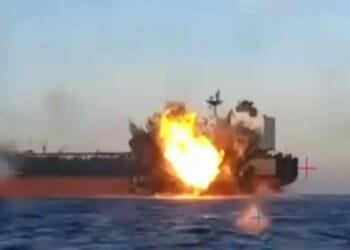
That, however, could change if the United States cannot quickly degrade the Iranian Revolutionary Guard Corps’ (IRGC) stranglehold on the Strait of Hormuz to allow commercial shipping to resume, and secure with Israel a convincing victory in decimating Iran’s capacity to develop nuclear weapons, they concurred.
“Ultimately, this comes back to … the duration of the war being key,” CSIS Geopolitics and Foreign Policy Department Chief of Staff Will Todman said during a March 16 “State of Play” presentation in Washington, summarizing views from Russia expert Maria Snegovaya and China Power Project Director Bonny Lin.
Snegovaya said while Russia has accrued short-term benefits from the U.S.-Israeli attack on Iran, a battlefield advantage against Ukraine is not among them.
“Ukraine has passed through the worst, hopefully, this winter,” she said. “It’s spring now, so it’s a little bit easier for them to survive Russian attacks. Also, Russian attacks have similarly slowed down somewhat in the recent weeks, although it doesn’t mean that they will not resume at high intensity quickly.”
President Donald Trump lifted sanctions on Russian oil when he issued a 30-day waiver on March 12. Moscow has pocketed more than $7 billion in increased oil sales since, Snegovaya said.
But that’s hardly “a game-changer” for Russia considering it has a $50 billion deficit in its 2026 budget and is still moving forward with plans to cut at least $25 billion from its annual spending plan, she said, an indication that “Russian officials do not really anticipate this to radically alter its economic situation” unless the strait remains hazardous for an extended time.
Snegovaya said it would take weeks, if not months, for Russia to boost oil production to truly profit from sanctions being lifted and noted banks in India, for instance, are hesitant to “make payments” for Russian oil that may not be delivered once the 30-day waiver expires.
Iran’s value to Russia, she said, is serving as a disruptive force against U.S. interests in the Middle East and, while it is providing intelligence to Iran, Russian President Vladimir Putin could threaten to send sophisticated weapons to Tehran as leverage in dealing with the Trump administration in extending the sanctions waiver or in sustaining support for Ukraine.
Snegovaya noted Russia, along with China, abstained from voting in the March 11 U.N. Security Council condemning Iran for attacking its Gulf state neighbors, adopted in a 13–0 vote.
But unlike China, Russia opted to participate in planned naval exercises earlier this year, she said, noting there are reports that newly minted Ayatollah Mojtaba Khamenei, named to succeed his father—killed in the Feb. 28 decapitation strike that kicked off Operation Epic Fury—as Iran’s “supreme leader,” is convalescing from wounds in Moscow.
“I think it was a Kuwaiti paper that said that, and—maybe I shouldn’t say this—but they’re not always extremely driven by facts,” Todman said.
Chinese Foreign Minister Wang Yi with Djibouti’s Minister of Foreign Affairs and International Cooperation Mahamoud Ali Youssouf upon his arrival at the diplomatic institute in Djibouti on Jan. 9, 2020. -/AFP via Getty Images
China: It’s ‘Complicated’
Lin, who heads the CSIS China Power Project, said how the war affects China is “complicated” since it receives 25 percent of its crude oil imports from Iran, but she dismissed fears it will seize the moment to invade Taiwan while the United States remains in conflict with Iran.
“I think, usually, pundits are too quick to link whatever the United States does to Taiwan,” she said. “There is a link, but it’s important to remember China has its own set of calculations for Taiwan that isn’t just based off whether the United States can defend Taiwan or not.”
Lin said the planned late-March meeting between Trump and Chinese leader Xi Jinping is far more important to China than Iran. Trump said on March 16 that he’s requested the meeting be delayed “a month or so.”
“So I think the reason why China has not directly engaged with the United States on Iran is, I think, they want to keep these issues separate,” she said.
China has more at stake in the region than oil imports, Lin said, noting that “since 2019, it has invested nearly $90 billion in LNG facilities, ports, various different projects, power grids, petrochemical projects” across the region. Its exports to the Middle East grew nearly twice as fast as its exports to the rest of the world in 2025, according to the Institute for Energy Research.
“So as Iran is retaliating” in attacking Gulf state energy infrastructure, “it’s also impacting China’s overall investment in the region,” she said.
But it’s unlikely to send warships to aid a U.S.-led effort to shield commercial ships from attack in the strait, Lin said. Even though it has two destroyers stationed in Djibouti on the Bab el-Mandeb Strait linking the Red Sea and Gulf of Aden, and is building a “dual-use” port in Gwadar on Pakistan’s Arabian Sea coast.
There are several reasons for this, she said, noting China has avoided formal defense commitments to Iran, has been “distancing itself” from the regime in Tehran, and continues to purchase 90 percent of the discounted, sanctioned oil Iran produces with Chinese flagged or contracted tankers still moving up to 12 million barrels of crude through the strait a day.
She said in analyzing internal Chinese commentary on the war, contrary to being pleased to see the United States expending expensive air-defense munitions such as THAAD anti-ballistic missile systems and Patriot air-defense systems to knock down Iranian drones, many are “suspicious” that the Trump administration is sending Beijing a message.
“For example,” Lin said, “I’m seeing Chinese experts write, ‘Well, why did the United States and Israel have to [use] so many advanced capabilities against a medium-sized power like Iran? Well, maybe because the United States wants to exercise the capability so they can … demonstrate a real world exercise of it, so they can use it later against China.’”
Lin said other analysts in China are “saying, ‘This is the second major operation the United States has conducted this year, first against Venezuela, second against Iran. And for both of these countries, they are critical suppliers of oil to China.’ So, yes, it is not directly against China right now, but it could be used to indirectly contain China.”
From China’s perspective, “I don’t think they’re seeing these conflicts as completely separate. And as a result, I don’t think the first thing that comes to China’s mind, or leading Chinese experts’ minds, is, ‘How do we take advantage of the situation?’ It’s more of, ‘To what extent is this situation going to negatively impact China?’”