You’re reading Dispatch Culture, our new weekly newsletter exploring the world beyond politics. Looking for more ways to support our work? Become a Dispatch member today.
Welcome to the first edition of Dispatch Culture, a new newsletter focused on the world beyond politics, from books, music, and movies to gender, food, and philosophy. Every Saturday morning, you’ll find a smattering of things: a roundup of culture-focused stories from our website, recommendations from Dispatch staffers, and art worth looking at. You’ll read rich commentary not only from Dispatch voices you’ve come to know, but guest contributors as well. This newsletter is curated by Valerie Pavilonis, The Dispatch’s New York City-based ideas editor.
Expect to see some experimentation with formats during these first few weeks; we want to take your feedback into account! Feel free to reach out to culture@thedispatch.com with any questions or recommendations. If you like what you read (and see), we hope you’ll consider forwarding this newsletter to the culture lovers in your life. If not, you can manage your newsletter subscriptions by clicking here.
This weekend, we take you to both the silver screen and the living room. Tim Sandefur’s day job involves complicated legal work with the Goldwater Institute in Colorado, but on his off days, he writes more widely—and today, he’s up on the site with a piece on how The Man Who Shot Liberty Valance dissects different ways of being a man. “Heroism is possible in bourgeois civilization, the movie teaches—but it’s a more nuanced, human heroism than the kind painted with the broad strokes of the warrior’s brush,” Sandefur writes.
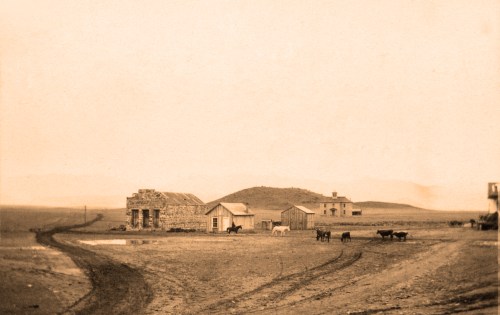
Next, we have Oklahoman Peter Biles on how being able to read road signs and labels shouldn’t be our bar for real literacy. “We might still manage to consume information,” he writes. “Basic literacy, however, is not enough. We need to remember how to read again. And that’s a different prospect entirely.”

Rounding out today’s trio is Dispatch contributing writer LuElla D’Amico, who, having recently celebrated a birthday, writes from Texas about women and the prospect of aging. “While Leonardo DiCaprio has reportedly distanced himself from 2026 now that it has passed quarter-century status,” she writes, “I am now officially in my early 40s and have hit, according to a certain corner of the online manosphere, what is called ‘the wall.’”

And make sure to check out more of our cultural offerings from earlier in the week: Quillette founder and Dispatch contributing writer Claire Lehmann on the women of January 6 and philosopher Oliver Traldi on the importance of subtlety.
American Artifacts
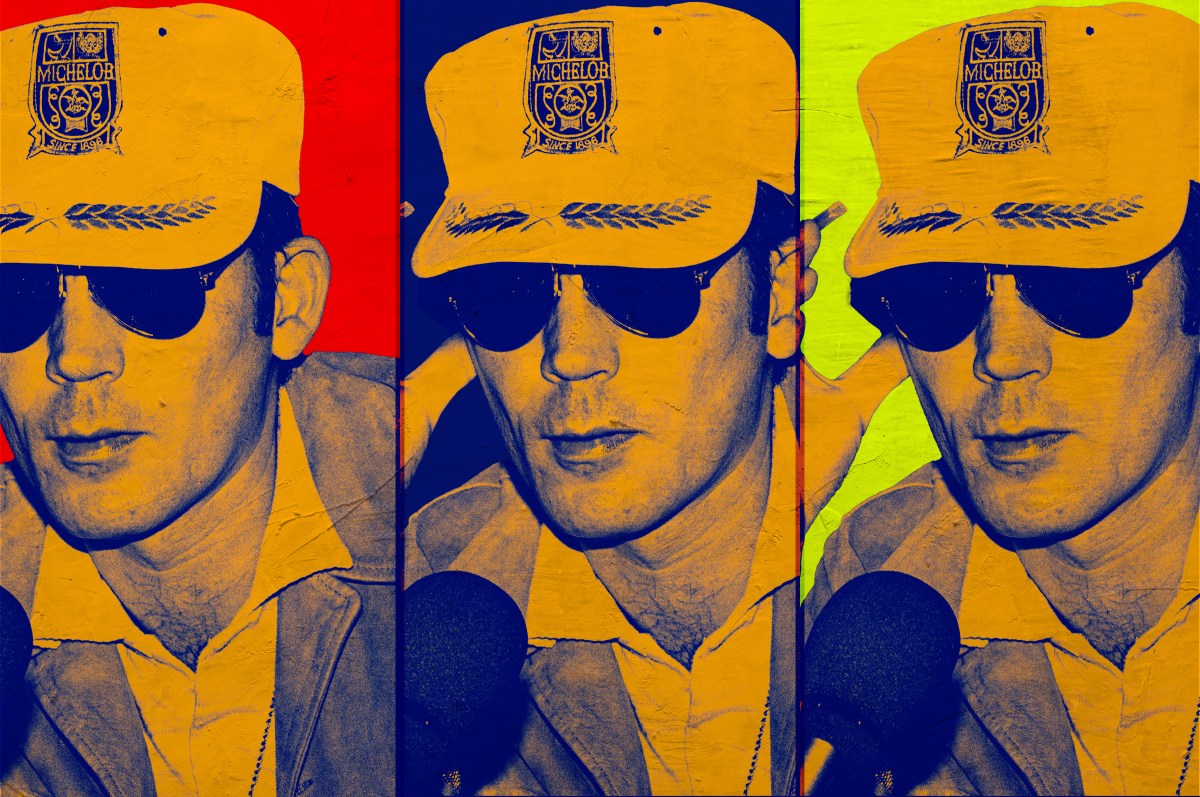
By Kevin D. Williamson, national correspondent
In this section every week, a writer will highlight a piece of Americana that he or she feels is valuable. First up, we have our own Kevin D. Williamson on the journalist Hunter S. Thompson.
Before he was Raoul Duke, played by Johnny Depp in the movies, or “Uncle Duke” in Doonesbury, or yet another famous rich guy at the bar in Aspen, Hunter S. Thompson was a hell of a reporter, one with an animating love of the boisterous possibilities of the English language and an extraordinarily intelligent eye for the most microscopic details of this profoundly weird American life. And his unequaled masterpiece was his first book, published in 1967: Hell’s Angels: A Strange and Terrible Saga, a brilliant account of the real-life adventures of an American motorcycle gang and the sensational—and almost entirely separate—media-driven legend that grew up around them.
Hell’s Angels was something new. Its novelty was not in its reportorial technique: Thompson spent many months embedded with the infamous motorcycle gang, whose taste for drugs and drunkenness and low living Thompson shared and whose penchant for histrionic displays of orgiastic violence and public indecency very much spoke to his sensibility, and was able to tell much of his story from firsthand knowledge, but other writers, notably Paris Review editor George Plimpton, already had been practicing similar if less outrageous forms of participatory journalism for years at that point. And while Thompson’s over-the-top sentences and exuberant language remain tons of fun to read, he wasn’t the first to employ that kind of rushing, tumbling, hurly-burly style, either: Tom Wolfe had beat him to it by a few years with “There Goes (VAROOM! VAROOM!) That Kandy Kolored (THPHHHHHH!) Tangerine-Flake Streamline Baby (RAHGHHHH!) Around the Bend (BRUMMMMMMMMMMMMMMMM…).” (Wolfe not only did it earlier—he did it better.) What made Hell’s Angels sing was the same thing that would undermine so much of Thompson’s subsequent work: the person, and then the semifictional literary character, of Hunter S. Thompson.
Tom Wolfe (of Sherwood Park in Virginia) and Plimpton (of Fifth Avenue) were American aristocrats, gentlemen who were sharp and at times merciless observers of the great American spectacle but whose views of American life were fundamentally benevolent and curatorial, even if Wolfe sometimes buried his affection under a thick layer of satire in his later years, when he had turned to fiction. There is something of the old WASP sense of civic duty and order in their work, something you can still get an aftertaste of in, e.g., the films of Wes Anderson, who seems to be very much of a dandyish spirit kindred to Wolfe’s. Thompson, in contrast, always seemed to be writing from a point of view a few years in the future from his contemporaries, where he could see the disasters toward which all that unchained American momentum was careening at high speed like one of the outlaw bikers who fascinated him. The world he saw was disordered and, above all, dirty. Like Vanity Fair, Hell’s Angels is a story without a hero. Thompson seemed to instinctively understand that Flower Power would end in the Manson cult, that both phenomena were the fruit of the same bent tree. And he managed to write about it for a time without too much in the way of moralizing or judgment.
Thompson was not an aristocrat, and nobody likes to épater le bourgeois like a child of the bourgeoisie. But Hell’s Angels is not full of shock for its own sake: Thompson saw the darkness and nihilism at the center of 1960s counterculture sooner and much more clearly than most of his contemporaries. And that probably is why he was more interested in the bikers than in the kids at Berkeley, writing: “Unlike the campus rebels, who with a minimum amount of effort will emerge from their struggle with a validated ticket to status, the outlaw motorcyclist views the future with the baleful eye of a man with no upward mobility at all.”
Unlike many conservative critics of the emerging counterculture, Thompson was, at least in his early days, able to simply take it for what it was and look at it as a reporter. It is not for nothing that so much of Hell’s Angels is taken up by media criticism when Thompson goes beyond first-person reporting: The great sin that infuriated him was not the Angels’ raping and pillaging their way up and down California but that so many reporters—especially New York reporters—got the story wrong. He points to a New York Times account of a public rape committed by outlaw bikers at a bar in California.
This incident never occurred. It was created, as a sort of journalistic montage, by the correspondent who distilled the report. … The word “alleged” is a key to this art. … Nowhere in the story was it either reported or implied that the Monterey charges had long since been dropped—according to page one of the report being quoted. The result was a piece of slothful, emotionally biased journalism, a bad hack job that wouldn’t have raised an eyebrow or stirred a ripple had it appeared in most American newspapers … but the Times is a heavyweight even when it’s wrong.
There is some irony in that: Hell’s Angels contains much careful reporting, but Thompson’s later work is distinguished by—and disfigured by—events that are clearly made up. Sometimes Thompson acknowledges that he is off on a fantastical fugue, but sometimes he doesn’t—and I suspect that young Hunter S. Thompson the reporter would have been disgusted by the laziness and occasional dishonesty of old Hunter S. Thompson the celebrity. The charitable view is that Thompson’s later work is something like Herman Melville’s infamously erroneous cetology in Moby-Dick: wrong on any number of particulars but endeavoring, often with great success, to get a harpoon in some bigger and more important game.
But the critic does not have to make too many excuses for Hell’s Angels. As the author himself would later famously put it: “Buy the ticket, take the ride.”
An Outside Read
In this section, we’ll point readers to a terrific piece of writing from someplace other than The Dispatch.
Back in December, FT published an essay by a U.K. woman who, against many odds and maybe also common sense—“You’ll go under in a year,” a lawyer tells her and her husband—opened a bookstore. The lawyer might eventually be proven right, but in the hopefully-long interim, the essay is a moving exploration of what can happen when a passion project is nurtured. “It’s like childbirth, or a crippling hangover after a great party; it’s the best, worst thing I’ve ever done,” the author writes. And later, after her first business day: “I dim the lights, turn the sign to ‘Closed’ and turn to take a last look. A bookshop. My bookshop. Full of stories and thoughts and the smell of new paper and fresh paint. As I’m about to leave, my eye falls on an envelope on the doormat I now own. Inside it is a £20 note and a scribbled letter. ‘Dear Fox & King, I’d like to order a book. I’m not in very good health and books give me a reason to keep going. Please keep the change and give it to someone who needs it. Someone who can’t afford to buy a book for themselves. A child, maybe? Or someone who just wants to learn something new about the world. I wish you every good fortune with your new venture. When the book arrives, please leave it in the window. I don’t have a telephone, you see. And that way, when I see it, I will know that it is for me.’”
Stuff We Like
By Ross Anderson, TMD editor
This section will offer recommendations from a rotating cast of characters from The Dispatch’s staff. Recommendations of what? Well, anything, really—the only rules are that they need to be fairly recent and not involve reading.
As a tech nut, I love trying fun new gadgets. Some of my favorites from last year were the Sol Reader, Oura Ring 4 Ceramic, and iPhone Air, all of which I use every day. But apps—the software we use on our phones—tend to be dull. You download an email app to serve a function, not because it’s chic—and so, most apps end up rather flavorless. The software company and app suite Not Boring is trying to change that, making apps that aren’t, well, boring. !Habits makes habit tracking fun; !Calculator, !Timer, and !Weather gamify these default phone functions; and !Camera and !Vibes have a permanent place on my home screen. !Camera lets you shoot beautiful unprocessed shots with manual controls—and the interface looks like a Pixar dream of a point-and-shoot camera. It has charming, quirky interaction sounds, and you can customize the colors of your camera interface; mine’s light gray with soft pink buttons. !Vibes is a background music app, with different modes for sleeping, focusing, exercising, and so forth. This category is crowded—Endel probably being the market leader—but not only is the music of !Vibes easy to listen to, its visuals—of slowly moving through a small animated world—are just delightful. (Editor’s Note: Neither Ross nor The Dispatch were paid to make this post. Ross is just a nerd.)
Work of the Week
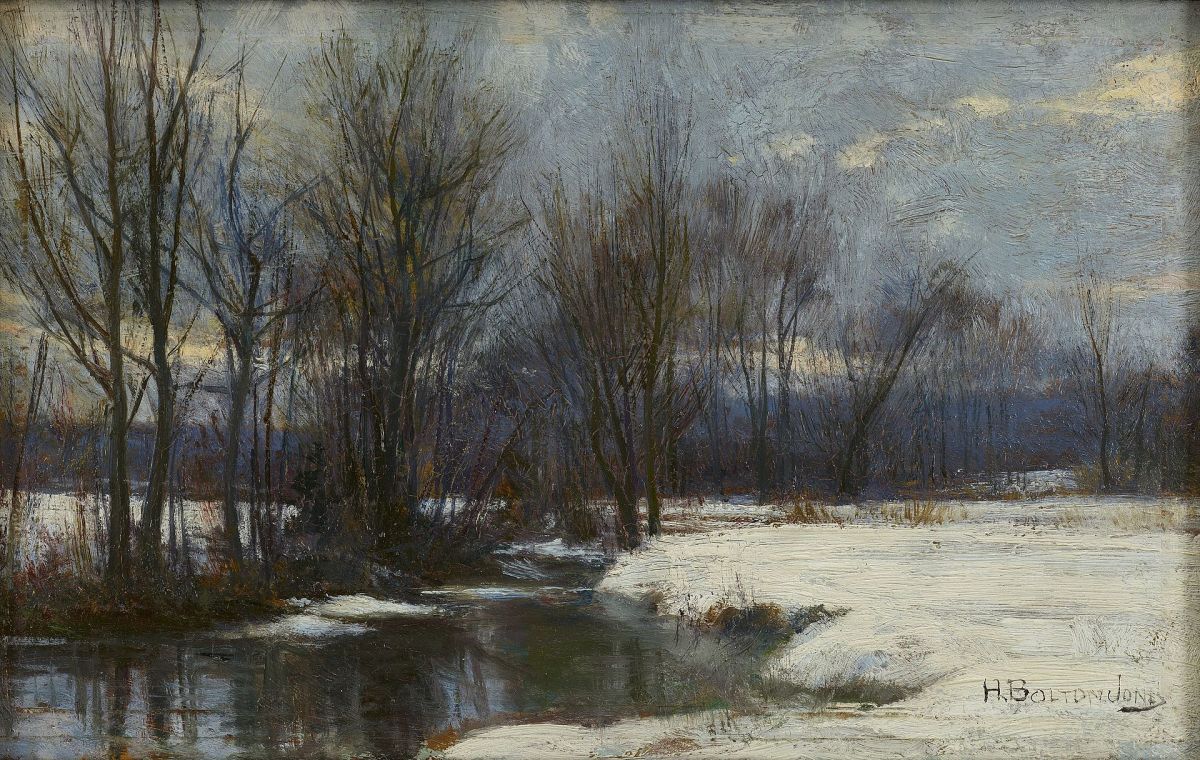
Work: Winter Landscape, Hugh Bolton Jones, 19th century
Why I’m a Dispatch member: Well, I get a free membership because I work here. But even if I didn’t, I’d still subscribe. Dispatch writers are some of the most fair-minded people I’ve ever worked with, and in a culture where people cave more and more to vanity, The Dispatch retains salt-of-the-earth people who care about truth and craft—and their readers.
Why I chose this work: I spend a lot of time on Amtrak, and that means I spend a lot of time looking at the backs of things. Sometimes it’s the backs of houses; other times it’s the backs of forest preserves, and this work reminds me of the latter: Near the train tracks there are often a few naked trees and some body of water, whether a brook or a small lake, and there’s something peaceful about the fact that I can whiz by from New York to Washington and still see a glimpse of stillness.
Interested in being featured in this section? Submit a work of art here.
Interested in being featured in this section? Become a Dispatch member here.