The administration sent the largest naval armada in South American history to the Caribbean months ago, and as far as I can tell, no one in Congress was informed of the administration’s actual goal. They were told publicly and in classified briefings that this was about interdicting drugs, not decapitating Venezuela’s regime and seizing its oil fields. Secretary of State Marco Rubio has tried to insist that this was all just an effort to act on an arrest warrant. To argue that all of those ships, all of those possibly illegal killings, and all of that firepower was deployed for a “law enforcement operation” is obvious nonsense. To say that Congress was properly notified about the seizure of Maduro assumes that Congress had been read in on the purpose of this massive military operation from the start.
And that brings me to the I-told-you-sos.
Last May, I wrote that “virtually the entire agenda of the second Trump administration is grounded in pretextual arguments. On almost every front, his stated arguments for why he’s doing what he’s doing, and from where he derives the authority to do it, are just BS.”
This is more of the same, just on a grander scale.
The Donroe Doctrine
Consider all of this talk about the Monroe Doctrine. Trump suddenly thinks this a very important doctrine, maybe the best doctrine, at least that’s what people are saying. The National Security Strategy released in November asserted, “After years of neglect, the United States will reassert and enforce the Monroe Doctrine to restore American preeminence in the Western Hemisphere, and to protect our homeland and our access to key geographies throughout the region.” On Saturday, Trump insisted that “the Monroe Doctrine is a big deal, but we’ve superseded it by a lot, by a real lot. They now call it the Donroe Doctrine.”
I’ve searched in vain for an instance when he talked about this very important doctrine on the campaign trail. He did talk a lot about not sending troops hither and yon on adventures. I just point this out to say that the “this is what I voted for” defense beloved by his apologists has a timeline problem.
Here’s what I think is obviously happening: Trump wants a bunch of legacy accomplishments. It’s all derivative of a lifetime of putting his name on everything he could. He’s renamed the U.S. Institute of Peace as the Donald J. Trump Institute of Peace, the Kennedy Center is now the Trump Kennedy Center, etc. Oh, there’s also the new Trump-class battleship, an immigration visa called the Trump Gold Card (you can read about it at Trumpcard.gov), a prescription drug program called TrumpRX (at TrumpRX.gov), and an IRS program of Trump Accounts for newborn Americans (and it’s a pretty good idea). The U.S. Mint is considering a new dollar coin with Trump’s image on it.
In 1994 New Scientist magazine coined a term, “nominative determinism.” It’s a somewhat tongue-in-cheek idea that people tend to do things that fit their name. Name your daughter Candiii Honeypot, and she almost has to become a stripper. Anyone who’s watched Seinfeld knows that if your last name is Assman, you have to become a proctologist. The serious version of the idea is that people with certain names feel subconsciously destined to live up—or down—to their name. No, I don’t think being named Jonah has driven me to be a prophetic voice.
But, at least in a literary sense, I think Trump is aptly named because he thinks his needs and desires should trump all other considerations. His effort to steal the 2020 election is only the most obvious example among scores of them.
And I think the Donroe Doctrine is a perfect illustration of the phenomenon. This isn’t a foreign policy crafted by prioritizing the national interest. It’s a foreign policy crafted to satisfy Trump’s self-interest. I do think that Marco Rubio has an actual theory of the national interest, and he’s trying to pursue it by selling it to Trump as a vanity play. Rubio doesn’t talk about “keeping the oil” but he knows that Trump has a long-standing obsession with the idea that conquering countries to take their oil is a brilliant idea.
That’s why this whole operation was pretextual. Trump said it was about the drug war because that argument worked for him. Once that pretext served its purpose, he basically admitted that the point was about oil. “Joe, the difference between Iraq and this is that Bush didn’t keep the oil. We’re going to keep the oil,” Trump reportedly told MS NOW’s Joe Scarborough.
Of course, there are other differences. The Iraq war involved actual regime change. Bush insisted—idealistically and arguably naively—that we would deliver democracy and freedom. We have not effected regime change in Venezuela. We took out the boss, and Trump is happy to work with his replacement, “tsarina” Delcy Rodriguez, who promptly named Maduro’s “torture czar” as the head of security. In other words, the regime is staying put, at least for the foreseeable future. And why not? Trump has been very clear that America isn’t interested in telling other countries how to treat their own people. That was the point of his tirade in Riyadh against “interventionists … giving you lectures on how to live and how to govern your own affairs. No. The gleaming marvels of Riyadh and Abu Dhabi were not created by the so-called nation builders, neocons, or liberal nonprofits like those who spent trillions and trillions of dollars failing to develop Kabul, Baghdad, so many other cities.”
What’s important is “taking the oil.”
Which brings me to another “I told you so.” I don’t know if I was the first, but I was very early to note that Trump’s foreign policy worldview is remarkably similar to a mobster’s. He sees the world divided up into “turfs” and “territories.” Why does he treat allies with such contempt? Because they are his underbosses, and they don’t kick up enough or treat him with enough respect. Why does he show such deference to Vladimir Putin and Xi Jinping? Because they’re the heads of rival families. (Nick Cataggio had an excellent extended riff on Trump’s mobster’s-eye view of the world earlier this week). This worldview explains vast swaths of Trump’s trade and industrial policies, his shakedowns of universities and law firms. Sure, sell vital chips to China, but I gotta have my taste. Crypto, I don’t know how it works, but I’m fine with it if I get a slice. Funding terrorism? We can talk about that after I get my plane.
The people who defend Trump’s application of the Monroe Doctrine get the causality backward. He likes the Monroe Doctrine because it ratifies his worldview. If it didn’t exist, he’d still pursue the same policy. The Monroe Doctrine, like the Alien Enemies Act, the Insurrection Act, and all of Trump’s prattling about “Article Two” are pretextual justifications for what he wants—and would try to do—even if they didn’t provide a rhetorical or legal fig leaf. He is not bound or inspired by ideas or “doctrines,” he uses ideas and doctrines as ornamentation for his will-to-power and glory. I do not see how this is debatable given that he’s been very clear that the definition of “America first” is whatever he says it is.
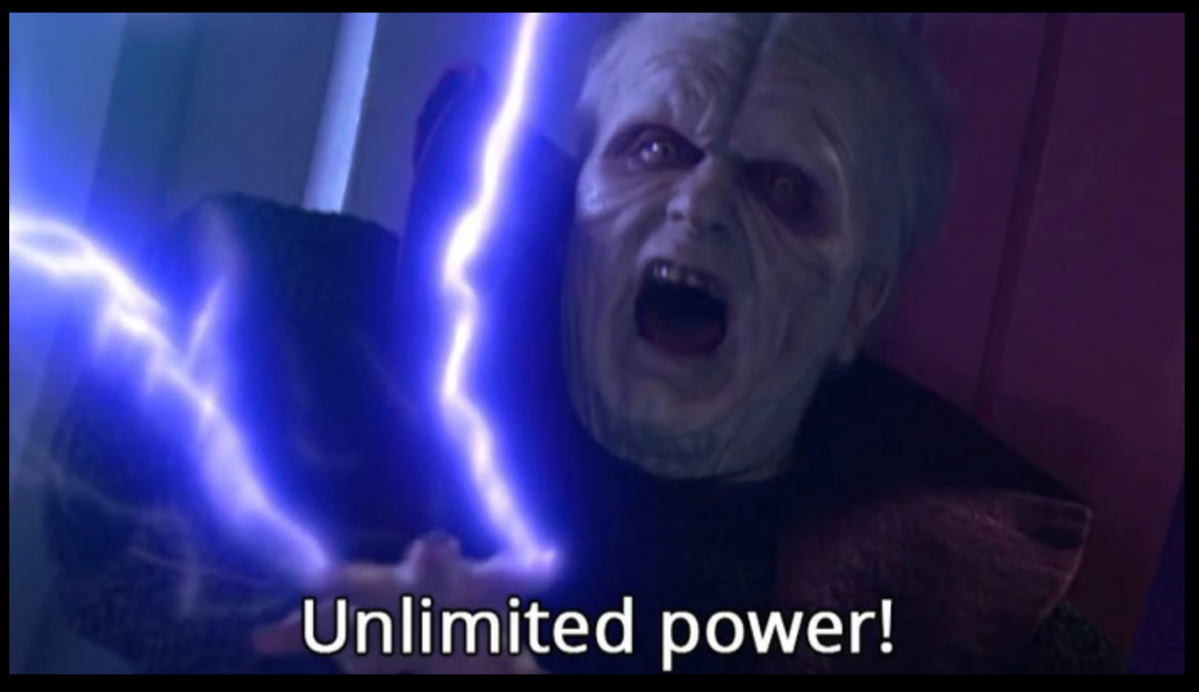
Yet another I-told-you so: A while back I wrote that the best word for Trumpian foreign policy is “sovereigntist.” This is the idea that the nation should not be bound by any external, artificial, legal, or even possibly moral restraints on its actions in the international realm. He’s not an isolationist—he’ll eat off anyone else’s plate if he thinks he can get away with it and it satisfies his appetite.
Sovereigntism certainly has some eggheady intellectual exponents, but that doesn’t mean he relies on any of that. Stephen Miller, the closest thing we have to Trump’s homunculus id, appeared on Jake Tapper’s CNN show the other night and laid out Trump’s worldview as clearly as one can: “We live in a world in which you can talk all you want about international niceties and everything else, but we live in a world, in the real world, Jake, that is governed by strength, that is governed by force, that is governed by power. These are the iron laws of the world that have existed since the beginning of time.” It was so pitch-perfect I’m not even sure it would be better in German.
Later on, Tapper asked him about using military force against Greenland. “The real question is, by what right does Denmark assert control over Greenland? What is the basis of their territorial claim? What is their basis of having Greenland as a colony of Denmark?”
Well, there’s an answer to this if you believe in things like treaties. But if the only thing that matters in “the real world” is strength, force, and power, Miller answered his own question. “The United States should have Greenland as part of the United States,” he told Tapper. “There’s no need to even think or talk about this in the context that you’re asking of a military operation. Nobody’s going to fight the United States militarily over the future of Greenland.”
After all, Trump “has been very clear,” Miller explained. He wants Greenland, so that is the “formal position of the U.S. government.” Constitutional eunuchs in Congress, take note.
In other words, we can just threaten Denmark and they’ll have to cave, which appears to be the strategy.
When Don Vito Corleone visited Johnny Fontane’s bandleader, he made him a generous offer to buy out Fontane’s contract. When the bandleader refused, Corleone returned with a much smaller offer, and Luca Brasi. But it was “an offer he can’t refuse.”
That is how this administration is talking about a NATO ally, and it is disgusting and dangerous and music to Vladimir Putin’s ears. People Trumpsplaining this “strategy” by saying he won’t actually seize Greenland, he’s merely threatening to put Denmark’s brains on the Treaty of Kiel, aren’t making the high-minded defense they think they are.
I began by joking that I wasn’t trying to make this all about me, and I am not. But this White House, the GOP-controlled Congress, and much of the broader right seems hellbent on letting Trump make foreign policy all about him. You can call that “America First,” but that doesn’t make it true.