Authored by Andrew Korybko via Substack,
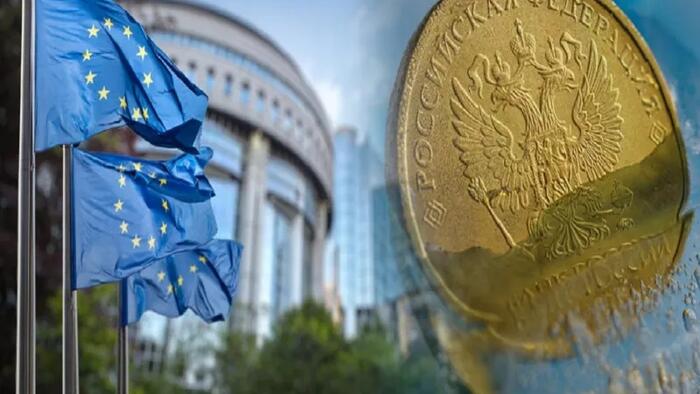
Russia condemned the EU’s recent decision to indefinitely immobilize its seized assets, the special procedure for which scandalously circumvented member states’ veto power in an effort to prevent Hungary and Slovakia from stopping them. This move might precede the bloc either confiscating some of these funds and giving them to Ukraine and/or using them as collateral for a loan to that country. The official purpose would be to fund more arms purchases and/or assist with post-conflict reconstruction.

The first goal won’t lead Ukraine inflicting the EU’s desired strategic defeat of Russia while the second requires much more than just Russia’s seized assets to complete.
Regardless of the official purpose, confiscating Russia’s assets or using them as collateral for a loan to Ukraine would inflict irreparable harm to the EU’s financial reputation.
Foreign investors might be spooked into fearing that their assets are no longer safe and could thus pull them from EU banks and not deposit future ones there either.
The bloc might therefore ultimately lose hundreds of billions of dollars, perhaps upwards of a trillion or even more with time, all ostensibly for Ukraine’s sake even though it’s impossible for that country to strategically defeat Russia or be reconstructed entirely with its foe’s stolen funds.
There are accordingly reasonable grounds for suspecting that the EU has ulterior motives in mind for seriously contemplating this and that its new policy towards Russia’s seized assets isn’t about helping Ukraine.
The real purpose might be to prevent the US from reaching a deal with Russia per point 14 of its leaked 28-point Russian-Ukrainian peace deal framework to invest a significant sum of its (by-then former) adversary’s EU-seized assets into joint projects, likely energy and rare earths, after the conflict ends.
Such an arrangement could set those two on the path to revolutionize the global economic architecture as explained here and consequently accelerate the EU’s growing irrelevance therein.
With a view towards averting that scenario, the EU might have thus decided to indefinitely immobilize Russia’s seized assets as the first step towards “legally” asserting quasi-ownership over them, after which it might then either confiscate them and/or use them as collateral for a loan to Ukraine. The special procedure that was employed for circumventing member states’ veto power bodes ill for Hungary, Slovakia, and others concerned countries’ ability to veto the aforesaid moves that might soon follow.
The abovementioned plot could be preempted by Russia transferring legal ownership of its EU-seized assets to the US as was proposed here in April, but this is only possible if Russia and the US reach a deal on using these funds for financing joint projects, which requires rock-solid trust that doesn’t yet exist. Tangible progress on reaching a NATO-Russian Non-Aggression Pact, or at least the US managing Turkish-Russian tensions in Central Asia, could bring this about and thus ensure that these funds aren’t all stolen.
If the US obtains legal ownership of Russia’s seized assets, then Trump would have the pretext for demanding their transfer to the US under pain of sanctions, which is the only way to guarantee that they’re not given to Ukraine or remain indefinitely immobilized. The EU must therefore decide whether it’s worth the gargantuan cost of destroying its financial reputation just to impede a Russian-US rapprochement, but if it goes through with this, then those two might team up against it afterwards.
Loading recommendations…