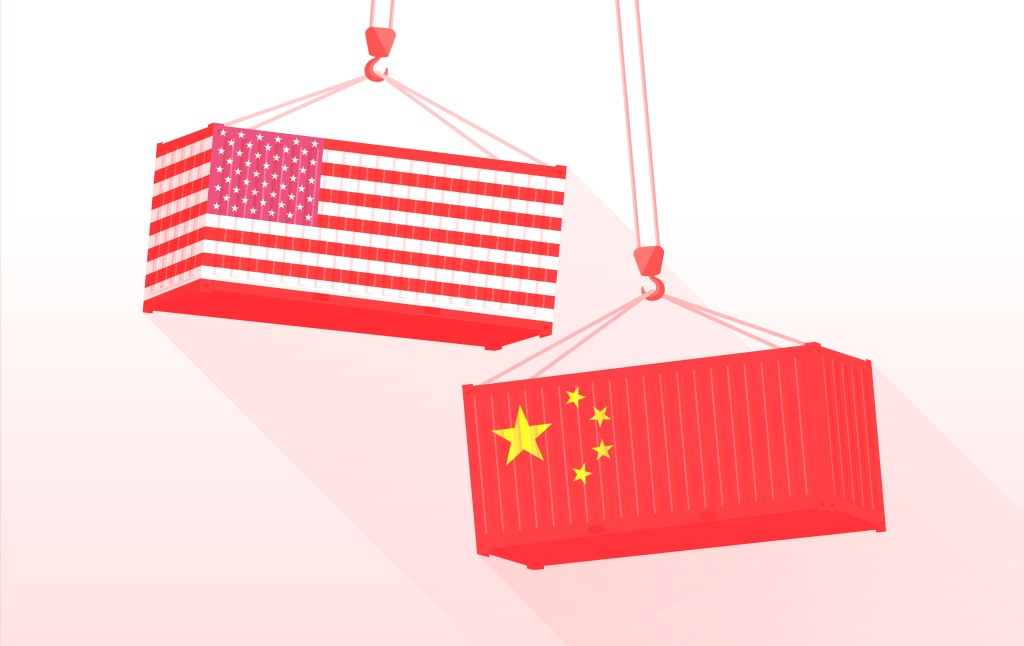
Over the past eight years, beginning with the imposition of tariffs under the 1974 Trade Act, the United States government has used various policies to address what it describes as China’s “chronic trade abuses” and “unfair economic practices.” These policies include a combination of tariffs, sanctions, export controls, and legislation. While some of these measures directly target the Chinese government’s market-distorting practices, many function as an excuse for Washington to expand its reach in the U.S. economy.
The question, then, is whether “standing up to China,” or any country for that matter, justifies expanded domestic government intervention.
Ultimately, the United States cannot control other countries’ domestic policies. It can only implement domestic policies to support Americans. Consequently, most of the tools wielded in the name of countering China serve only to burden U.S. taxpayers.
Take, for example, the CHIPS and Science Act. The legislation offers subsidies to domestic semiconductor manufacturers in the hopes of pulling market share away from Chinese manufacturers. But it faces several shortcomings: 1) It does not guarantee increased domestic semiconductor manufacturing; 2) it does nothing to compel China to change its industrial policy; 3) it gives the U.S. government the power to reshape the American economy as it sees fit by picking favored industries and making taxpayers foot the bill; and 4) it makes the American system closer to the Chinese one that Washington decries as unfair.
The legislation, signed into law in 2022, authorizes around $280 billion in new spending through 2027. More than that, it permits greater regulatory oversight and political involvement in the market. Laws like this one raise the question: To what extent does creating an enemy out of China give the U.S. government license to expand its power?
“Trade is not a concession to foreign governments. It is simply a mutually beneficial, voluntary exchange between individuals.”
Gabriella Beaumont-Smith
“A democracy cannot trade with a communist state and hope to remain competitive or free.”
Michael Sobolik
It is true that Beijing uses policies that distort markets, creating competitive advantages for some Chinese businesses. For example, several Chinese steel companies are owned or controlled by the state. A government stake is an implicit form of subsidization as it lowers effective costs, insulates the firm from competition, and protects it against bankruptcy. Since survival isn’t tied to profitability, firms are able to take more risks and absorb losses for longer periods because the government effectively provides a financial backstop.
From the perspective of some American companies, it may seem unfair to compete against Chinese firms that have such a cushion. However, private American firms benefit from something far more valuable: a relatively free business environment where businesses decide what to produce and how. This freedom should not be taken for granted—by American businesses or consumers. It is precisely this autonomy that drives innovation and delivers superior goods and services. It has made typical Americans the most prosperous people on the planet.
State-owned firms, on the other hand, operate under incentives that work against long-term competitiveness. Because these firms are not solely guided by consumer demand, they face less pressure to improve quality, reduce costs, or respond to evolving preferences, whereas private firms must deliver things people actually want or risk failure. And state-owned enterprises don’t benefit from government protection forever. Despite the short-term advantages offered by government backing, without the pressure to truly compete, state-owned firms’ ability to outperform private competitors is weakened. Government protection disrupts a company’s ability to detect when customers change their preferences and adjust accordingly.
Some people also argue that China-dominated global supply chains put Americans at risk by exposing them to shortages when the Chinese government enacts policies on a whim. The classic example comes from the COVID-19 pandemic, when China briefly introduced export controls and licensing requirements for certain medical products. Politicians and pundits seized on this, claiming that the U.S. depends on China for most of its pharmaceuticals and that Chinese trade restrictions would trigger a massive shortage, and therefore, America is too reliant on China.
This narrative rests on a misleading and mistaken premise. China is not responsible for most of America’s pharmaceutical imports, and globalization does not inherently make America less resilient. U.S. supply chains are diversified, allowing businesses to adjust when disruptions occur. Just as consumers switch stores when their usual vendor is out of stock, firms can shift across suppliers. Recent research and data also show U.S. imports are increasingly diversified across a broad set of trading partners—only two countries supply more than 10 percent of U.S. imports, and as of December 2025, China is not in that list. Meanwhile, the U.S. baby formula crisis offers a cautionary counterexample. In the face of disruption, a highly concentrated, largely domestic supply chain led to severe shortages, demonstrating that onshoring does not guarantee resilience.
Perhaps the federal government should instead look inward to consider why people procure certain resources from China. Rather than trying to micromanage arbitrary economic outcomes by hindering international trade, policymakers should consider domestic reforms to the already expansive regulatory state hampering American businesses. For example, they could relax burdensome regulations on mining and refining key inputs for semiconductors, and allow the market to respond on its own.
Yet many policymakers instead support using restrictive policies such as tariffs to counter China’s anticompetitive behavior. And despite the Supreme Court’s ruling that many of the tariffs invoked under the International Emergency Economic Powers Act were unconstitutional, the president invoked a different legal authority to levy tariffs.
The problem with policies that favor a narrow group of people while spreading the costs over millions of taxpayers is that they’re difficult to do away with; the beneficiaries will always petition the government to keep them intact. Harvard Business School estimates price increases of up to 6.6 percent for imported goods and 3.8 percent for domestic goods.
These numbers are relatively small in the aggregate because they spread the costs across millions of Americans. But from the individual’s perspective, these price increases rarely go unnoticed. The added costs of these taxes quietly eat into people’s budgets and limit how they can spend or save. And “buying American” isn’t the solution: If there is an American substitute, it is often already pricier. Even worse, when tariffs are reflected in the sticker price, U.S. companies can be incentivized to raise their prices too. This is exactly what happened after the U.S. imposed tariffs on washers. Prices for dryers also increased even though they weren’t subject to tariffs.
Sanctions and export controls also raise concerns about the government’s hand in the market. Sanctions may be a more direct approach to addressing Chinese distortionary practices because they target specific firms or aim to restrict particular transactions. However, their effectiveness is mixed. Export controls, meanwhile, are no different from tariffs and quotas in that they dictate to whom and what American businesses can sell.
This adversarial response is not unprecedented. All countries are guilty of intervening in their economies and implementing distortionary policies, and rivals frequently object. In the 1980s, for example, U.S. policymakers debated the best way to deal with Japan’s active industrial policy. In the end, the U.S. chose against engaging in Japan’s version of government-directed investments and subsidies, and American semiconductor firms outcompeted their Japanese rivals. As of February 2024, seven U.S. companies were among the world’s 10 largest semiconductor makers—none were Japanese.
The United States is playing a twisted game with China, in which both sides shoot themselves in the foot. Instead of responding with more distortionary policies that harm companies and citizens, governments should negotiate ways to reduce their use globally. A better approach is leadership on liberal principles, including giving people the freedom to trade. The U.S. should lead on new and enforceable international rules that result in fewer and smaller state-owned enterprises. For example, international law should prohibit unlimited government guarantees that artificially lower borrowing costs for state-owned enterprises.
Trade is not a concession to foreign governments. It is simply a mutually beneficial, voluntary exchange between individuals. These benefits are well established in the economic literature yet are increasingly ignored by policymakers. International trade is the opposite of capitulating to China. It is fundamentally peaceful competition between American and Chinese individuals. Empirical evidence shows that international trade is a reliable economic tool for preventing war because it creates positive relationships and makes conflict more costly.
It is difficult to see how a Beijing bent on destroying America would be deterred by restrictive domestic U.S. policies. The Chinese government will continue to implement policies that harm Chinese citizens regardless of whether U.S. officials implement restrictive policies that harm Americans. If anything, the American government should develop more open and friendly policies with other countries if its goal is to outcompete China in the global marketplace.
Free trade fosters the competitive forces that push American firms to be the best. By cutting off those forces, American entrepreneurs risk complacency. Being a better market economy (and a beacon of freedom) is how the U.S. stands up to China, and history demonstrates that autocratic governments are incompatible with innovation, productivity, and prosperity. Any government that goes all in on controlling its people’s lives, especially their economic decisions, runs counter to human nature.
The debate is no longer about China and its practices but rather how far the U.S. government is willing to go to control economic outcomes—a fundamentally un-American strategy. Perhaps, as the richest country in the world, the United States can afford to burden its taxpayers in the name of “standing up to China.” But these policies produce little measurable effect on China. In reality, they are nothing more than expensive theater.