Dario Perkins of TS Lombard wrote a piece titled “How to Respond to Oil Shocks.”
His analysis draws on the Fed’s history to address how it should respond to today’s oil shock.
While researching Fed transcripts from the 1990 Gulf War, he discovered a proposal by Don Kohn, senior Fed staffer, that offers a solution to the central bank’s oil shock problem: nominal GDP targeting.
Kohn’s logic is straightforward and makes sense in the current environment where the Fed is contemplating monetary policy as oil prices spike, simultaneously boosting inflation and reducing economic growth. Per Kohn, if those two forces balance out, the Fed should hold rates steady. But if one dominates, the Fed should respond: “hike if nominal GDP growth rises” and “cut if nominal GDP growth falls.”
In other words, a demand shock calls for higher rates, while a supply-side shock calls for lower rates.
Historically, as he shares in the table below, nominal GDP almost always falls after a supply-driven oil shock.

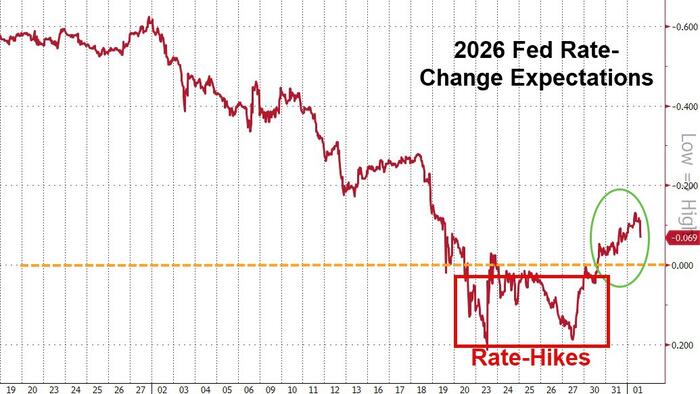
Today’s spike, driven by the Iranian conflict and “the Iranian weaponization of the Strait of Hormuz,” is unambiguously a supply shock. By the Kohn framework, the Fed should be cutting the Fed Funds rate, not considering hiking it.
The current counterargument is the high-inflation era of the 1970s, when central banks were allegedly too dovish on inflation and allowed inflation expectations to spiral out of control.
Perkins dismisses this comparison directly. To wit:
The 1973-74 recession “was one of the worst in history” and “in terms of its impact on unemployment, it was only slightly better than the GFC.”
Importantly, he notes that the 1970s featured widespread union membership and inflation-indexed wage contracts that caused wages to “accelerate even as the economy sank.”
That wage-price spiral is nonexistent today.
Thus, the inflationary danger of easing into an oil shock is considerably lower than the popular 1970s narrative suggests.

His conclusion: Central banks don’t need to hike today. In fact, if they follow the advice of Don Kohn, they will probably need to ease policy.