Hello. On Wednesday, the International Energy Agency agreed to the release of 400 million barrels of oil from member nations’ strategic reserves in response to Iran’s closure of the Strait of Hormuz. About 20 percent of the world’s oil supply travels through the strait, meaning that the war against Iran has created the largest oil shock since the 1970s. On Thursday, the United States lifted sanctions on Russian oil to help suppress prices, which have increased to about $95 a barrel (at least as of this writing). Also on Thursday, CNN reported that the White House “underestimated Iran’s willingness to close the Strait of Hormuz in response to US military strikes.”
In his Friday column, Kevin D. Williamson criticized President Donald Trump for agreeing to tap into the oil reserves so quickly and suggested that any lack of planning cannot be blamed on the military: “The United States does not lack adequate resources for dealing with such a power as Iran or a challenge such as its mining of the Strait of Hormuz or other attempts by Tehran to wage economic warfare—the tools are fine, but the workman is a dim, lazy neurotic who spends his days watching cable television ‘news’ programming and getting ragey on social media. The Army, Navy, Air Force, and Marines are all ready, willing, and able to do whatever is asked of them: The problem is the commander in chief.”
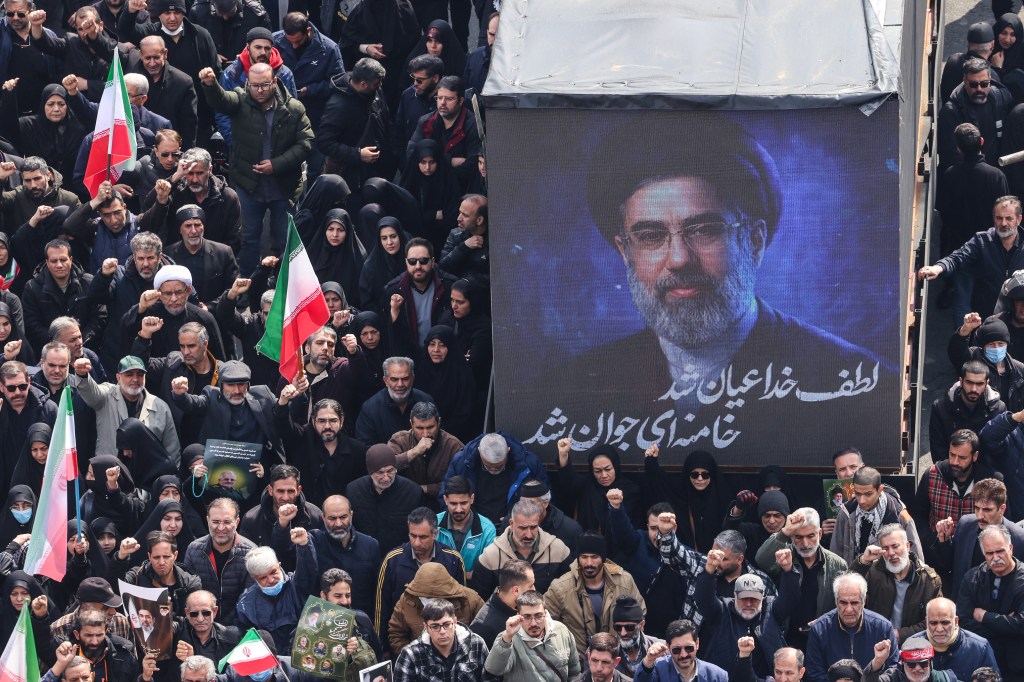
On Sunday, Iran’s Assembly of Experts announced that Mojtaba Khamenei, the son of late Ayatollah Ali Khamenei, would be Iran’s new supreme leader. Mojtaba, believed to have been injured on the first day of U.S. airstrikes, has not appeared in public as of Friday, though a written statement credited to him vowed revenge, called on Iran’s neighbors to close U.S. bases hosted in their countries, and said, “The lever of closing the Strait of Hormuz must certainly continue to be used as well.”
Mojtaba Khamenei is in some ways an unlikely successor to his father. Beyond the fact that the Assembly of Experts that chooses the supreme leader is leery of hereditary succession, contributor Shay Khatiri explains that Mojtaba never achieved the rank of ayatollah much less grand ayatollah, which is supposed to be a requirement. He predicts that the younger Khaemenei will rule much like his father, writing:
The first initiative of the younger Khamenei was the regime’s crackdown on the 2009 Green Movement, which emerged in response to the fraudulent presidential election. The regime ignored the protesters’ demands for a recount, which fueled challenges to Ali Khamenei’s legitimacy. Mojtaba Khamenei was resentful of the security forces’ soft touch and the growing radicalism of the protests. It is unclear whether he volunteered for or was tasked with crushing the movement, but his willingness to deploy brutal force against the demonstrators quickly became clear.
Reports indicate that Russia has been aiding Iran, providing intelligence on the locations of U.S. forces in the region as well as advice on drone tactics, as Russia has been relying on Iranian-designed Shahed drones in its war against Ukraine.
In Boiling Frogs, Nick Catoggio writes that Russian dictator Vladimir Putin could use this opportunity to try to broker a “peace deal,” and he worries that Trump, “who’ll balk at a fight that he can’t win easily and look for excuses to end it before it reveals the extent of his impotence,” could be amenable to such an arrangement. Nick notes that there are reasons Putin might want the war to go on for at least a little while—Russia is making an extra $150 million a day from oil sales with the Strait of Hormuz closed—but that there are also benefits to helping bring the conflict to an end. Like extracting concessions on Ukraine in return for persuading Iran to open the strait, for example. Nick writes:
To Trump, that would be a twofer, a way to expedite the end of not one but two conflicts that are currently bedeviling him. At last he’d have a pretext for abandoning Ukraine that he could semi-seriously sell to Americans: I didn’t want to do it but I had to in order to protect our boys.
Would Putin trade the oil dividend he’s been reaping since Iran closed the Strait of Hormuz for a significant advantage in Ukraine that he can secure by convincing Iran to reopen it? Quite possibly, I think.
On Wednesday, we published a piece from Michael Rubin of the American Enterprise Institute headlined, “How Will the Islamic Republic Retaliate Once the Guns Go Silent?” He called attention to the danger of sleeper cells, warning that “the regime might also unleash a wave of terror across the United States and the West unseen since the 1980s.” He wrote about Iran’s “willingness to co-opt non-Iranians for terror is standard Islamic Revolutionary Guard Corps tradecraft” and pointed to plots involving Mexican cartel members, “Azerbaijani mafioso” and Lebanese living abroad.
Alas, we did not have to wait for the “guns to go silent” to start feeling the effects of the war on the homefront. While law enforcement has not identified a motive nor made a connection to the regime, a Lebanon-born U.S. citizen attacked the Temple Israel synagogue in West Bloomfield, Michigan, on Thursday. Ayman Mohamad Ghazali rammed his vehicle into the synagogue and traded gunfire with security officers. Ghazali was found dead in his vehicle, according to law enforcement. And in Virginia, a former member of the Virginia Army National Guard, once convicted for supporting ISIS, opened fire on a classroom full of ROTC cadets at Old Dominion University. Mohamed Jalloh reportedly shouted “Allah Akbar” as he fired his weapon, killing an instructor. ROTC cadets subdued Jalloh and killed him.
Also this week, Emanuele Ottolenghi argued that the October 7, 2023, invasion of Israel by Iran proxy Hamas was a disastrous strategic mistake for Iran, and David M. Drucker reported that President Trump has been using the Iran war to solicit political donations.
Thank you for reading, and have a good weekend. One note: There will likely not be a Dispatch Weekly next Saturday as celebrating the first weekend of March Madness is a longheld tradition in the Ohio bureau.
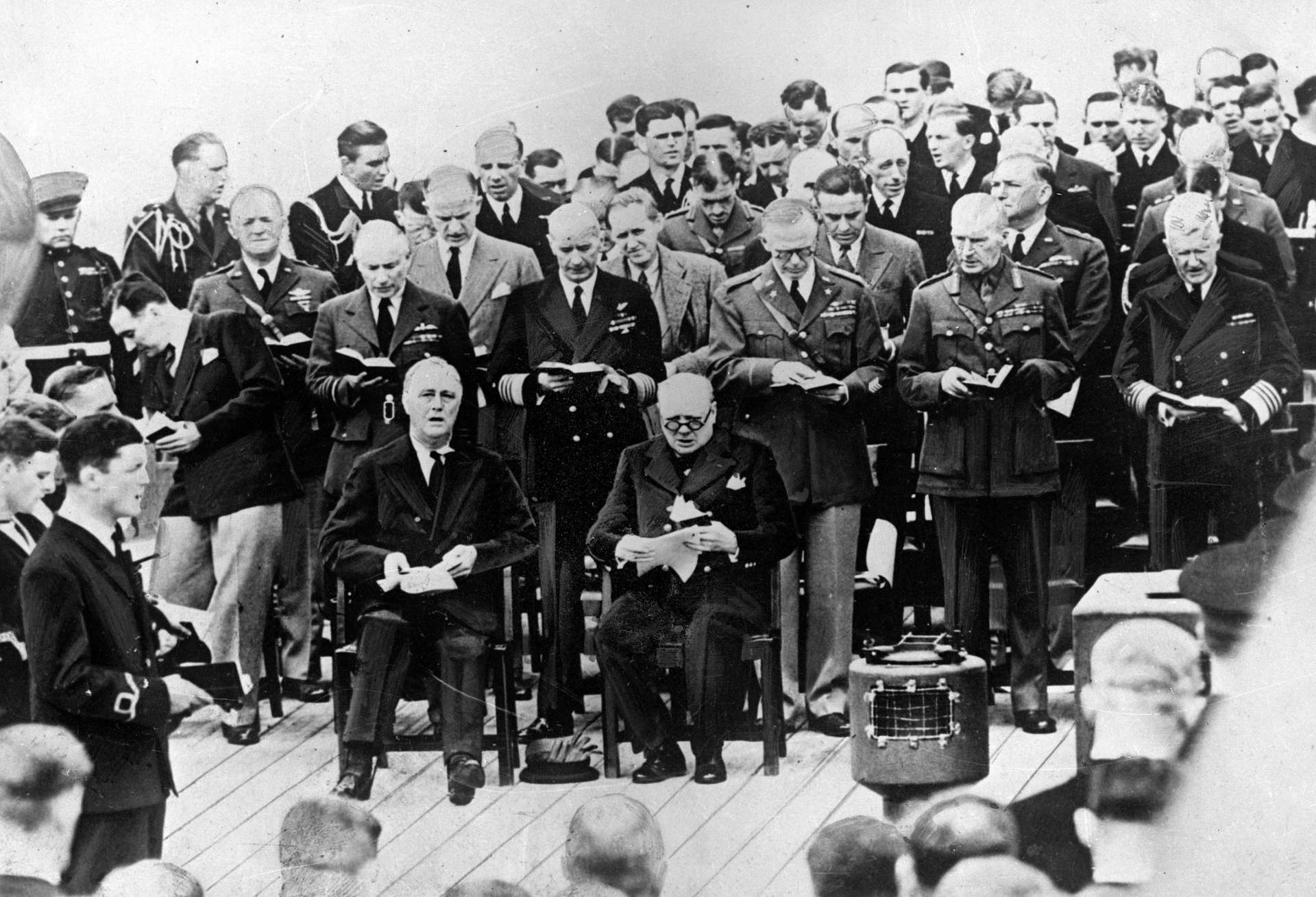
The charter is the founding document and constitution of what is clunkily called the “liberal international order,” but is more accurately called the free world. It was later incorporated into the Charter of the United Nations—but the real animating spirit of the charter found life in the North Atlantic Treaty Organization (NATO), an alliance of free democracies that has anchored world order for eight decades. Most Americans today have only the dimmest understanding that for most of human history, most people were poor, unfree, and miserable. The emergence of a free world order—with democracy and rights, capitalism and free trade, international cooperation and collective security—is the greatest thing that has ever happened in (secular) history. It happened because of the convergence of American power with American ideals. We did not beat the fascists with the power of American ideals; we beat the fascists because we had bigger guns. But so did the Soviets, and the Soviets did not write the Atlantic Charter.
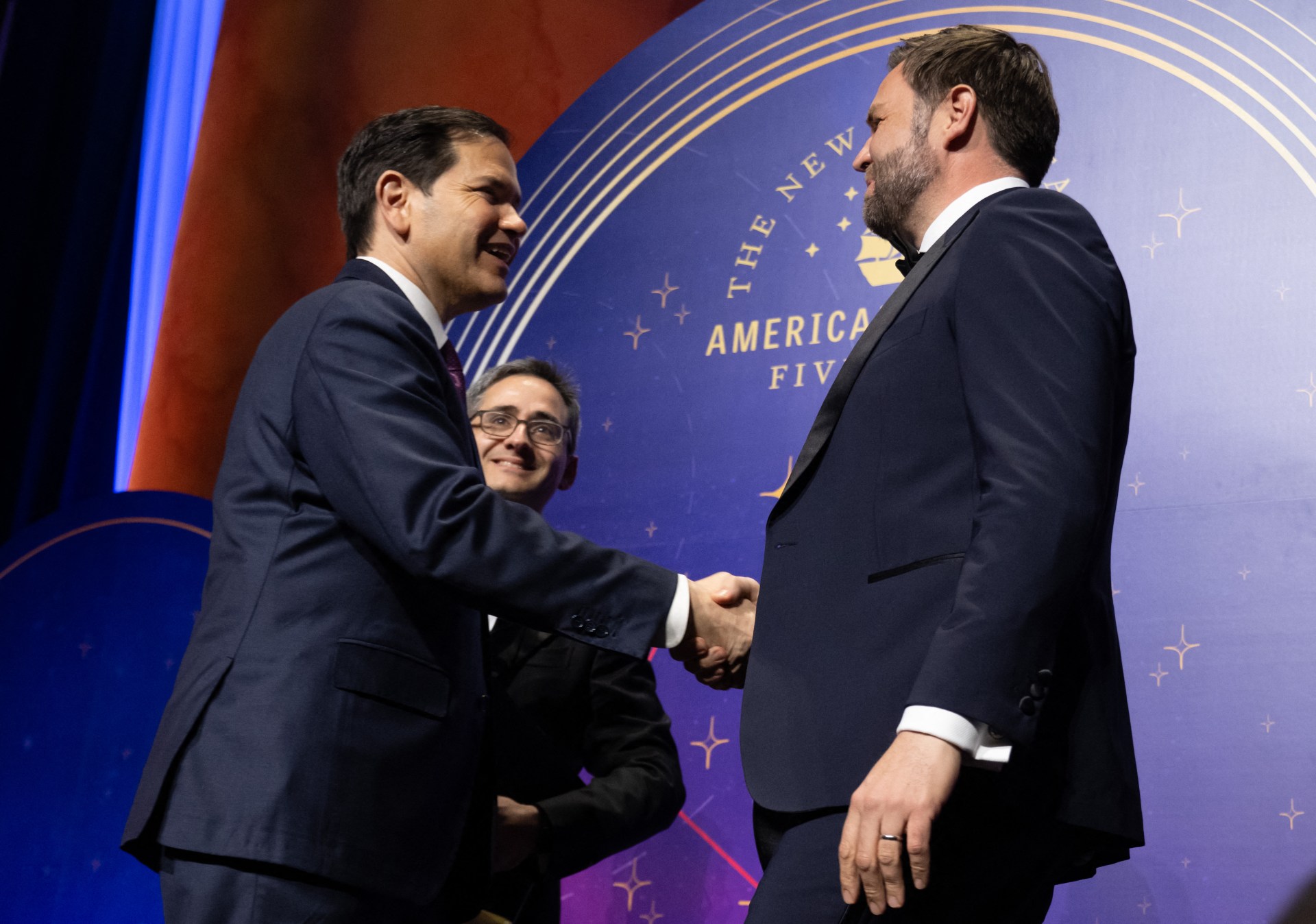
J.D. Vance and Marco Rubio are potential rivals for the Republican nomination in 2028 and among Trump’s closest advisers. Each has worked to reorient the GOP away from small-government conservatism and toward a more nationalist and populist economic agenda. The tie binding Vance and Rubio in that effort is American Compass, a relatively new think tank. Over the last decade, Oren Cass, the former Romney adviser and the man behind Compass, helped draw the intellectual roadmap that would ultimately lead both Vance and Rubio to the second Trump administration and that could very well form the policy foundation for the next Republican presidency. Cass founded American Compass in early 2020 to provide an institutional home for a new vision of “conservative economics.” … The GOP should no longer rely on a 1980s policy playbook of tax cuts and low consumer prices. A new economic consensus was needed “that emphasizes the importance of family, community, and industry to the nation’s liberty and prosperity,” Cass wrote in 2020, and that would require government interventions anathema to many conservatives and libertarians. There are a range of new right think tanks and advocacy groups seeking to sway the GOP during the Trump era and beyond. The Heritage Foundation, a historically influential institution for Republican administrations, has turned toward the new right in recent years. But the think tank has been embroiled in a leadership crisis over its association with antisemitic voices, prompting a wave of board and staff exits. No policy group seems as influential as Compass for the two men currently best positioned to take up the party mantle in 2028.
You know my basic view of both parties. They’re too internally democratic—TLDR: primaries suck—and they are too institutionally weak to do the admittedly hard, but obviously smart, thing: purge or marginalize their fringes in an unapologetic campaign to win over the voters in the middle. As a purely political matter (we can leave policy and morality out of it for the moment), the reason such a purge would be smart for Democrats—or Republicans—is simply that there are more voters in the middle than there are on the fringes. Moreover, the more “normie” voters you get, the more fringy you make the other party look. Enduring majorities are built on this basic logic. The main reason it’s hard is that those on the fringe—and the fringe-sympathetic—care more about politics and take politics more seriously than normal voters who, broadly speaking, have more important and rewarding things to do with their time and energy. (The suits at The Dispatch often call these normies, or “our audience.”) The fringers have more internal power within the parties and the network of institutions that fund and support them (with media coverage, donations, organization, and mobilization).