
Editor’s Note: We’re two weeks away from Dispatch Energy: The Current State, a symposium focused on the future of energy innovation. You can catch Jonah Goldberg, Steve Hayes, Kevin D. Williamson, and more of your favorite Dispatch authors as we bring our Dispatch Energy newsletter to life in Dallas. Tickets are available here.
Welcome to Dispatch Energy! Today’s topic is the Arctic and its rising role in energy geopolitics. Importantly, “Arctic” derives from the Greek word meaning “bear,” because the constellation Ursa Major is visible in the Northern Hemisphere. Antarctic comes from the phrase “opposite the bear.” By sheer coincidence, bears reside in the Arctic but not the Antarctic.
If there is one word that best describes how many Americans feel about President Donald Trump’s designs on the Danish territory of Greenland, it is likely “baffled.” While some of the president’s opponents chalked it up to another case of Trump’s bombastic mercuriality, the push to acquire the territory appears to be tied to a major U.S. priority going into the 21st century: resource security. Consequently, Greenland and the rest of the Arctic Circle are of increasing strategic interest to the United States—and its competitors.
In the world of energy security, the Arctic Circle comes up perhaps more than many realize. The region holds an estimated 13 percent of the world’s undiscovered oil resources and 30 percent of the world’s undiscovered natural gas. In terms of mineral resources, Greenland in particular has exceptional deposits, with 25 of the 34 minerals considered “critical raw materials” by the European Commission and one of the world’s largest rare earth element deposits.
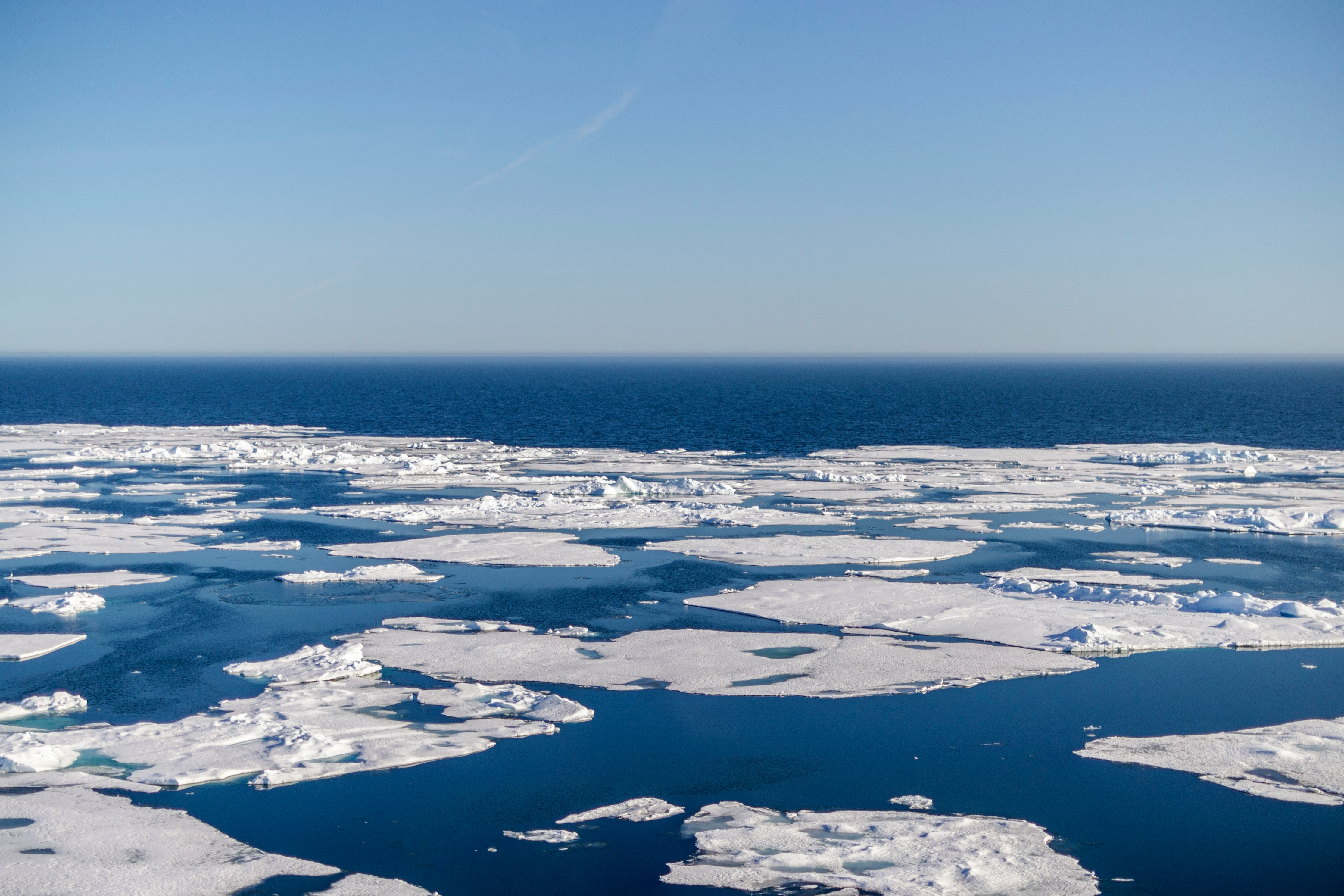
Beyond these resources, the Arctic is also increasingly important as a sea lane. Currently, about one-third of global maritime shipping passes through the South China Sea, the site of Chinese military expansion, and some nations see strategic value in an alternative route. Although not often used, there are sea routes that connect the Atlantic and Pacific oceans via the Arctic. Climate change, which is reducing the summertime ice coverage of the Arctic by 12.6 percent per decade, is making these routes more accessible.
In many ways, the Arctic is an extraordinarily appealing region for the national security community. It offers considerable natural resources and alternative sea routes. That said, some serious reality checks are in order.
Yes, the Arctic has considerable oil and gas resources. But extracting them requires very expensive offshore drilling rigs operating in harsh climates. Shell and ConocoPhillips learned this the hard way, spending $2.5 billion for the rights to explore for oil and gas off the coast of Alaska before giving up in 2016. It turned out that it is far easier to produce massive amounts of oil and gas via fracking in the contiguous United States than in the Arctic Circle.
Yes, Greenland has many mineral resources that could be a huge boon to the United States. But there is a distinct difference between physical access to a resource and its presence in the market. It is not the government or the military that extracts resources; it’s companies, which in the United States are thankfully private entities that can make their own choices as to which investments are worthwhile.

The Farmer vs. the Federal Government
When Jack LaPant set out to become a farmer, he expected some regulatory oversight from the U.S. Department of Agriculture. He never imagined he would find himself in the crosshairs of the U.S. Army Corps of Engineers—an ordeal that ultimately cost him eight years of torment and more than $1.2 million in fines, property, and fees.
The offense? According to the government, Jack violated the Clean Water Act by plowing his own farmland to grow wheat.
On this point, recent events in Venezuela may prove informative. Despite the U.S. capture of dictator Nicolás Maduro and de facto American access to the nation’s vast oil reserves, oil companies remain skeptical of undertaking the risk of investing in the region. ExxonMobil executives have described the country as “uninvestable,” a view that’s unsurprising, given that the oil company’s assets in Venezuela have been nationalized twice.
Certainly, Greenland does not have the same political challenges as Venezuela, but the example illustrates the need for investor confidence. Greenland’s government imposes strict environmental protection policies that inhibit the extraction of natural resources. Additionally, the less-than-cordial dialogue between Europe and the United States over the territory can diminish investors’ confidence that a durable deal enabling resource extraction is likely to emerge.
Political stability is important for investors because they need to be confident in the decision to invest capital in resource extraction. Conflict is, by its nature, antithetical to stability. Longstanding research shows that conflict reduces rather than increases investment in resource extraction. Resource security—and particularly energy security—is not merely a function of how much and where a resource is produced, but the practical availability of that resource for economic purposes. More simply, a nation can have “independence” over its energy resources and still face scarcity.
And while sea lanes are incredibly important, and the United States is correct to be concerned about China’s military aggression in the South China Sea, Arctic routes are not yet viable substitutes. They are traversable for less than half the year, and even achieving that requires the aid of icebreaker ships that can keep passages clear. The United States has just three icebreakers; in contrast, Russia is estimated to have 40, while China has five.
As the U.S. lags behind, its adversaries increasingly view the Arctic as an important venue for great-power competition. China exercises an alarming degree of influence over mineral supply chains, global energy production, and transnational shipping. The Arctic offers the United States and its allies a response that can diminish Beijing’s potential influence over these strategically important issues. The administration is also correct to chide the naïvety of European allies that do not view China as adversarial.
In the Arctic, China has continued its efforts to establish monopolies over global mineral supply chains via its state-owned enterprises. This includes its bid to secure extraction rights for minerals in Greenland—Chinese foreign direct investment in Greenland between 2012 and 2017 accounted for more than 11 percent of the territory’s GDP and nearly 6 percent of Iceland’s GDP. In a 2018 white paper, Beijing declared itself to be a “near-Arctic state” despite not controlling territory in the region.
American concern is rooted in the idea that Europeans don’t see China as a significant threat. A 2023 poll by the European Council of Foreign Relations found that a large plurality of Europeans—some 46 percent—consider China an ally or partner rather than a rival or adversary. Similarly, the poll found that if the United States opted to defend Taiwan from a Chinese invasion, only 23 percent of Europeans would want their countries to support the U.S., while 62 percent would prefer to remain neutral. In this context, it is no surprise that the Trump administration fears a Greenland in league with its foremost global competitor.
But the path to improving security is not saber-rattling against our longtime allies. The lessons from past energy crises prove that markets, not territorial conflicts, are the solution to scarcity.
What lifted the U.S. out of the oil crises of the 1970s was not territorial gain, but the removal of price controls on domestic oil to incentivize more production. What tempered record oil prices in the 2010s was not military interventions in the Middle East, but that those same high oil prices ripened the market for drilling innovations that massively increased production in the U.S.—developments that later became known as the “shale revolution.” Similarly, resource security via the Arctic is best achieved by creating stable business environments in which our partners view resource extraction as mutually beneficial.
Moving forward, U.S. policy should embrace these lessons to improve security across multiple dimensions. If Washington is serious about competing for the Arctic, it needs to expand its icebreaker fleet. It also needs to strengthen, rather than undermine, its relationships with NATO allies in the region. And fortunately, signs of movement toward this strategy are already emerging; the Trump administration recently announced plans to purchase icebreakers from our NATO ally Finland. Finally, the U.S. must do a better job of communicating to our European friends why their ambivalent attitudes toward China are misguided.
Is the Arctic the immediate solution to the United States’ strategic concerns of sea and resource access? No. But is a more sober view of the strategic importance of the Arctic—and the role of our NATO allies in maximizing the region’s utility—warranted? Absolutely. Ultimately, however, unlocking that value must be done in a manner that appreciates rather than rejects the lessons of past resource security crises. It is better to lean on the strength of markets to remedy scarcity than the wisdom of politicians.
Policy Watch
- A bipartisan group of senators recently introduced a bill that would act as a companion to the House of Representatives’ ePermit Act, which passed in the House in December. Both bills aim to modernize the data collection and application process for projects requiring federal permits via the National Environmental Policy Act. Under the current framework, there is little information on how many projects are approved, how long it takes to approve them, and what hurdles projects face. These congressional efforts aim to create more simplicity and transparency in the process.
- This month, Japan pledged to invest $36 billion in American oil, gas, and critical mineral projects. The deal, struck following trade negotiations with Washington, includes financing for a massive 9.2 gigawatt natural gas facility in Ohio. While these commitments are considerable, there is a distinction between pledged investments and production, and it remains to be seen how effective these dollars will be in addressing scarcity issues for these commodities.
Innovation Spotlight
- The U.S. military is testing out a brand new nuclear microreactor, the Ward 250. This small nuclear reactor, which can be airlifted by a C-17 military transport aircraft, has a capacity of about 5 megawatts. According to the Pentagon, these small nuclear reactors are becoming increasingly important for powering military bases, particularly as the armed forces utilize artificial intelligence and directed-energy weapons, such as high-powered microwaves and high-energy lasers.
Further Reading
- Writing for his Substack Heavy Lifting, Robert Eccles argues that the apparent tension between different carbon accounting efforts is fundamentally misguided. Eccles points out that older efforts like the Greenhouse Gas Protocol, compared to newer efforts like Carbon Measures (in which major players like ExxonMobil participate), measure different things and offer different information to investors. While the Greenhouse Gas Protocol examines the carbon footprint of companies, Carbon Measures and its E-Ledgers system examine the carbon footprint of products. Both offer information that investors find useful in their decision-making, and Eccles hopes these dual efforts will improve greenhouse gas accounting rather than sow antagonism.
- Fellow Dispatch Energy contributor Roger Pielke Jr., in his Substack The Honest Broker, offers a sober look at the Environmental Protection Agency’s reversal of its endangerment finding. Pielke explains that the finalized repeal differs substantially from earlier proposals, shifting away from a stance of challenging climate science toward the idea that the unique nature of greenhouse gases makes them closer to other pollutants that the EPA is not permitted to regulate. Pielke further notes that the final rule from the EPA presents a much stronger legal justification than initially speculated. “What the rule does offer is an opportunity for Congress,” he writes, “to at least clarify the language of [the] Clean Air Act, but perhaps more significantly to open up a debate over what a common-sense, bipartisan approach to greenhouse gas policy might look like in legislation.”
Pacific Legal Foundation has been fighting for freedom since 1973. We sue the government on behalf of farmers, fishermen, teachers, nurses, and entrepreneurs—Americans from every corner of the country and from every walk of life—and we win.