There are two different free speech regimes in America. When it comes to print speech, whether physical or digital, Americans enjoy some of the world’s strongest legal protections against government censorship, so strong that supporters and critics alike often refer to it as “First Amendment absolutism.” Broadcast speech, however, has been given far inferior protection. Controls—such as government licensing, content review, and public-interest mandates—that would be unthinkable in any other medium have been routine features of broadcast regulation.
This two-tier regime stems from the original sin of broadcasting regulation: spectrum licensing. The decision to license broadcast stations, beginning in the 1920s, opened the door to a century’s worth of regulatory capture, partisan weaponization, and a shocking degree of overt speech control.
This was done in direct violation of the spirit of the American experiment when it came to the relationship between the government and free speech. To illustrate the gulf between Founding intent and present regulatory reality, consider two transatlantic events in 1791 involving the freedom of speech.
In 1791, a book titled The Uterine Furors of Marie Antoinette was published in defiance of the French royal censor. It accused the queen of incest, bestiality, and frequenting “all the brothels of Paris.” It was pornographic, for sure, but it contained a deeper point. The implication was that the Austrian-born Antoinette was whoring out not only herself but also the nation to service the base desires of France’s foreign adversaries. This was just one entry in a popular genre. Pamphlets with lurid illustrations of the scurrilous behavior of the king, his ministers, and especially his wife, Marie Antoinette, fomented a broad sense of outrage about the corruption and incompetence of the monarchy.
Prior to the revolution, such works were confined to a literary underground of books smuggled in over the Swiss or German borders. In France, like in most of Europe at the time, publishing was a privilege, not a right. Recognizing the political power of the press, publishers needed to first obtain a royal license to print and receive preapproval from the royal censor for their publications. Failure to do so could result in criminal charges and massive fines.
That licensure system temporarily fell into dysfunction during the eruption of the French Revolution, but it is a useful reminder of just how profoundly radical the American experiment with free speech was by contrast. The Founding Fathers wanted to emulate the British and French republican literary traditions, their flouting of publication controls, and the way they used unlicensed pamphlets to undermine absolutism.
So in 1791, the United States enshrined a nearly unprecedented degree of protection for freedom of speech and the press in the newly ratified First Amendment to the Constitution. There would be no licensing of publishers, for such was a marker of the oppressive, continental, absolutist ancien regimes. It was thus anathema to Americans who broadly (although not universally) thought of the press as a mechanism for holding government officials to account. As one newspaper author wrote in 1786, “A licensed press is worse than none.”
And so began the gradual but steady march toward First Amendment absolutism for print speech in American jurisprudence. At first, states could do what the federal government could not and target disfavored speech. During the antebellum debates over slavery, for instance, Southern states routinely shut down abolitionist presses and agitated against the use of the United States Postal Service to carry anti-slavery literature into the heart of the South.
But the incorporation of the Bill of Rights through the 14th Amendment’s due process clause extended the shield of speech protection.And in a series of landmark 20th-century Supreme Court cases, like Near v. Minnesota (1931) and New York Times Co. v. United States (1971), the law cemented the principle that prior restraint of speech is intolerable from any government body in the United States.
Yet at the same time as the courts were extending and deepening protections for print speech, they were upholding government controls on broadcast speech. Just a year after Near, the D.C. Circuit Court of Appeals affirmed the authority of a new government agency, the Federal Radio Commission (later renamed the Federal Communications Commission) to license broadcasting in the public interest.
That case, Trinity Methodist Church, South v. Federal Radio Commission (1932), explicitly involved speech content. Robert Shuler, a muckraking radio preacher in Los Angeles, had been using his radio station to expose the corruption of local city officials, several of whom were involved in a pyramid scheme and had ties to organized crime. Angered by his activism, those officials charged him with various crimes but lost in court. So they then lobbied the FRC to repeal his radio station license, exacting revenge for the political headache he had caused them and silencing their most successful critic. Of course, if Shuler had made the exact same accusations in the pages of a newspaper instead of over radio broadcasts, his speech rights would have remained unimpaired.
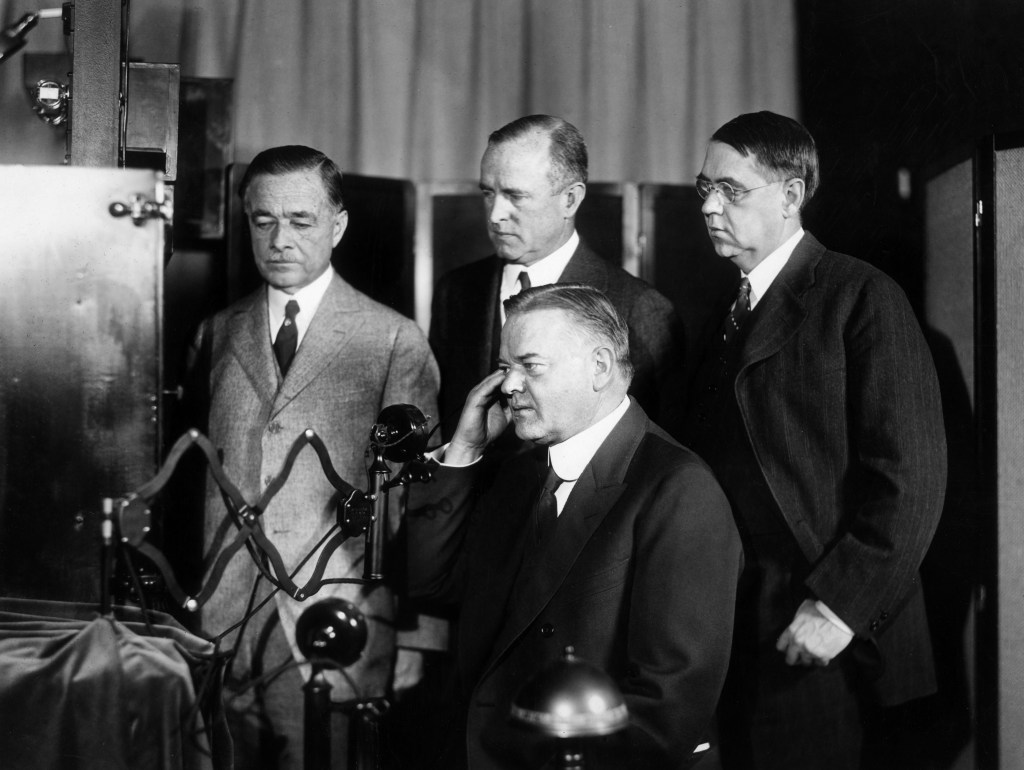
How did the country arrive at this point of severe differentiation between print and broadcast speech? The initial responsibility lies with Herbert Hoover, who in 1927 was the secretary of commerce. For the preceding several years, the Commerce Department had maintained a registry of spectrum claims made by radio station operators. As economic historian Thomas Hazlett has noted, this common-law approach to spectrum management worked reasonably well; courts had recognized the validity of the claims and actively adjudicated disagreements over signal strength and overlap.
“Public ownership of the spectrum has been a disaster, not only by enabling the abuse of broadcast allocation for partisan purposes but also through simple underutilization.”
Hoover could have respected this emergent order on the airwaves and even taken steps to formalize private spectrum ownership. But that would have meant tolerating both broad ideological diversity on the airwaves and wide ethnic diversity in station ownership, neither of which fit with Hoover’s belief in government management of the spectrum to advance political and cultural moderation. So Hoover abruptly yanked the radio registry, thus throwing the airwaves into confusion, and then used that chaos to justify a request for a legislative mandate cementing federal control of broadcasting.
The result was the Radio Act of 1927, which adopted a model that fell in between full nationalization in the vein of the British Broadcasting Corporation and the laissez-faire system Hoover had despised. Station operators would need to request a license from the FRC, which would be granted (and later renewed) only if they could prove they operated in the public interest. Despite the FRC’s claimed intent to respect broadcasters’ free speech, the licensing system quickly led to control of the airwaves based on speech content. Notionally, licensure was meant to ensure that stations operated in “the public interest, convenience, or necessity,” a noble sentiment that from the outset acted as cover for opportunistic advancement of partisan interests, private rent-seeking, and public inconvenience.
As an immediate result of the FRC’s crackdown in the name of the public interest, a broad range of marginalized communities lost significant access to the airwaves, including racial minorities, pacifists, Jehovah’s Witnesses, fundamentalists, and socialists. For example, New York City station WEVD (named for Socialist Party presidential candidate Eugene Victor Debs) had to fight to keep its license after the FRC accused it of being a “propaganda” station and thus not serving the public interest. WEVD won after a lengthy public campaign but still had to run at reduced power.
Similarly, when the only applicant for a new license in Kansas City came from a black-owned newspaper, the Kansas City American, the FRC rejected it and opted for dead air rather than allow a radio station that would not serve the “general population.” And stations in Chicago serving immigrant populations with foreign-language programs had their licenses revoked; their spectrum slots were given instead to native-owned stations that promised to air primarily in English and featured programs “stress[ing loyalty to the community and Nation” and “citizenship and American ideals and responsibilities.”
Broadcast licensing also immediately opened the door to blatant partisan opportunism. In the late 1930s, President Franklin Roosevelt faced significant political backlash from conservative newspaper owners who attacked his New Deal agenda. Worse, newspaper magnates were buying up radio stations and taking their criticisms to the airwaves, which had previously been a safe space for FDR’s cozy, pro-administration “fireside chats.” Roosevelt considered a range of responses, like urging the FCC to deny license transfers to his political opponents under threat of firing the entire FCC.
Ultimately, FDR “put the blowtorch” on his newly appointed FCC chairman, James Fly, who promptly announced an investigation into cross-media ownership that functionally halted license transfers to Roosevelt’s enemies for a number of years. And in a warning shot across the bow, in 1941 Fly gave the license of influential Boston-area Station WAAB—which had editorialized against the New Deal—to a competing claimant who would not be “an advocate” for the politics of the owner. Again, the freedom of speech that newspaper owners enjoyed in print was being violated the moment they broadcast those same ideas, something only possible because of the backdoor censorship introduced by the licensure system.
Yet even FDR’s abuse of the broadcast licensing power paled next to the weaponization of the public interest principle by the Kennedy, Johnson, and Nixon administrations a generation later. In 1959, progressive activists at the FCC introduced a public-interest regulation known as the Fairness Doctrine, which stipulated that license holders had an obligation to air multiple points of view on contentious political issues. If they failed, for instance, to balance the speech of someone criticizing the Vietnam War with someone supporting it, then listeners could file Fairness Doctrine complaints, on the basis of which the FCC could choose not to renew stations’ licenses.
Even equitably applied, the Fairness Doctrine would have a chilling effect on speech. But President John F. Kennedy and Attorney General Robert F. Kennedy, his brother, realized that the Fairness Doctrine could be weaponized to extract partisan advantage. In the early 1960s, a class of conservative broadcasters had emerged that built an ad hoc national network of hundreds of radio stations with a total listening audience in the tens of millions. And they constantly criticized the Kennedy administration’s policies.
But if Kennedy instructed the FCC to enforce the Fairness Doctrine against only unbalanced conservative speech, then stations airing such programming would face the threat of losing their licenses and drop the offending conservatives. As President Kennedy told his newly appointed FCC chairman, Bill Henry, “It is important that stations be kept fair.” Of course, “fair to me” was the subtext, a fact that becomes quite clear while listening to Oval Office recordings in which Kennedy orders his aides to coordinate with the FCC and IRS to target conservative broadcasters.
After Kennedy’s assassination, the Lyndon Johnson campaign used the threat of Fairness Doctrine enforcement to extract thousands of hours of free, pro-administration airtime in the crucial final weeks of the 1964 election. Officials with the Democratic National Committee bragged about the censorship campaign, exulting that even “more important than the free radio time … was the effectiveness of this operation in inhibiting the political activity of these Right Wing broadcasts.” The intent was overtly censorial—and it was a wild success, with more than half of the targeted stations dropping conservative programming altogether. Right-wing radio wouldn’t fully recover until 1987, when the FCC repealed the Fairness Doctrine.
The abuse of the Fairness Doctrine was not only a Democratic impulse. President Richard Nixon, angry over network television news coverage of his administration’s conduct of the Vietnam War, sent one of his aides (and future Watergate cover-up felon), Charles Colson, to meet with CBS leadership in 1970. Colson reported back that he found the CBS executives to be “accommodating, cordial and almost apologetic” under threat of negative Fairness Doctrine scrutiny. Later, in the midst of the Watergate scandal, Nixon’s FCC would implement a cross-media ownership ban that Katherine Graham, the owner of the Washington Post and several affected television stations, believed was meant to convince her to order her journalists to drop their investigation.
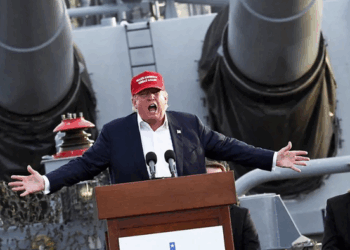
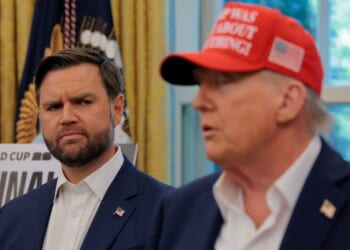
In that regard, the Trump administration’s ongoing abuse of the FCC’s licensure authority in order to intimidate his media critics are entirely routine. Trump himself has frequently demanded that the FCC revoke licenses for multiple news networks. While the networks themselves are not licensed, they own local station affiliates that are. That was all the leverage FCC Chairman Brendan Carr needed to bully CBS into settling a junk lawsuit that Trump had filed against the network for its coverage during the 2024 campaign. If CBS refused, Carr could have blocked the network’s merger with Skydance because it involved transferring ownership of local station licenses.
Carr also weaponized station licensure to force comedian Jimmy Kimmel’s talk show off the air. After Kimmel accused MAGA of politicizing Charlie Kirk’s death, FCC Chairman Carr suggested that station ownership groups Nexstar and Sinclair “step up” to put pressure on Disney to yank Kimmel. Given that both groups would need Carr’s blessing for any future mergers, it is not a surprise that within hours of Carr’s words they had preempted Kimmel’s show and maneuvered Disney into temporarily suspending Kimmel.
This only scratches the surface of the last century of abuse enabled by federal licensure of broadcasting as well as misguided regulations like the Fairness Doctrine that are erected on the back of that authority. Yet the utter crassness of the current administration’s abuse of that authority may have created an opportunity for reform. While next year is the nation’s 250th anniversary, the following year will be the 100th anniversary of the creation of the Federal Radio Commission, a perfect time to consider root and branch reform of the agency.
Public ownership of the spectrum has been a disaster, not only by enabling the abuse of broadcast allocation for partisan purposes but also through simple underutilization. Were it not for the spectrum auctions of the 1990s—which raised $100 billion for the U.S. Treasury by selling unused spectrum to the wireless companies—we would not have widespread use of Wi-Fi technology and the development of faster and better cellphone networks would have been delayed.
Notably, the economist who proposed the idea of spectrum auctions in 1959, Ronald Coase, was not targeting unused “waste” spectrum. Coase wanted to auction off the broadcast spectrum and ditch the licensing system altogether. The massive financial and technological benefits that have flowed from a partial application of Coase’s insights indicate that policymakers should adopt his original proposal in full. It would pay political benefits as well by removing the ability of any future administration from either party to abuse the FCC’s licensing power to advance partisan interests.
Ensuring spectrum property rights would not only modernize the FCC for its next 100 years but also naturally rebalance broadcast speech rights to match the protections afforded to print speech. Even if America’s Founders could not have imagined the technology of broadcasting, at least they would then be able to recognize the same free speech principles they ratified in 1791 at work in a broadcast industry free from federal licensure and speech control.
Trump has been criticized as the man who would be king—a comparison he has himself leaned into—but there is one regard in which he indeed possesses something of the old monarchial powers. For years, Trump has raged about Jimmy Kimmel’s lampooning of his august person. For instance, in June 2025 Kimmel joked about Trump nodding off while sitting next to Melania during the lackluster military parade the president had arranged for his birthday (and the Army’s 250th anniversary). It was, Kimmel cracked, “as close as he gets to being able to sleep with his wife.”
In politics, virility and vigor are often praised. Thus the implication of Kimmel’s comment was that Trump’s marital relations were as limp as his public preening. The French revolutionary pornographers had once used Marie Antoinette’s supposed profligacy to criticize the crown’s ineffectiveness; Kimmel was doing the inverse by using the Trumps’ supposed frigidity to make a similar critique.
The difference, however, was that Kimmel’s lampooning aired over a licensed broadcast medium, which gave the Trump administration more functional leverage for suppressing Kimmel’s dissent than that possessed by the lame duck monarchy of Louis XVI during the final, desultory years of his reign. At a minimum, in its next 250 years America should at least catch up to 18th-century France by doing away with broadcast licensure and its rotten reminder of ye olde absolutism.