We’ve unlocked this edition of The Morning Dispatch, our flagship daily newsletter explaining all the news you need to know today in fewer than 15 minutes. To get the full, unlocked version every day, become a Dispatch member today.
Happy Tuesday! Yesterday marked 150 years since Secretary of War William Belknap—a name that all professional podcasters should have no problem pronouncing—resigned amid a bribery scandal. He was the first Cabinet secretary to be impeached and, of course, the last White House official to ever be corrupt.
Quick Hits: Today’s Top Stories
White House Expects an Extended Iran Operation
Speaking at a Medal of Honor ceremony on Monday, President Donald Trump said that the U.S. military operation in Iran was working to eliminate the country’s missiles, missile-making facilities, and naval targets. Earlier on Monday, Trump told the New York Post that he would consider placing U.S. troops on the ground in Iran “if they were necessary,” adding, “I don’t have the yips with respect to boots on the ground.” Similarly, Defense Secretary Pete Hegseth said during a press conference at the Pentagon on Monday that he would not rule out U.S. ground operations, but emphasized that the campaign would be “not endless.” Joint Chiefs of Staff Chairman Gen. Dan Caine noted that “this is not a single overnight operation,” adding that completion will require “difficult and gritty work.” To learn more about the Iran operation, read yesterday’s TMD.
- U.S. Central Command said on Monday that six U.S. service members have been killed in the operation—all from a single Iranian strike on a tactical operations center at Kuwait’s Shuaiba port on Sunday. CENTCOM initially reported three dead, but a fourth seriously wounded service member later died from injuries, and the remains of two additional service members were recovered from the facility.
- Bloomberg reported on Monday that Qatar and the United Arab Emirates have privately pushed for Trump to reach a diplomatic off-ramp with Iran.
- After a missile struck a girls’ elementary school in Iran on Saturday—killing at least 175 people, according to Iranian state-owned media—Secretary of State Marco Rubio said on Monday that the Defense Department “would be investigating that if that was our strike,” but added that the U.S. military “would not deliberately target a school.”
War Continues Between Pakistan and Afghanistan
Pakistani and Afghan forces exchanged fire for the fifth consecutive day on Monday, with the Taliban Defense Ministry claiming to have destroyed a Pakistani tank in southeastern Afghanistan after it fired shells. Taliban officials say their forces have taken 25 Pakistani strongholds, killing more than 100 soldiers. Pakistani fighter jets targeted Afghanistan’s Bagram Air Base on Sunday, and while Taliban officials claimed that Russian-made defense systems successfully repelled the Pakistani forces and that the facility didn’t sustain damage, satellite imagery obtained on Monday by the New York Times shows that an aircraft hangar and two large warehouses were destroyed. A Pakistani military official also told the outlet that Pakistan was targeting military equipment and supplies stored at the air base.
- Pakistani President Asif Ali Zardari said in a speech to lawmakers on Monday that his government attempted to negotiate a diplomatic resolution with the Taliban before resorting to military action.
- He reiterated Pakistan’s claim that the Taliban had supported terrorist groups within the country and emphasized that they “must choose to dismantle” those allegedly linked entities.
France Pushes to Expand Nuclear Capabilities
French President Emmanuel Macron announced on Monday that France was planning to expand its nuclear weapons arsenal, and that European allied nations would, for the first time, temporarily host its nuclear-armed aircraft for nuclear wargame missions, deterrence exercises, and “circumstantial deployments.” Macron said that France has begun preliminary talks with the U.K., Belgium, Denmark, Germany, Greece, the Netherlands, Poland, and Sweden on such drills, but emphasized that France would retain full authority over all nuclear-launch decisions. Macron said this is “forward deterrence” to counter what he described as “geopolitical upheaval fraught with risk.” He added, “To be free, one needs to be feared.”
- Macron announced the move at a military base in Île Longue, where France’s nuclear ballistic missile submarines are stationed.
- France and Germany also announced plans to strengthen cooperation on nuclear deterrence, under which, in addition to joining French nuclear exercises, Germany will work with France to align priorities in other strategic defense areas.
Another Massacre in Sudan
A South Sudanese official on Monday said that insurgent militant fighters had attacked a village in the country’s northern region on Sunday, killing at least 169 people, including 90 civilians. Government soldiers and the insurgents battled for more than three hours. The attackers’ motive remains unclear to local officials. Authorities said that the death toll included women and children and that the figure may rise as more bodies are found. The United Nations shared in a statement that it was housing 1,000 people displaced from the attack at a nearby base, and identified the attackers as “unidentified armed youth.”
- SPLM-IO—a group led by Riek Machar, the South Sudanese opposition leader and suspended first vice president, who is currently on trial for treason—denied being behind the attacks, stating that it “has no military presence in the area concerned.” The group has recently engaged in skirmishes with government forces.
Ukraine Pursues EU Membership
Ukrainian President Volodymyr Zelensky said on Monday that Ukraine will soon complete the technical requirements to advance negotiations on possible Ukrainian entrance to the European Union. Zelensky urged European leaders to schedule a specific date for Ukrainian accession, stating that such a move would pressure the Kremlin toward negotiating peace, though he later told reporters that “not everyone is ready to give Ukraine this opportunity.” Zelensky also said that Ukraine and Russia were still planning to hold in-person peace talks later this week, though he added Ukrainian officials were looking to change the location, possibly to Turkey or Switzerland. Before the U.S. and Israeli strikes on Iran this weekend, both sides had planned to hold talks this Thursday and Friday in Abu Dhabi. Kremlin spokesman Dmitry Peskov said that Russia was “open” to continuing talks.
- Zelensky noted that he would not approve a prospective land swap proposal that exchanges Russian-occupied Ukrainian territory near the country’s northeastern cities of Sumy and Kharkiv in exchange for territory in Ukraine’s eastern Donbas region that it has continued to hold.
- Hungary summoned Ukraine’s ambassador after Hungarian officials said that two ethnic Hungarians were wrongly conscripted into Ukrainian military service.

Claude, Anthropic’s AI system, is likely playing a key role in America’s ongoing war with Iran. U.S. Central Command, which oversees the Middle East, uses Claude for planning, operations, battle simulations, and target identification, the Wall Street Journal confirmed Saturday. But the Trump administration has also just labeled Claude a threat to U.S. national security.
The U.S. attacks on Iran came just hours after President Donald Trump directed all U.S. government agencies—with a six-month transition period for the Department of Defense—to stop using Anthropic’s tools. Trump’s announcement capped a roughly weeklong saga in which a dispute between the Pentagon and Anthropic over how AI technology can be used in weapons systems and surveillance boiled over, ending Anthropic’s $200 million contract with the Department of Defense. Defense Secretary Pete Hegseth then designated the company a supply-chain risk, declaring that no military contractor, supplier, or partner may conduct any commercial activity with Anthropic.
The breakdown marks the first major collision between AI safety policy and government interests. But what led up to this? Do existing laws actually protect against the uses Anthropic tried to block? And what does the fallout mean for Anthropic and for the Pentagon’s relationship with Silicon Valley?
Anthropic, which has cultivated a reputation as the frontier AI company most committed to safety research and the ethical dimensions of its products, said negotiations with the government failed over a matter of principle: It refuses to allow its models to be used for deploying autonomous weapons or for mass surveillance of U.S. citizens. “We support all lawful uses of AI for national security aside from the two narrow exceptions above,” the company said in a press release on Friday, adding “we do not believe that today’s frontier AI models are reliable enough to be used in fully autonomous weapons” and “we believe that mass domestic surveillance of Americans constitutes a violation of fundamental rights.”
The White House and Pentagon maintain they have the sole authority to decide how to use AI tools. Jeremy Lewin, the acting undersecretary of state for foreign assistance, humanitarian affairs, and religious freedom, tweeted, “This isn’t about Anthropic or the specific conditions at issue. It’s about the broader premise that technology deeply embedded in our military must be under the exclusive control of our duly elected/appointed leaders.”
This edition of The Morning Dispatch is fully unlocked. To receive the full version every day—and access all of our stories, podcasts, community benefits, and Dispatch Voiced, which allows you to listen to our written stories in your own podcast feed—join The Dispatch as a paying member.

“They’re kind of talking past each other,” Bryan Clark, a senior fellow at the Hudson Institute, told TMD. “The Pentagon’s thinking, well, we don’t plan on using it for the things that you don’t want us to use it for, but we don’t want you to dictate how we employ the products that we buy from you. So it’s a little bit of a philosophical issue.”
Government officials have maintained that Anthropic’s objections were specious because U.S. law already addresses the company’s red lines. Pentagon spokesman Sean Parnell wrote on social media Friday that the Pentagon “has no interest in using AI to conduct mass surveillance of Americans (which is illegal) nor do we want to use AI to develop autonomous weapons that operate without human involvement.”
Strictly speaking, Parnell is correct, but the law is more flexible than the government’s framing suggests. The main legal authority governing the Pentagon’s use of AI weapons systems—Directive 3000.09—defines “lethal autonomous weapons” (LAWs) as a “weapon system that, once activated, can select and engage targets without further intervention by an operator.” LAWs aren’t banned, and there’s no public evidence the DOD has such weapons in its inventory, but the directive requires them to go through extensive review and have “human judgment over the use of force.”
At the moment, the military is mostly using AI for more mundane tasks. “The Pentagon is ultimately a giant bureaucracy that pushes a lot of paper, and so you can’t undersell how valuable something to speed that up is, to enable operations,” Lauren Kahn, a former Defense Department adviser who’s now a researcher at Georgetown University, told TMD. Jesse Kallman, the CEO of Danti—a geospatial search tool that can access data, internet search, and government data to aid operational planning—cited a concrete example: When major wildfires hit Chile earlier this year, Danti pulled together satellite imagery, social media, and weather data within seconds.
U.S. law also doesn’t quite rule out mass surveillance. “A lot of what you would colloquially think of as a search is not a search under the Fourth Amendment,” Alan Rozenshtein, a law professor at the University of Minnesota and a former Justice Department attorney, told TMD. User data, such as search history and algorithm preferences, collected and held by private companies, is not categorically protected by the Fourth Amendment (though that’s a subject of ongoing legal debate). Neither is CCTV footage collected in public places. Under the Foreign Intelligence Surveillance Act, the government can also acquire information from U.S. citizens collected incidentally during the surveillance of foreigners. AI-enabled search engines and image recognition tools could, in theory, massively expand the government’s ability to continuously monitor its own citizens.
The gap between Anthropic’s principles and legal reality seems to have doomed a last-ditch deal. The Atlantic reported Friday that Anthropic executives were optimistic about negotiating a new contract with the Pentagon, only to learn that the DOD intended to use Anthropic AI to analyze the bulk data of U.S. citizens, killing any chance of a deal. The company’s supply-chain risk designation swiftly followed. Interpersonal dynamics may have also soured the outcome. On Friday evening, Emil Michael, the Pentagon’s undersecretary for research and engineering, was reportedly on a call with Anthropic executives just before the deadline and asked to speak with Anthropic CEO Dario Amodei directly. Michael was told the CEO was in another meeting and unavailable.
As Anthropic’s deal with the government collapsed, its chief competitor, OpenAI, was crafting its own. On Friday, OpenAI announced it had agreed to a deal with the DOD to use its AI models in classified settings, and, on its website, OpenAI also took the unusual step of posting the “relevant” parts of its contract with the government, maintaining it upheld the same safety and usage red lines as Anthropic.
The published excerpts committed to human control over autonomous weapons and Fourth Amendment compliance for private data. OpenAI maintains its contract “provides better guarantees and more responsible safeguards than earlier agreements, including Anthropic’s,” in part because AI processing will happen in centralized data centers rather than on battlefield hardware, OpenAI’s own safety systems will remain active, and cleared OpenAI employees will have ongoing oversight of how models are used.
“OpenAI’s story is that Anthropic was wrong to try to rely on contractual requirements,” Charlie Bullock, a senior research fellow at the Institute for Law and AI, told TMD. “Instead of that, they’re going to rely on technical safeguards and having OpenAI employees in the loop.” But he noted that if the DOD then identified a lawful use of AI that violated OpenAI’s own safeguards, “it’s not clear whether OpenAI would be contractually obligated to comply.” It’s also unclear, Bullock and Rozenshtein both noted, whether a change in U.S. law would also change the terms of the contract.
On Monday night, OpenAI CEO Sam Altman said the deal would be amended to explicitly ban domestic surveillance of U.S. citizens—including through commercially acquired personal data—and that DOD intelligence agencies would be excluded from using OpenAI models unless the contract was renegotiated. Bullock noted that OpenAI’s deal appeared to place the same restrictions on AI use that Anthropic had demanded, raising the question of why Anthropic’s stipulations were deemed a supply-chain risk at all.
The government may also be exaggerating the effect of its penalty on Anthropic. “Effective immediately, no contractor, supplier, or partner that does business with the United States military may conduct any commercial activity with Anthropic,” Hegseth claimed in his tweet announcing the move. If taken at face value, this would bar Anthropic from conducting business with companies such as Amazon, which is simultaneously a government contractor, an Anthropic investor, and its primary cloud infrastructure provider. Anthropic disputed Hegseth’s assertion, claiming that Pentagon restrictions “can only extend to the use of Claude as part of Department of War contracts.”
“Hegseth’s statement is sort of wildly overstating what the law allows them to do,” Bullock said, noting that there also wasn’t any evidence the government had conducted the legally required investigation to designate the company as a supply-chain risk. “I think Anthropic has a strong legal case here,” he said.
The risk to Anthropic’s business is mixed. When companies such as the Chinese telecoms giant Huawei have been slapped with the supply-chain risk designation in the past, out of an abundance of caution, other companies “cut their technology out of their entire stack,” Bullock said. But Anthropic’s stance could be viewed similarly to Apple’s refusal in 2016 to build an encryption back door for the FBI, which lent weight to the brand’s claim to be the secure, private phone company. Anthropic may have lost a $200 million contract, but the company is on pace for $14 billion in annual revenue, and this news cycle has driven a dramatic increase in general consumer interest in Claude. In app downloads, this incident has seemingly been more effective advertising than its no-ads-in-AI Super Bowl commercial.
But no matter the legal outcome, the Pentagon’s apparent attempt to cripple Anthropic’s business jeopardizes the fragile relationship between Silicon Valley and the U.S. government.
And those who do business with the DOD are certainly paying attention. Designating a U.S. company as a supply-chain risk would be “highly unprecedented,” said Kallman. “It’s highly concerning.” Rozenshtein was even more pointed: “This should be understood as the first chapter in the nationalization of the American AI industry,” he said.
Today’s Must-Read
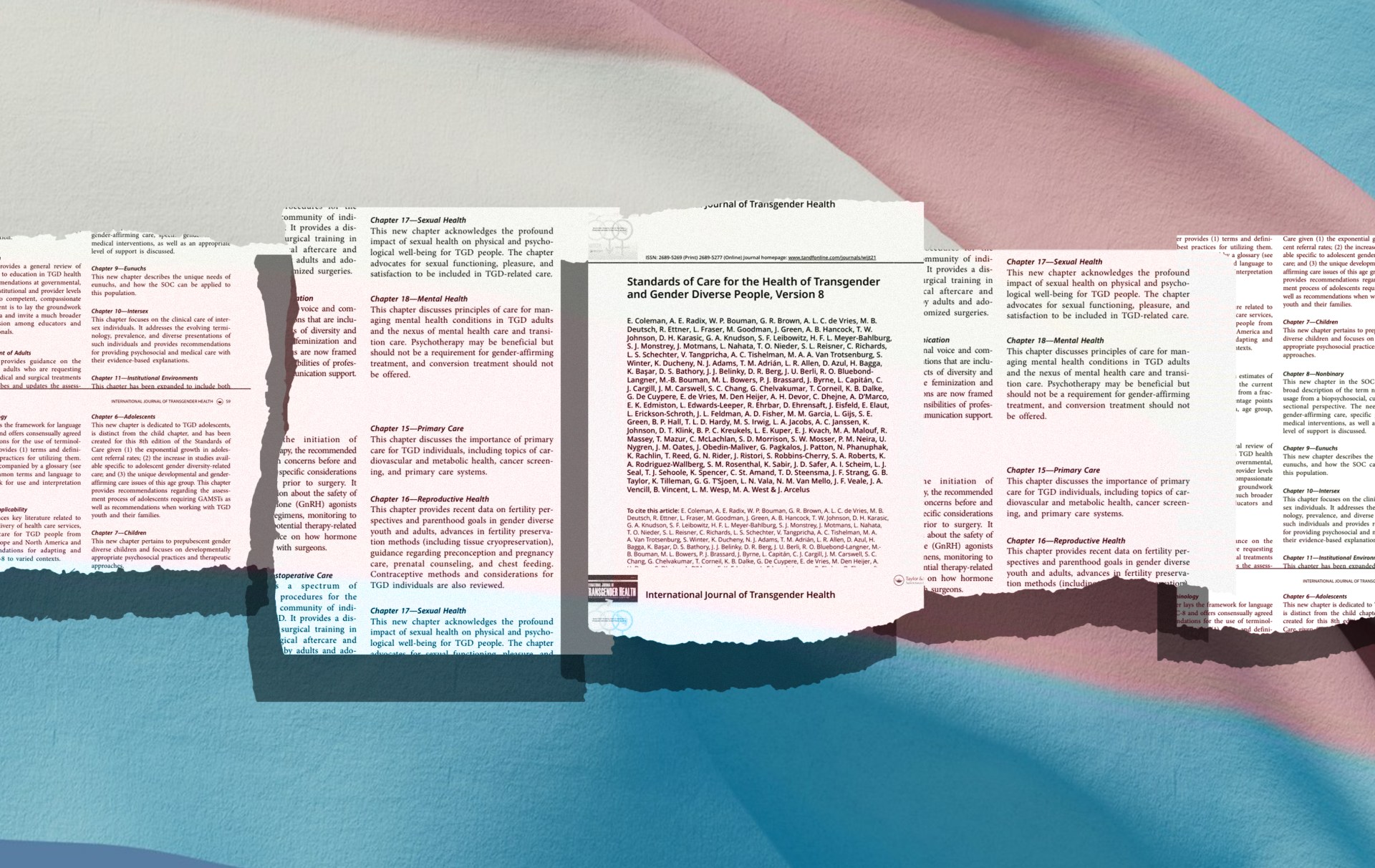
A growing number of medical malpractice lawsuits is raising serious questions about pediatric gender interventions in the U.S. Joseph Figliolia, a policy analyst at the Manhattan Institute, examines how the World Professional Association for Transgender Health’s Standards of Care—arguably the most influential and widely cited clinical practice guidelines—prioritize affirming all identity claims over rigorous psychiatric screening. “Many of these complaints fit a common pattern, often involving highly complex clinical cases that feature multiple psychiatric and developmental issues taking place within challenging family contexts,” he writes. “Exactly the kind of cases which would signal to any experienced clinician the need for caution and delayed decision making.”
In Other News
- In an interim docket decision, the Supreme Court ruled 6-3 in favor of pausing a New York state judge’s decision, which had blocked the state from using its existing congressional map in the 2026 midterms and potentially led Republicans to lose the only GOP-held seat representing New York City.
- The Justice Department informed a federal appeals court that it no longer intends to continue its legal cases defending Trump’s executive orders that targeted certain law firms with punitive measures, and asked for the cases to be dismissed.
- A leaked internal database from the Interior Department shows that the Trump administration is planning to revise or remove exhibits and signage at National Park locations, including references to slavery, civil rights history, and climate science.
- The Supreme Court sided with religious parents to reinstate an order barring California schools from “misleading parents about their children’s gender presentation” and requiring schools to follow parental instructions on names and pronouns.
- First lady Melania Trump presided over a United Nations Security Council meeting that, according to the White House, centered on “education’s role in advancing tolerance and world peace.”
- Canadian Prime Minister Mark Carney met with Indian Prime Minister Narendra Modi in New Delhi, where the pair of leaders announced plans to formalize a “comprehensive economic partnership,” intended to more than double bilateral trade between the two countries to $70 billion annually within five years.
- M23-linked rebels claimed responsibility for a drone attack on an airport in the Democratic Republic of Congo.
- Cuban authorities arrested 10 Panamanian nationals for allegedly making signs that promoted “subversive content.”
- Greek officials arrested a 36-year-old man on the island of Crete who they believe had been attempting to spy on a U.S. military base on the Greek island.
- A “blood moon” lunar eclipse is expected to be visible from parts of the world, including the U.S., this morning.
- Paramount Skydance CEO David Ellison said on a conference call Monday that, should the company’s acquisition of Warner Bros. Discovery go through, the Paramount+ and HBO Max streaming services would be merged into a single platform.
- Nvidia announced that it would invest $4 billion in two U.S.-based data center optic developers: $2 billion each in Lumentum Holdings Inc. and Coherent Corp.
- SpaceX’s Starlink announced a deal with the German-based and partially state-owned telecommunications firm, Deutsche Telekom, to launch a satellite-based mobile platform in 10 European countries by 2028.
- Apple unveiled its newest smartphone, the iPhone 17e, and an upgraded iPad Air, using the M4 chip.
Fox News: FBI Files Reveal New D.B. Cooper Suspect—Maine Pilot Once Investigated in Skyjacking Mystery
New York Times: He Is Charged With Murder. He Could Become a Sheriff.
The Guardian: Private Jet Prices Soar As Wealthy Scramble To Leave Dubai
Let Us Know
Have any thoughts or questions about today’s newsletter? Drop us a note in the comments or via email at tmd.questions@thedispatch.com. We read every submission, and your message could be featured in an upcoming “Behind the Scenes” segment.
Have any thoughts or questions about today’s newsletter? Become a member to unlock commenting privileges and access to a members-only email address. We read every submission, and answer questions in the following edition of TMD.