Fresh off a bruising defeat in the 2016 Republican presidential primary, Sen. Marco Rubio needed a new path forward. The former conservative rising star almost left the Senate but after mounting a successful reelection bid that fall, Rubio set about unpacking how Donald Trump had taken the reins of the GOP.
He did the logical thing for most once and future presidential hopefuls: He put together a “kitchen cabinet.” His office assembled a cadre of outside analysts, thinkers, and writers to help the senator understand the new political landscape, where the conservative governing agenda had gone wrong, and determine what could be done about it.
The group included the domestic policy director for Mitt Romney’s 2012 presidential campaign and a buzzy young author riding the high of a hit memoir. The former would go on to found a think tank now at the vanguard of the new right. The latter is now the vice president of the United States and, some would say, the presumptive heir to the MAGA movement.
J.D. Vance and Rubio, now secretary of state, are potential rivals for the Republican nomination in 2028 and among Trump’s closest advisers. Each has worked to reorient the GOP away from small-government conservatism and toward a more nationalist and populist economic agenda. The tie binding Vance and Rubio in that effort is American Compass, a relatively new think tank. Over the last decade, Oren Cass, the former Romney adviser and the man behind Compass, helped draw the intellectual roadmap that would ultimately lead both Vance and Rubio to the second Trump administration and that could very well form the policy foundation for the next Republican presidency.
A new ‘conservative economics.’
Cass founded American Compass in early 2020 to provide an institutional home for a new vision of “conservative economics.” In his telling, the economic dislocation and working-class anger that propelled Trump to the White House in 2016 were the products of 30 years of a “neoliberal consensus” that prioritized globalization, free trade, and free market “fundamentalism” over and against the interests of the average worker and to the detriment of family and community cohesion. The GOP should no longer rely on a 1980s policy playbook of tax cuts and low consumer prices. A new economic consensus was needed “that emphasizes the importance of family, community, and industry to the nation’s liberty and prosperity,” Cass wrote in 2020, and that would require government interventions anathema to many conservatives and libertarians.
There are a range of new right think tanks and advocacy groups seeking to sway the GOP during the Trump era and beyond. The Heritage Foundation, a historically influential institution for Republican administrations, has turned toward the new right in recent years. But the think tank has been embroiled in a leadership crisis over its association with antisemitic voices, prompting a wave of board and staff exits.
No policy group seems as influential as Compass for the two men currently best positioned to take up the party mantle in 2028. “If you could say that Heritage in 1980 was Ronald Reagan’s think tank, Compass in 2028 will be either Vance’s or Rubio’s or both, if they end up on the same ticket,” Henry Olsen, a senior fellow at the Ethics and Public Policy Center and a member of American Compass’s advisory board, told The Dispatch. “Compass is directly involved with both Vance and Rubio at a personal level, directly involved at a staff level, [and] have been for many years. Compass will be much closer to either of those people than Heritage was in 1980 to Ronald Reagan.”
Senior staff brain trust.
Perhaps most significantly for a future presidential campaign or administration, a constellation of current and former senior staff to Rubio and Vance have been closely involved with Compass. Michael Needham led Heritage Action, the lobbying arm of the Heritage Foundation, for the better part of a decade before leaving in 2018 to become Rubio’s right-hand man in the Senate, a role he’s reprised at the State Department. Needham was a founding board member of American Compass and also served as chairman of the think tank from July 2024 until he joined the administration last year. “American Compass has benefited enormously from his advice since we were just an idea on a piece of paper,” Cass said of Needham when he became chairman. The pair have known each other since their undergraduate days at Williams College in Massachusetts.
Chris Griswold, American Compass’s current policy director, worked as a senior adviser to Rubio when he chaired the Senate Small Business and Entrepreneurship Committee. In remarks introducing Rubio at a Compass gala last June, Griswold detailed the think tank’s close relationship with Rubio dating to the organization’s early days.
“When American Compass released a statement … that declared conservatives should give workers an organized seat at the table, Rubio was the only sitting elected official to sign it,” Griswold said. “When American Compass organized an inaugural lecture about political economy, Rubio was there to deliver it. When in due course, American Compass needed more staff, his office supplied it.” (Rubio’s office did not respond to The Dispatch’s request for comment.)
Caleb Orr spent seven years working for Rubio’s office and under his chairmanship of the small-business committee. Now an assistant secretary for economic, energy, and business affairs at the State Department, he attended multiple American Compass retreats during his time working in the Senate, and he authored a policy memo in Compass’s 2023 “Rebuilding American Capitalism” handbook. “In my professional life, there has been no better arena in which to test ambitious plans and no symposium livelier to propose new ideas than American Compass,” Orr said then.
Wells King now works on the White House Domestic Policy Council but was a senior policy adviser to Vance during his time in the Senate. Before that, King was the research director at American Compass. Jacob Reses is the vice president’s chief of staff, a role he also held in Vance’s Senate office and before Vance entered politics. Reses also worked for Needham at Heritage Action before leaving in 2018 to work for Vance. Last year, American Compass gave Reses one of three inaugural awards recognizing rising leaders.
The other two recipients were Orr and King.
Cass, who declined to be interviewed for this article, appears as a central figure in the personal political evolution of both men—Vance a former libertarian-minded author who once labeled Trump an opioid of the masses and praised Barack Obama’s character, Rubio a former Tea Party darling who once saw economic freedom, not government intervention, as the path to the American dream. As a former Romney policy whiz kid looking for answers after the campaign’s 2012 loss, Cass himself undertook a similar journey.
An influential book.
Both politicians’ relationships to the ideas and people behind Compass long predate the think tank’s formation in 2020—they reach back to Rubio’s kitchen cabinet and even earlier.
Cass has said he became acquainted with Vance around the publication of Hillbilly Elegy in 2016. And by the time Cass wrote the 2018 book The Once and Future Worker, which decried the U.S. economic policy emphasis on consumption growth over and against harmful impacts to workers, the pair had become friends. Vance wrote a ringing endorsement, calling the book “among the most important I’ve ever read.” The two began appearing together for speaking events and interviews discussing ideas for the future of the right.
When deciding to create Compass, Cass consulted closely with Vance, even discussing what kinds of donors would be willing to support the organization’s mission and work. A significant portion of the think tank’s funding has come from progressive-leaning philanthropies looking to amplify criticisms of free market capitalism; the Hewlett Foundation has given Compass more than $4.7 million since 2020.
The relationship with Cass seemed particularly significant to Vance, not just on an intellectual level but a religious one. When the future vice president wrote a personal account detailing his journey to becoming a Catholic in 2019, he highlighted two thinkers whose views on the corrosive effects of elite decadence and debauched consumption particularly influenced him.
One was St. Augustine’s fifth-century work The City of God. The other was Cass in The Once and Future Worker. “‘Yes,’ I found myself saying, ‘Oren’s preferred policies might reduce per-capita consumption. But that’s precisely the point: our society is more than the sum of its economic statistics. If people die sooner in the midst of historic levels of consumption, then perhaps our focus on consumption is misguided.’ And indeed it was this insight, more than any other, that ultimately led not just to Christianity, but to Catholicism,” Vance wrote. (The vice president’s office declined to comment.)
When Vance reached the Senate in 2023, he was the most junior among the handful of populist-leaning Republican senators who were also friendly with Compass. The 2024 vice presidential selection vaulted Vance to the national stage. Compass lauded the pick, saying it “signaled the Republican Party’s decisive break with Reagan-era orthodoxy and a commitment to building a movement that can last beyond the next four years.” Since becoming vice president, Vance has made clear that Compass is his brain trust of choice. “I’ve given up hope that we can persuade most of the think tank intellectuals of Washington, D.C., to change,” he told the crowd at the Compass gala last year. “We can’t change them. What we can do is replace them with all of you, and that’s exactly what we aim to do.”
American dream or decadence?
Rubio has been more reserved than Vance in discussing his relationship with Cass, but their history goes back further.
On January 8, 2014, Rubio delivered a policy address in the Capitol’s Lyndon B. Johnson room before a gathering organized by the American Enterprise Institute, a heavyweight free-market think tank, to mark the 50th anniversary of Johnson’s “war on poverty.” Rubio declared the war a policy failure and outlined an ambitious plan for restructuring federal antipoverty programs that the senator would later make a policy centerpiece of his 2016 presidential campaign.
“Its originator, by the way, is an economist by the name of Oren Cass who’s done a great job of developing the idea,” Rubio said when asked about the details of the plan, which Cass had outlined in an article for National Review three months earlier. The publicity around the proposal and Rubio’s public crediting elevated Cass in D.C. policy circles. He became a senior fellow at the Manhattan Institute in 2015, the same year that Politico Magazine included him on its top 50 list of most influential people in politics and policy.
By that point, Rubio had come to be identified with the so-called “reformicon” wing of conservatism. The movement focused on using market principles to reform tax policy, health care, and social spending, although it also favored family policies like boosting the child tax credit. After 2016, Rubio became more openly critical of free market policies, emphasizing the side effects of free trade and globalization and assailing corporate America for advancing shareholder interests over workers. Cass, a fellow traveler on the road away from the conservative establishment, was there again to help the senator along the journey.
The Rubio kitchen cabinet, the existence of which four sources familiar with the group confirmed to The Dispatch, featured several thinkers and writers who are now affiliated with Compass: Cass; Julius Krein, editor of the magazine American Affairs; and Olsen, the Ethics and Public Policy Center scholar. Krein would go on to serve on American Compass’s board of directors.
Throughout the first Trump administration, variations of the group met at least 10 times. Two sources confirmed Vance participated in the cabinet’s initial launch meeting, but it’s unclear how extensively he was involved in subsequent conversations. One source said Vance attended at least one additional gathering. A second source only recalled Vance being part of the first meeting. The Dispatch’s David Drucker reported in his 2021 book In Trump’s Shadow: The Battle for 2024 and the Future of the GOP, that Vance, Cass, and Olsen were all having conversations with Rubio’s office at the time, and Vance himself appeared to reference one such meeting in public remarks at a Compass event last year.
“It was first a very pure intellectual discussion about why has the post-Cold War consensus not worked, why are voters unhappy with it, why are they voting for Trump, and then moving onto, ‘what does our policy need to be going forward,’” a source who requested anonymity in order to speak freely said of the gatherings.
The fruits of the collaboration soon began emerging. In April 2018, Rubio published a manifesto in National Review declaring he would “help reinvigorate a national American conservatism that puts the strength of family, community, faith, and work first.” The essay was thin on specifics, but a clearer picture of the senator’s nascent policy pivot began to emerge. Cass’s book came out in November 2018 with a Rubio endorsement blurb alongside Vance’s. Rubio authored an essay in The Atlantic the next month arguing that the government has a responsibility to facilitate access to meaningful work, citing Cass and The Once and Future Worker.
Throughout 2019, Rubio produced a blitz of essays, reports, and op-eds advancing ideas for economic policy interventions and criticizing big business for failing to make long-term productive investments that benefit the country. “That work was informed by the totality of the conversations,” a source familiar with the cabinet said of the writings. The senator’s public arguments culminated in a speech he gave at Catholic University that November, outlining his case for “common good capitalism.” There were no Reagan citations; he quoted Sen. Robert F. Kennedy and a 19th-century papal encyclical on the dignity of work.
The address sparked a series of negative responses from conservative figures, but Cass came to the senator’s defense in National Review, and Rubio shared the Cass article online, calling it a “strong rebuttal” to his critics.
The conversations with Cass and the kitchen cabinet didn’t just produce fodder for magazine editors. When the COVID-19 pandemic hit, Rubio took the lead in shepherding a huge government relief effort in the form of the Paycheck Protection Program (PPP). “That’s a role that Compass helped us think through, not necessarily in real time during PPP, but from a year or two of conversations we’d been having with Oren,” Needham, Rubio’s chief of staff in the Senate, told Politico. The program suffered serious issues with fraud, but Rubio would later describe it as the “most impactful legislation I’ve ever passed.”
By summer 2023, Rubio was fully enrolled in his new school of thought. That June he sat down with Cass in the Russell Senate office building as part of a public forum on “Rebuilding American Capitalism.” In the same grand room where Bobby Kennedy had launched his presidential campaign in 1968, Rubio reflected on his political journey. The senator had just published a new book that he described as “the product of a five- or six-year process” of evolution in which American Compass provided “a lot of the intellectual work behind some of these ideas.”
The work’s title, Decades of Decadence: How Our Spoiled Elites Blew America’s Inheritance of Liberty, Security, and Prosperity, struck a different tone than his 2015 book, published during his presidential campaign: American Dreams: Restoring Economic Opportunity for Everyone. Rubio thanked Cass in the acknowledgements of both books.
Looking ahead to 2028.
While the Venn diagram of relationships among Rubio, Vance, Cass, and American Compass may be closer to a single circle, the secretary and the vice president’s positions within the new right coalition are not identical. “There are subtle differences between Vance and Rubio,” Matthew Continetti, a historian of the right and the conservative movement, told The Dispatch. “Vance is more open to progressive economic policy than Rubio, even though Rubio does share this American Compass critique that globalization was not good for the average American worker.”
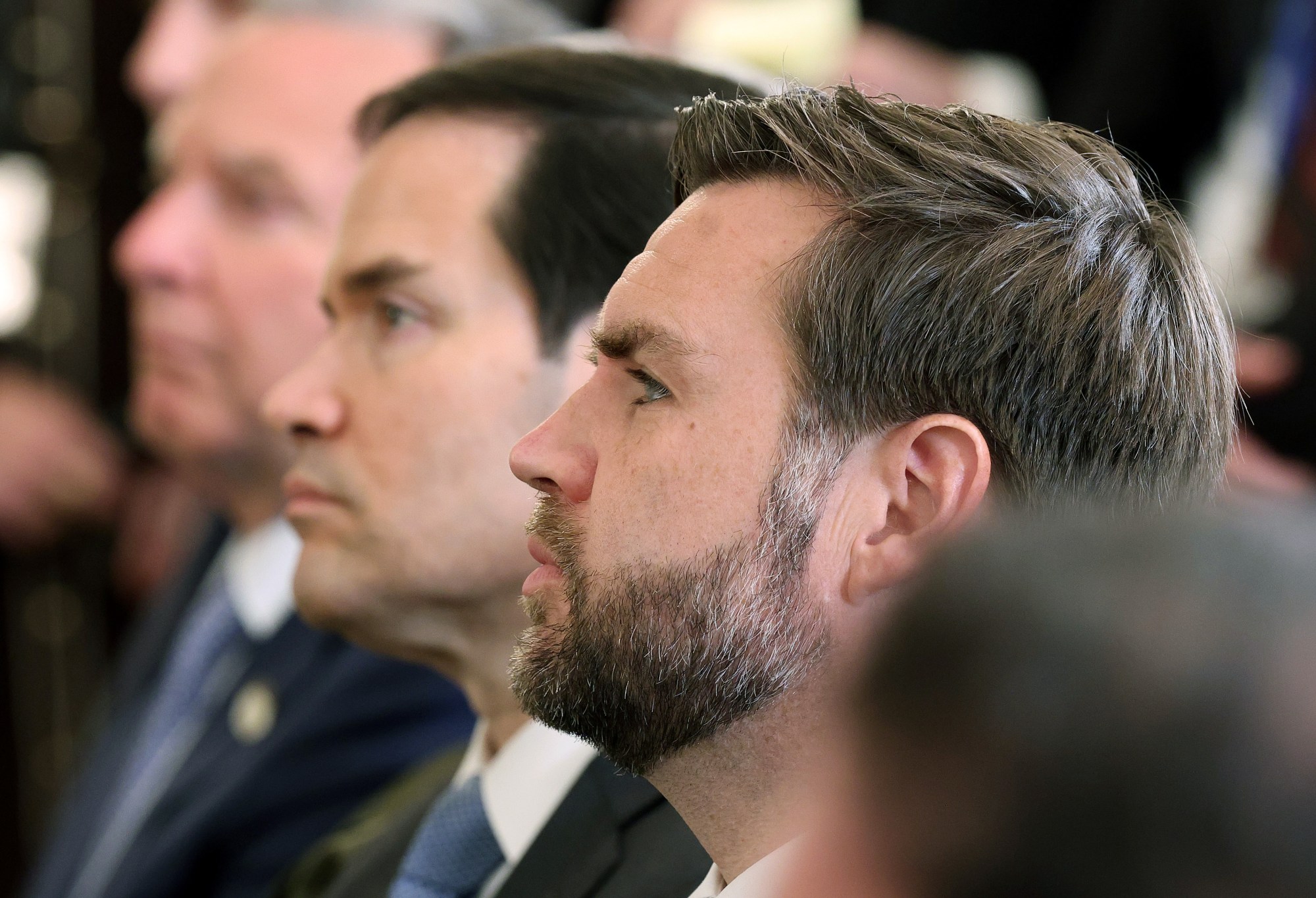
Continetti cited Vance’s ties to Silicon Valley investors, including tech mogul Peter Thiel, as well as his apparent support for a more hands-off approach toward artificial intelligence policy. There’s a clear tension between Vance’s techno-optimist allies and those on the new right concerned about social and economic disruptions from AI. “Vance has the Oren Cass side of things, but he’s also the person who gave the speech at the AI summit last year, and who’s defending basically letting AI develop with very few federal regulations and controls,” Continetti said.
Rubio lacks the affinity that Vance has for some postliberal thinkers as well as conspiracists like Tucker Carlson. “[Rubio] certainly shares some of the impulses of the national conservative right, but he also, at his core, still believes in the American project,” a source familiar with Rubio and Vance’s policy teams told The Dispatch. “He doesn’t fit the box as neatly as Vance does.”
There is also clear daylight between the pair on foreign policy, with Vance known for condemning American adventures abroad and “forever wars” and Rubio known for favoring greater global engagement and U.S. leadership in promoting human rights and democracy. To varying degrees, both men have had to conform their views to the president’s personalist foreign agenda, though the current conflict with Iran is a particularly jarring break for Vance, who has said previously that Trump’s best foreign policy is “not starting any wars.”
To many observers, the 2028 GOP nomination is the vice president’s to lose. But Rubio—the first secretary of state since Henry Kissinger to simultaneously serve as the White House national security adviser—has taken a central role in executing the administration’s foreign policy, elevating his standing with Trump. In recent days, the president has raised the question of whether Rubio or Vance would be best to succeed him, according to reporting from the Wall Street Journal. He mused last month that a combination ticket of Vance and Rubio “would be very hard to be beaten.”
A lot can happen between now and 2028. Rubio has publicly discounted running against Vance, and both have taken pains to tamp down any hint of a personal competition, with the vice president calling Rubio his “best friend” in the administration. But rivals or not, they espouse much of the same economic policy vision for the post-Trump Republican Party, a vision deeply intertwined with their relationships to Cass and American Compass.
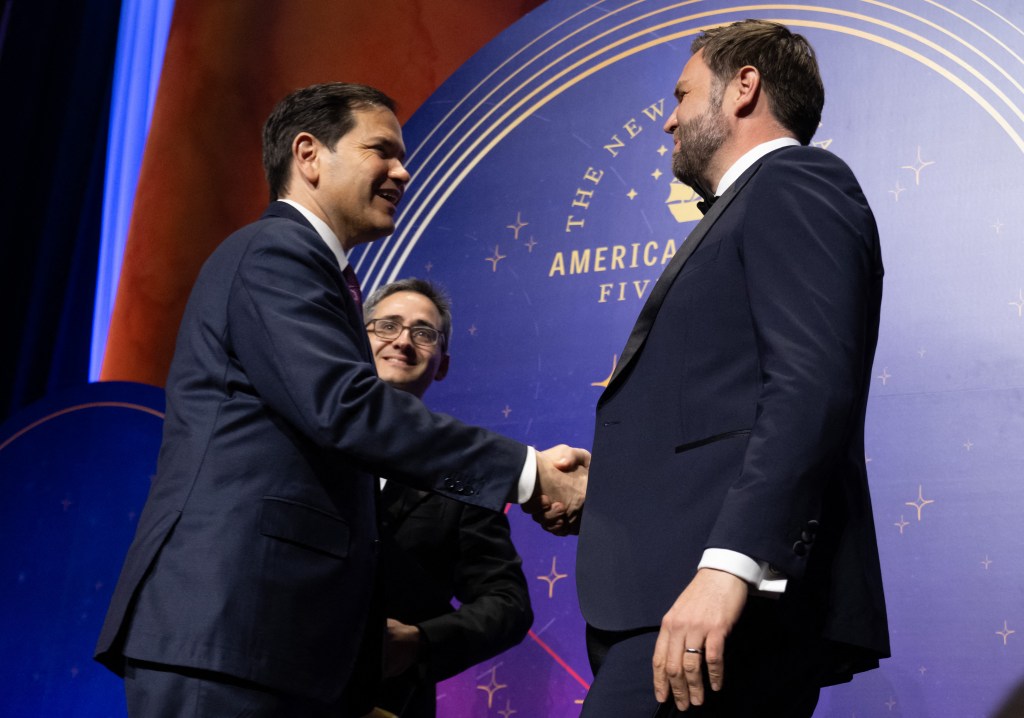
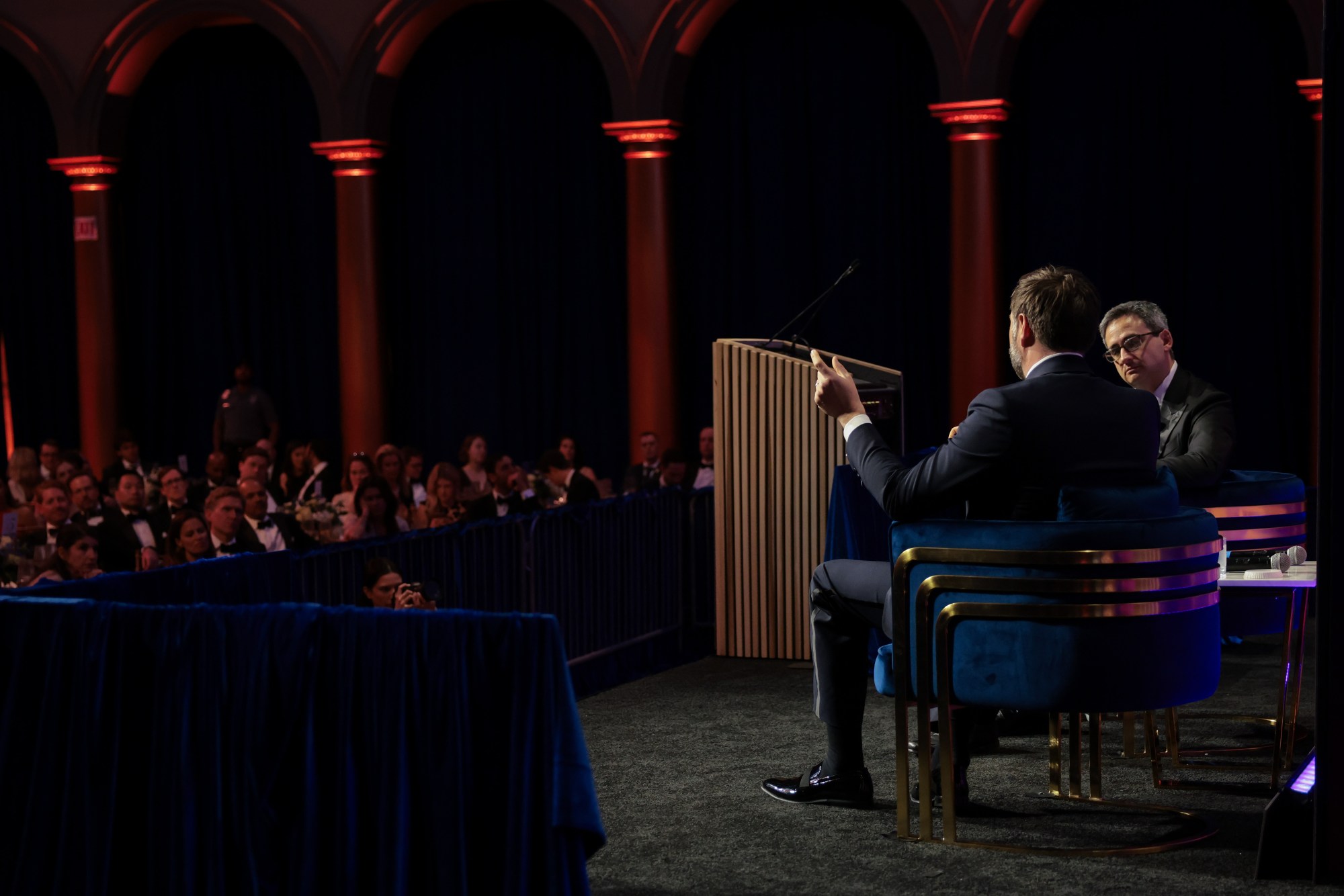
At the think tank’s “New World” gala last June, Cass interviewed Vance on stage, and the vice president took a trip down memory lane. “Maybe the first time I ever met Marco was in a conference room in his Senate office with Mike Needham and Oren Cass talking about some of the very things we’re talking about here tonight,” Vance said. “It’s kind of amazing to see it come full circle to where we are today.”