Editor’s Note: This is the third entry in a new Dispatch series entitled “Where I’m From.” Every Saturday, a writer will share a meditation on his or her hometown—a bustling metropolis, distant desert outpost, quiet suburb, or somewhere in between—and what makes it unique. The goal? Highlight voices—and good writing—from every corner of these United States.
Sometime in the Miocene, some 20 million years ago, the long edges of the North American and Pacific plates catch a chunk of north-south crust between them and begin to twist. The chunk turns clockwise, one degree for every 100,000 years, until it settles perpendicular, like a knife buried in the coast, and begins to rise.
The Valley! Like a cupped hand plunged beneath the water, coming up: a ring of hills and mountains and a bowl between them, quivering with sediment, seawater, and muck. The fingers rise and the palm sinks. Are still sinking, still rising. Rain washes trees and dirt and rocks down from the peaks, packs rocks and dirt on top of salt and fish and water, a basin packed 5 miles deep and diving. The mountains sit crosswise to every other range in California. When the water dries, pines grow on the slopes and juniper blossoms on the valley floor.
The Valley! By the late Pleistocene, Columbian mammoths, saber-toothed cats, Western camels, ancient horses, dire wolves, immense ground sloths, short-faced bears, and teratorns. At the end of the last ice age, wildfires burn woodlands into scrub and chaparral but leave the oaks behind. The big cats pass away. In what is now Nevada, a band of Uto-Aztecans break off from their friends and travel west, settling along the tributaries and springs inside the basin. They call themselves the Tongva, or the Achooykomenga, which doubles as a name for their new home, the ones who face the sun. The Spanish who replace them come in through the southern pass, Franciscan priests and soldiers. They call the region El Valle de Santa Catalina de Bononia de los Encinos, the Valley of Saint Catherine of the Oaks. But then, in honor of the mission that they’ve built to put their hosts to work, and named after a saint who died ten thousand miles away, a second name: El Valle de San Fernando, the San Fernando Valley. Smallpox, flu, and baptism by water, iron, fire: by 1826, no Tongva left, but 60,000 cattle on the valley floor.
The Valley! The Spanish cede it to the Mexicans. The Mexicans cede all of California to the States. Droughts and floods and wildfires turn ranchos into wheat farms. The Southern Pacific railroad arrives. In 1913, the aqueduct brings water, turns wheat fields into orange groves. The gold rush, the railroad, the discovery of oil. The population doubles, doubles, doubles again. Tract houses, ranch houses. Lockheed—pre-Martin days—staples planes together in Burbank and ships them straight to the Pacific. Tract houses, ranch houses. Car exhaust and ozone get trapped inside the sunken ring and circle; smog rots the oranges from the inside, kills the Ponderosa Pines, and leaves the oaks behind. Suburban homes replace them, mission-style, with Spanish tile, swimming pool, two car-garage. The river fills with concrete. Strip malls, gas stations, asphalt, freeways, boulevards, Persians, Armenians, Protestants and Jews, marginal Americanos on streets with Catholic names. Screenwriters, TV writers, grips, gear-heads, and skaters, the Galleria and its Valley Girls; Tom Petty’s vampires on the street.
The Valley! An earthquake in 1971 collapses a section of the freeway. An earthquake in 1994 knocks it down again. Fires whenever the wind comes through the pass. By the new millennium, nearly 2 million people live inside the basin. It is a city larger than Phoenix, Philadelphia, or San Antonio. Across the Santa Monicas, a city but not The City. Here, not a valley but The Valley: The 101, the 405, the 110, 118, and 2. The Valley is, among other things, responsible for casting, filming, and producing some 90 percent of all American professional pornography.
I have always understood Los Angeles to be the dream of the 20th century made flesh: America in oil and cars and luxury, sunshine, defense contractors, suburbs between skyscrapers, sprawl, the movies. Richard Rodriguez writes that the attention LA lavishes on a single face is as generous a metaphor as I can find for the love of God, although he didn’t stay. The Valley is a part of Los Angeles. Its schools are LAUSD schools, its mayor is the Los Angeles mayor, its streets are filled with LAPD Crown Victorias, black and white, from central casting; it was home to the first In N’ Out. The last effort to secede, in the fall of 2002, failed at the ballot box. I was 12 years old. I was born in the Valley and lived there my entire life. It was not until then, when the beginnings of puberty and junior high school put me in contact with kids who lived beyond the hills, that I learned how the children of Santa Monica (independently incorporated in 1886) and Beverly Hills (1914) and Malibu (1991) did not consider me part of the city—their city—at all. I did not live in Los Angeles. I lived in the Valley, so close to nowhere, so far from the angels and their dream. The evidence was on TV: the groaning, the moaning, the eye-rolling in every kind of program about going to the Valley, shot on sound stages at the end of Ventura Boulevard but set beyond the hills.
Ventura Boulevard: East or west oriented my whole life. Turn right, go 40 minutes straight to school. Turn left, go 20 minutes straight to grandpa’s, the dentist, the mall. I was 13 years old before I first attempted to walk Ventura from Encino to Universal Studios and it felt endless, and impossible. On foot, the Valley is hostile and infinite, very flat and very hot, hotter than the city on hot days, but cool at night. I did not understand humidity, the sickly way that the air remains damp and smothering well into the nighttime in the rest of the United States, until I was an adult and living elsewhere. I did not see snow in person until my first winter at a Midwestern college.
I lived in the west Valley and went to school in the east. My best friend lived in the east Valley and went to school in the west; we traded places every day in heavy traffic on the 101. Until I could drive, I had a carpool. One morning, a wrong turn made us loop through some suburban streets we didn’t ordinarily pass, and my carpool pal, gap-toothed and 12 years old, pointed, suddenly, to the middle house of a cul-de-sac: They shoot so much porn there, he said. The best movie about the Valley, Boogie Nights, is about the industry: Philip Seymour Hoffman begging Mark Wahlberg to love him on streets paved over mammoth bones.
For many years in the east Valley, just north of Ventura, there was a dusty Mediterranean bookshop called Iliad Books and next door was an adult VHS rental outfit: Odyssey Videos. Further north, I passed an old dilapidated movie theater on a street dominated by strip malls and motor oil shops. It had been converted into a little church, Iglesia El Camino or Iglesia Cristina or La Luz del Mundo, something like that. Sunday School announcements on the old marquee; service times where the posters used to go. I thought here, of all places, is where hundreds of people go when they want to talk to God.
There are three phases to adolescence in the Valley: Your parents drive you to a friend’s house. Your parents drive you to a mall. You drive your own car, saying that you are going to a mall or to a friend’s house, but really you are going anywhere you feel like, you’ve got your own car now. My first girlfriend—lightly, in quotation marks—met me at the Westfield Promenade but made me wait outside the Coach store while she shopped. She was worried I’d embarrass her before her cooler people, the kind who worked Coach retail on the second floor of a west Valley mall. Her father was a divorce attorney. I knew a girl whose father was divorced. He lived in the middle Valley, near one of the schools named after shitty presidents. He did standup tours on cruise ships, and his daughter threw parties when he was away: I had my first cigarette, my first beer, my first joint in one night, pretending I had had them all before. For years, we sent her to the parking lot behind the Galleria to buy dime bags from somebody-or-another’s-brother’s-friend, the weed man, because he gave her discounts he never gave to us. I knew the son of a struggling TV writer. When dad finally hit it big, he bought himself a thousand pairs of sneakers.
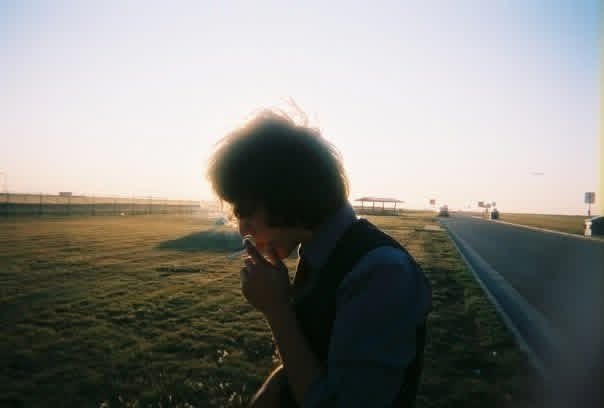
I kept smoking: on corners, outside coffee shops, behind the Calabasas Commons, near the baseball field of Beeman Park, a square patch of brown grass hidden behind Studio City craftsmens. Once, in the late afternoon, a woman walked by with a young child and coughed in my direction, gesturing to her kid. I gestured to the sky: look, just walking here, you’re inhaling two packs a day. Once, I threw a cigarette out of my car window at the intersection of Van Nuys and Chandler Boulevard. Another driver shouted: I don’t put my cigarettes out in your living room. I said you’re right. I shouldn’t desecrate the asphalt left here by the Tongva. When I was very young, I took a long walk with my father from our home through the hilly southwest corner of the Valley to a school that wouldn’t let me in. I don’t remember the route, or if I’d been rejected from the school yet, but I remember stopping for a long time under an enormous oak.
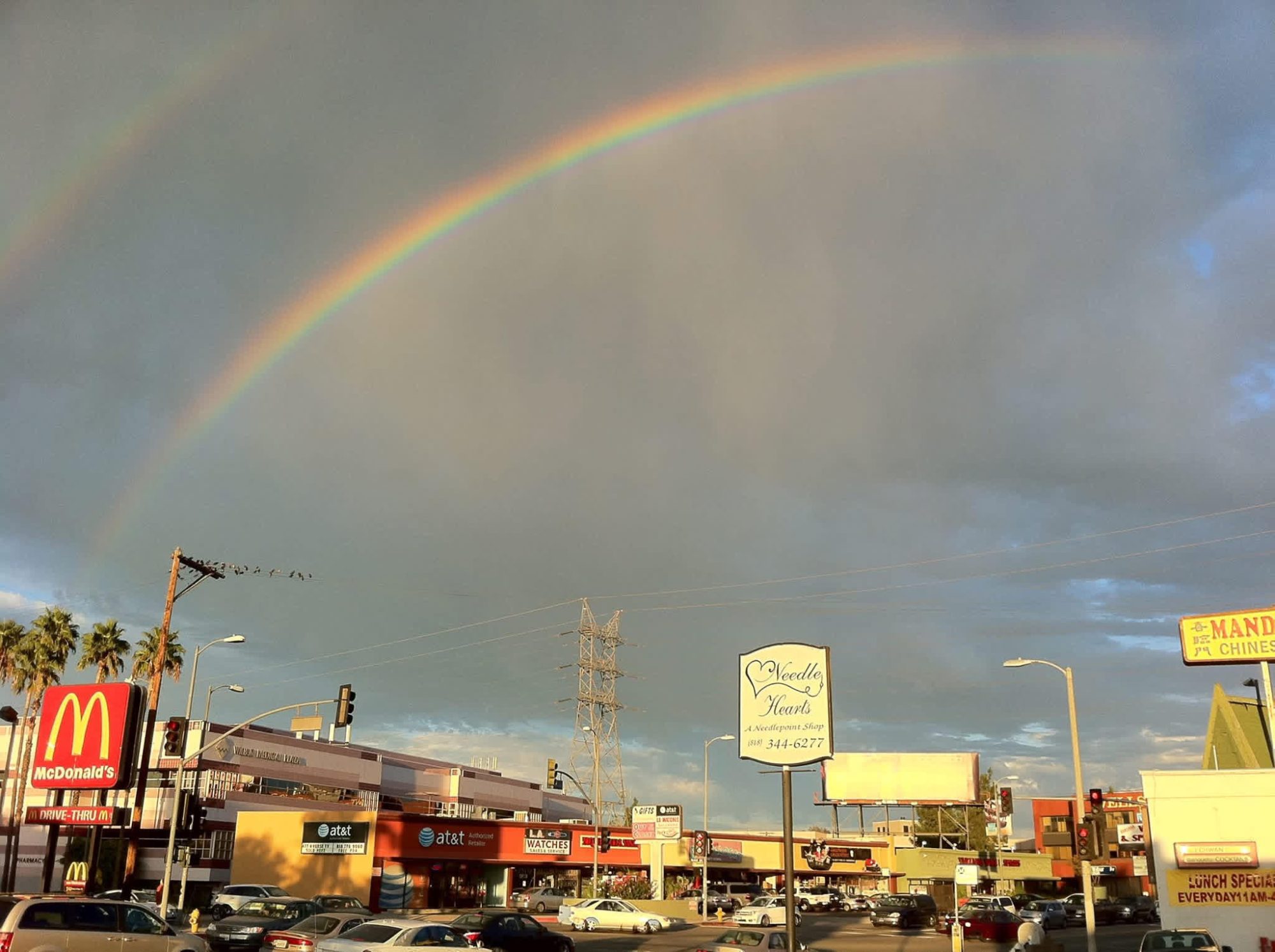
Everything in beige: stucco, strip malls, sidewalks, hills in summer. Taco Bell, Denny’s, the occasional El Torito. Mattress stores going out of business—just read the sign—for 20 years. The particular ugliness of Valley car dealerships with colored flags on strings. Jacaranda trees drop purple on the sidewalks, orange sodium streetlights. Parking lots bigger than the buildings they serve, autoshops, laundromats, nondescript buildings hosting attorneys and cardiologists and pornographic talent agencies. Tanning salons, hookah bars, Zankou Chicken, the Corbin Bowl. Casa Vega: what passes for a classic restaurant here. The Ultrazone, the first laser tag outfit in the city.
I went to a parochial high school, squeezed between the 101 and the sewage channel that we still called the LA River. School was closed just once: torrential rains had overflowed the concrete barriers and flooded into the parking lot. Years after I left, the man who ran my elementary school collected his tuition checks in May and closed up shop in August, took the money, and ran. The last I heard he was managing a casino restaurant out in Vegas. The school is still there: now a special charter for the disabled.
The Valley is just there. It’s in the Valley, ugh. The Valley, ugh. The Valley! Ugh, ugh, ugh.
I drove to Panorama City in the far north of the Valley. I drove past Toluca Lake to Disney in the east. I let a girl drive me down Mulholland Drive using her knee. I parked in the big dark lot behind a Rite Aid on Laurel Canyon. The girls stole wine by hiding under gaudy faux-fur coats in 95 degrees but Daniel was the best: He could fit two full bottles in each pant leg and walk out like it was nothing. I knew every diner: Mel’s, Bob’s, Twain’s, Du-Par’s. (Sub-pars, am I right?) For years after I left the Valley I offered anybody who wanted to come back with me a tour of every corned beef hash and eggs on offer. I made good grades until I didn’t. I knew, for several years, a drug dealer who went by Lev, spoke ripoff white boy AAVE, had OD’d twice, been resuscitated from a car crash on a hill beside the 405, and loved to say you want some muscle relaxants with this? Why? You double your money. His real name was David Levin. He was a Jew from the Valley and grew up a few freeway exits east of me.
In the very center of the east-west drag, at the southmost point before the Santa Monica Mountains, a residential street terminated in a cul-de-sac, and if you walked a hundred feet further on, you came upon some wooden stairs leading into a little forest. The wilderness is still inside Los Angeles, even in the Valley; outsiders only see the freeway, but there are pockets of dirt and stream and tree if you know where to stop the car. For many years I thought it would be a nice place to take somebody, but I never got the chance.
Until I was 3 years old, my family lived in a little house in Sherman Oaks. I learned to swim from a retired cop across the street named Mike; he’d shot a man during a robbery and was never the same. We moved to Encino, to a ranch house on a street of ranches, squats, and bungalows. Behind our yard was a hill of underbrush and poison oak. A small farm on the hill had peacocks who landed on our lawn. We had two cats, a mother and her son, who liked to sneak under the fence and get lost there for a while. In the late 1990s, coyotes pushed out by the Valley boom began to stalk back to the basin floor, and both my cats were eaten. We only had inside cats after that.
By the time I moved away, the farm and brush were gone, replaced by a mansion that sat on every inch of its allotment, looming on the hill above us. We were, by then, the only one-story house left on the street. We had an orange tree and a lemon tree and the ashes of my cats were buried under a clay statue of St. Francis of Assisi. My parents moved on years ago. The house is still there, but it is a very pricey, very small private rehabilitation center now. The phone number is the same.
F—k, thank God, the Valley, a friend of mine said when we were 17 and hauled ass out of a party in the Palisades, through the canyons, back over the hill, several bottles of liquor and half a birthday cake we’d stolen from the hosts in the backseat. I thought we’d crash, like, karma. But then I remembered there’s no God here. In the hot flat shimmering-air stink of afternoons and weekends, in the time of cellphones but not smart phones, we picked up friends and didn’t know what to do. We called another friend and picked them up and didn’t know what to do. We picked up another friend, and then another, driving in circles in a parking lot blasting “Fortunate Son,” last chopper out of Saigon Plaza Strip Mall, full car now, don’t know what to do. A friend got his own apartment in the city, downtown, on Fifth and Spring Street. But that’s so far away, an hour and a half in evening traffic. Smoke cigarettes, hit In N’ Out, go home.
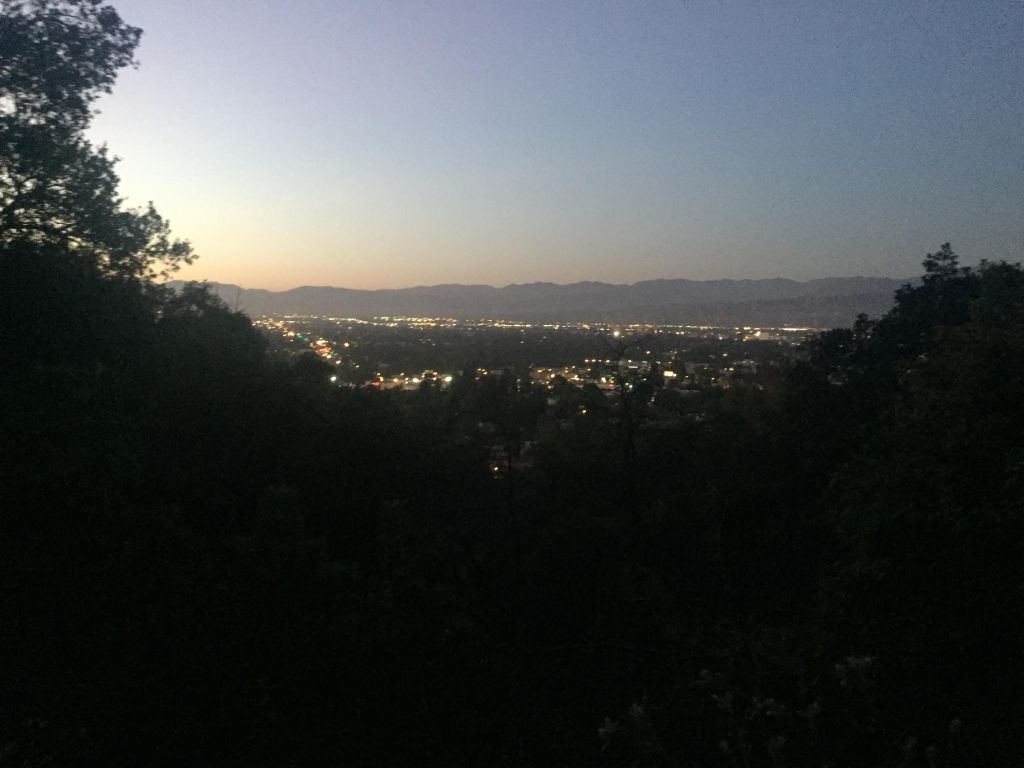
I believed for a long time that I knew a secret about the San Fernando Valley: that it was the true heart of Los Angeles, the shape of the city when the dreamers woke up. Los Angeles with its makeup off, Los Angeles without the halo light, postproduction, this movie has been formatted to fit your screen. But other than the lingering particulars of the southern California sun, the design of stucco office blocks and smog, there is little to distinguish the Valley from New Jersey, from Skokie, from some teenage wasteland in Ohio, Arizona, Florida. The secret of the Valley is only that it sits precisely where the world left it, a strange pinched bowl of rock laid into the coast. Newark needs a special train to reach Manhattan. The hinterlands of Cleveland are invisible to the movies. But the Valley sits upon the dreamers’ pillow. The freeway passes through it; you can see the flat illuminated endless spread at night from a perch up on Mulholland Drive. Try as they might, the angels must fly through. The dream of Los Angeles is in the city: Brentwood, Hollywood, Sunset Boulevard. Even Compton, South Central, Inglewood, and East LA have their mythology, their place within the firmament of the terminating continental dream. The Valley is neither glamorous nor gritty, insufficiently real and unreal all at once, just gross and strange and beautiful in stucco and pornography. Cars crawling between exit ramps, 2 million drivers in a sea of red taillights and every one of them wants dignity. Here? In this place? At the intersection of Coldwater and Sepulveda, at the base of the Cahuenga Pass, in the maw of Kagel Canyon? America dreams about itself in Hollywood and forgets itself in the Dakotas. The Valley is not a dignified place. The Valley is a part of Los Angeles. The Valley is just there. It’s in the Valley, ugh. The Valley, ugh. The Valley! Ugh, ugh, ugh.
A memory from elsewhere: three months after leaving Los Angeles for good, in a lecture hall, in a gothic Midwest college. “Postwar American Literature, 1945-1990,” the first elective of my freshman year. I watched snow begin to flutter down for the first time through the window. Our professor was explaining the significance of Tom Wolfe’s kandy-kolored tangerine-flake streamline baby. This was New Journalism, she said. This was real, what the old newspapers didn’t do: meeting real people, going to those out-of-the-way places far from Washington, D.C., and New York City, seeing what they found among the freaks building their custom cars in mom’s garage. They discovered the real United States, she said. But wait, another student interrupted from across the room, doesn’t this story take place in like, Los Angeles? Oh sure, professor said. But it’s the Valley.