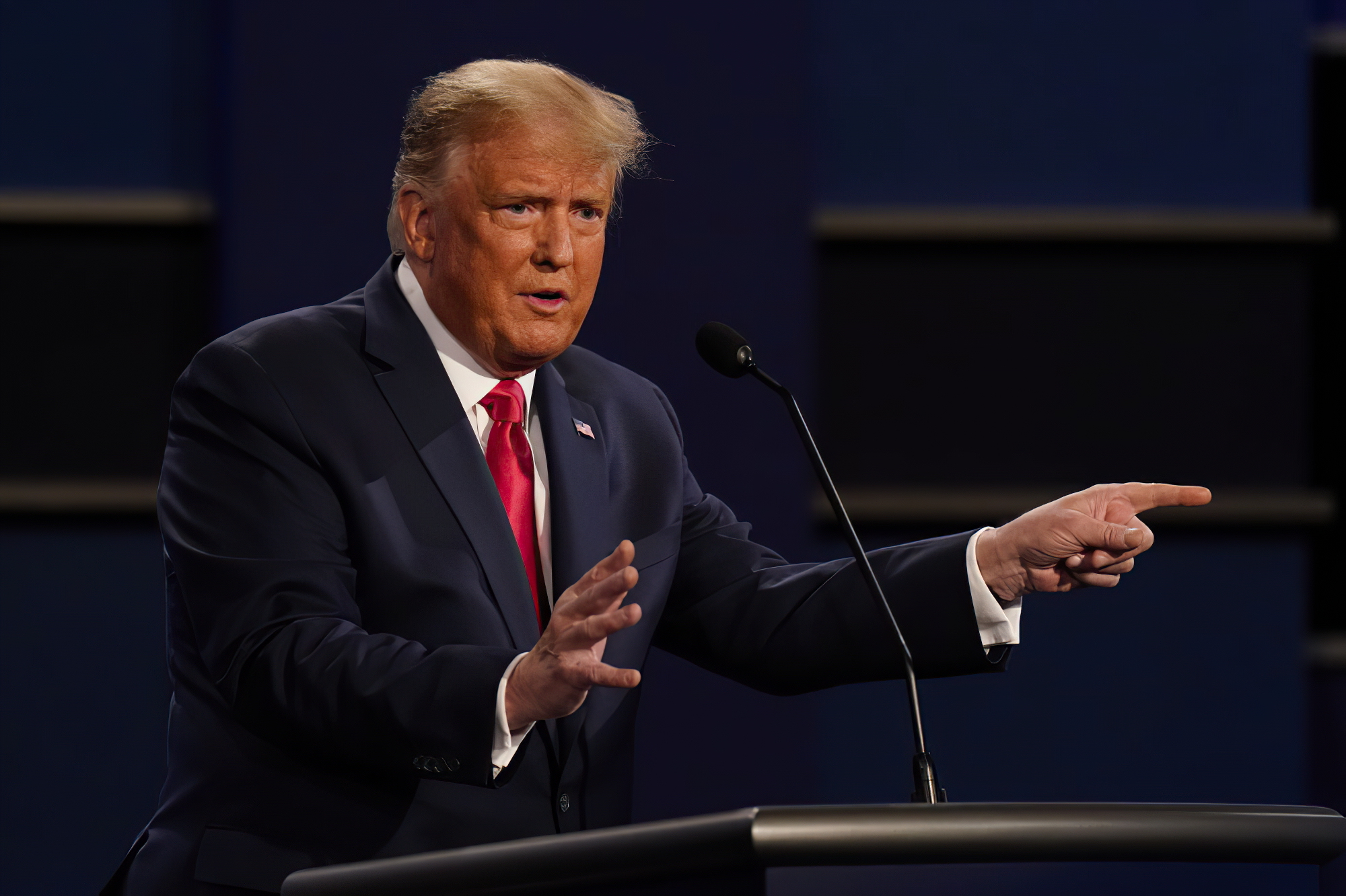
President Trump announced on Truth Social that due to productive talks with Iran, he would delay, by five days, his threat of hitting Iran’s power grid. In retaliation, Iran had threatened to completely close the Strait of Hormuz, target power plants in the region, and mine maritime routes across the Gulf. Iran has been letting Indian, Pakistani, Turkish, and Chinese ships pass through the strait, but no ships of the United States or its allies.
After Trump’s announcement that talks with Iran were happening, Brent crude oil dropped below $100 a barrel after trading above $114. Rising fuel prices are hitting motorists hard, especially in the South and Southwest of the United States. Jet fuel has topped $200 a barrel, raising airline ticket prices, and diesel is averaging above $5 a gallon, hurting profits in the trucking industry and potentially raising prices on everything from food to other commodities trucked to retail outlets. According to Bloomberg, container shipping lines are adding fuel surcharges, and sharp price swings in shipping fuel markets are prompting some marine fuel buyers to hold off on large orders.
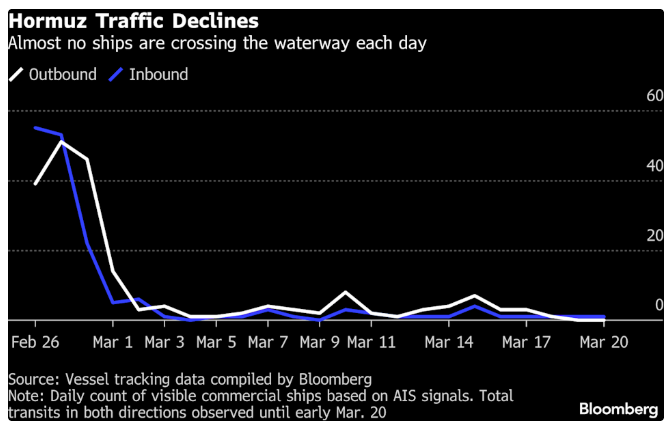
The war has damaged major energy facilities in the Gulf, and Iran has nearly halted shipping through the Strait of Hormuz, which handles about 20% of global oil and liquefied natural gas flows. Goldman Sachs has estimated that about 17 million barrels of oil per day flowing through the Persian Gulf are being affected by the conflict. The reopening of Hormuz should lead to a sharp drop in global oil prices, but Middle Eastern producers will need time to restart oilfields forced offline by the conflict. However, refineries, export terminals, and other infrastructure damaged in the attacks will take far longer to repair.
According to Reuters, U.S. oil prices are trading at a huge divergence from Brent oil due to the abundance of shale oil resources in the United States and U.S. supply chains from wellhead to refinery remaining mostly intact. The Fort-Worth Star Telegram reports that takeaway capacity to move natural gas out of the Permian Basin, however, is limiting oil growth in the region in response to the large increase in oil prices. While the market wants more oil, restrictions on moving associated natural gas are limiting the ability to move oil from the Permian Basin. Until new pipelines add a combined 4.7 billion cubic feet a day of new pipeline capacity by the end of the year, producers will not be able to move much more associated gas and oil from the basin. The meeting Trump administration officials held with oil executives highlighted that permitting reform remained an issue inhibiting supply-side increases.
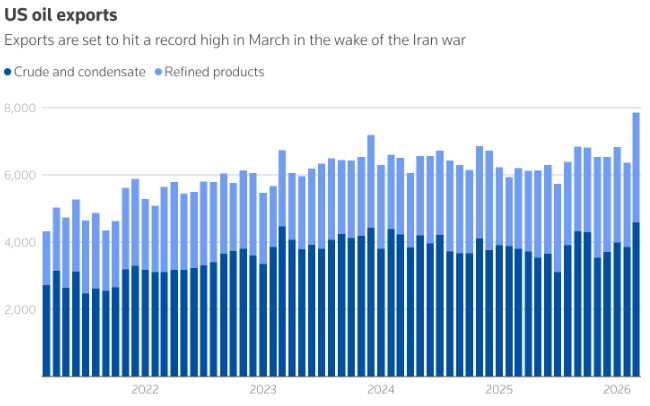
Even with the United States being the world’s number one oil producer, U.S. gasoline prices have increased by more than 30% this month and could reach $4 a gallon, averaging $3.96 on March 23, according to AAA. Asia and Europe are turning to alternative sources for oil, refined fuels, and natural gas, drawing more U.S. fuels into the international market and tightening supplies at home. Offshore Engineer reports that U.S. oil exports are expected to reach a record 4.6 million barrels per day in March, and exports of refined products, mainly gasoline and diesel, are expected to reach a high of about 3.2 million barrels per day.
Analysis
U.S. envoys Steve Witkoff and Jared Kushner have been in touch with the speaker of the Iranian parliament, Mohammad Bagher Ghalibaf, according to Axios, and hope to reach a lasting arrangement that allows oil and gas to transit the Strait of Hormuz. The Trump administration has instituted a number of measures, from releasing oil from the Strategic Petroleum Reserve to allowing Russian oil at sea to be sold, but these have had a limited effect on oil prices. The reopening of Hormuz should result in a sharp drop in global oil prices. However, the war’s impact will still be felt, as Middle Eastern producers will need some time to restart oilfields forced offline by the conflict, and refineries, export terminals, and other infrastructure damaged in the attacks will likely take far longer to repair.
For inquiries, please contact [email protected].