Taking NATO hostage.
“We don’t need people that join Wars after we’ve already won!” That’s how the president reacted to an offer of help eight days ago, after the conflict had begun, when the United Kingdom considered sending two aircraft carriers to the Middle East.
Never mind that many European leaders consider the war illegal under international law, that their enemy in Moscow is the prime beneficiary of America’s action, and that the White House did nothing to try to build a Western consensus in favor of attacking before the bombs fell. In sneering at the U.K.’s belated gesture of support, Trump behaved the way he always behaves toward European allies—with needless imperious arrogance.
Fast-forward to Saturday, when the state of his “already won” war brought him to Truth Social to plead for help in ending Iran’s hostage-taking. “Hopefully China, France, Japan, South Korea, the UK, and others, that are affected by this artificial constraint, will send Ships to the area so that the Hormuz Strait will no longer be a threat by a Nation that has been totally decapitated,” he declared.
Act unilaterally and aggressively to upend the economies of countries all over the world and then demand that those countries work with the White House to ease the crisis the president created: That was the administration’s playbook for its “Liberation Day” tariffs last year and it’s the playbook for ending the Hormuz standoff now.
This impromptu effort to bootstrap an after-the-fact coalition of the willing isn’t going well so far. Per Politico, Japan and South Korea are noncommittal while the U.K. and France are waiting for things to cool off (although Britain might send minesweeper drones). And China—really, what is there to say?
China and Iran are allies. The Chinese purchase 90 percent of Iran’s oil and tankers transporting crude to their country have been allowed to pass through Hormuz. Why on earth would they join Trump’s intervention? “That’s his war, not our war,” one surprised Chinese foreign policy expert said of the president to Bloomberg.
Trump demanding China’s help in reopening the strait because it gets oil from the Gulf would be like China demanding the U.S. Navy’s help in subduing Taiwan because of all the microchip business we do on that island. You can’t threaten an enemy’s supply of some critical resource and then expect its military cooperation in subjugating the supplier.
I mean, you can. But it’s stupid.
The president isn’t going to conscript China into the Iran conflict. But he might conscript some European countries into it—by taking NATO hostage, Axios reported:
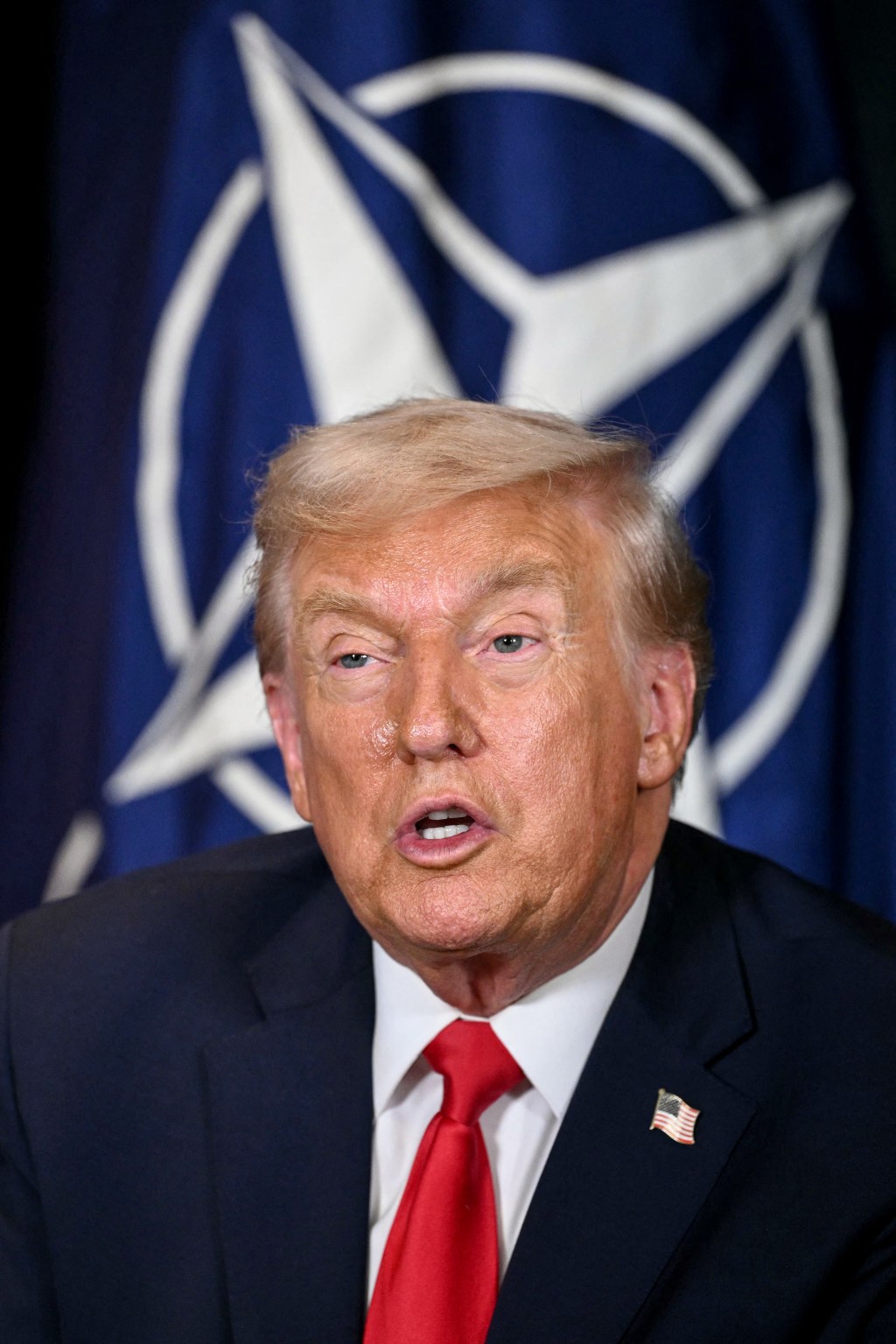
Trump called on NATO allies to do “whatever it takes” to help the U.S. “We have a thing called NATO,” Trump said. “We didn’t have to help them with Ukraine…. But we helped them. Now we’ll see if they help us,” he said.
“Because I’ve long said that we’ll be there for them but they won’t be there for us. And I’m not sure that they’d be there,” Trump added.
“If there’s no response or if it’s a negative response, I think it will be very bad for the future of NATO.”
“Whether we get support or not, I can say this, and I said it to them: We will remember,” he told reporters later on Air Force One, in case the threat wasn’t clear.
European diplomats were appropriately diplomatic in responding, mindful as ever not to poke a rabid bear that they’re momentarily forced to share an alliance with. But the foreign minister of Luxembourg couldn’t resist calling a spade a spade: “Blackmail is not what I wish for,” he said drily of Trump’s ultimatum.
Blackmail.
This isn’t the first time this year that Trump has resorted to blackmail in trying to get something he wants from longtime European partners.
In January he vowed to impose 10 percent tariffs on eight NATO members if they didn’t support America’s bid to acquire Greenland, before eventually backing off. That episode established that the president doesn’t view longtime European allies meaningfully differently from how he views other nations. If you have something that he wants, he’ll extort you—even if you’ve been a reliable U.S. partner for decades. NATO membership doesn’t make you special, not even in being spared from Putin-esque territorial grabs by the White House.
His threat this weekend about NATO and Hormuz can be understood as a sequel to that. If NATO membership is special, Trump seems to be saying, then members have a special obligation to comply when the alliance’s most powerful nation demands their help militarily—even if the conflict it needs help with was initiated by that very powerful nation.
To put that another way, Trump’s blackmail attempt is a bid to turn NATO from a defensive into an offensive alliance. “I want to remind that none of us has been directly attacked,” Luxembourg’s foreign minister complained in his comments on the war. “There are no grounds for now to invoke Article 5.” That’s correct. This isn’t the war in Afghanistan, where the U.S. enlisted NATO help to defend itself after a massive terrorist attack by jihadists based in that country. Iran is a preventive war in which the U.S. moved first to neutralize a prospective attack that might someday have come.
“But Iran has been waging war against America through irregular channels off and on for decades,” you might say. True, but Russia has done the same with European countries. If Poland launched a preventive air raid on the Kremlin to kill Vladimir Putin and his advisers so that they can’t invade Eastern Europe someday, I promise you that Donald Trump would consider that an offensive, not defensive, operation that imposed no Article 5 obligation on him to join the fight.
Why does the president even want European ships in the strait? What would they achieve?
Yesterday the New York Times reported that a “frustrated” Trump pressed Joint Chiefs Chairman Gen. Dan Caine last week about why the strait remained closed. “Even one Iranian soldier or militia member zipping across the narrow neck of the strait in a speedboat could fire a mobile missile right into a slow-moving supertanker, or plant a limpet mine on its hull,” Caine explained to him, presumably not for the first time given how foreseeable the crisis was before the war. If the U.S. Navy can’t repel that sort of threat on its own or muster the number of ships needed to escort tankers through the strait in meaningful volume, why would a small and no-doubt token naval force from Europe be a gamechanger?
It wouldn’t. “What does Trump expect from a handful of European frigates?” Germany’s mystified defense minister wondered rhetorically.
In all probability the coalition of the not-very-willing would fail to secure Hormuz and then the president would try to extort them again into deepening their involvement in the conflict. It may be that the only way to secure the strait is to have troops occupy the coastline around it; on what grounds would members refuse if Trump said to them, “We need your infantry to help us hold the coast—and if we don’t get it, NATO is dead”?
It’s quintessentially Trumpy to turn America’s obligations into points of leverage against the parties to which we’re obliged. Threatening to tear up trade deals unless our partners in those deals obey the president’s wishes in other matters is one example; vowing to withhold appropriated federal funding from universities unless they meet his ideological demands is another. If the Trump administration owes you something under the law or under a contract, you actually owe it: Whether it keeps up its end of the bargain will depend on how willing you are to comply with new demands it might eventually make of you.
Having a legal relationship with Trump’s government makes it easy for him to take you hostage. Right, Anthropic?
That’s precisely what’s happened to NATO. The NATO treaty, a duly enacted federal law, obliges the United States to defend members in the event that they’re attacked. Trump has now turned that obligation into a lever of extortion: Whether he upholds his obligation will depend on whether European navies send vessels to assist in a conflict unrelated to the alliance’s common purpose. And probably not for any real tactical reason, as I doubt that the president expects Europe’s contribution to be decisive. What he wants, as usual, is to spread blame: If a multinational naval effort can’t force Hormuz open, then America’s failure to do so thus far will seem less embarrassing.
Nothing could be clearer after five years of Trump’s leadership than that he sees no value in NATO and actively disdains European culture. He likes getting to sit at the head of the table in summits and having the leaders of Britain, France, and Germany kowtow to him but he has no interest in containing Russia or preserving Western liberalism. One gets the sense that the president believes the United States and Europe effectively have no common interests anymore—especially with respect to Ukraine, a NATO non-member whose sovereignty seems to matter to him not a bit.
“We didn’t have to help them with Ukraine…. But we helped them. Now we’ll see if they help us,” he said this weekend about his request for help with Hormuz. For Trump, assisting Ukraine with weapons and intelligence is a favor we did for Europe, not something we did to protect our own strategic interest in limiting Russian expansionism. And needless to say, if the Europeans refuse to repay the “favor” in Iran, American intelligence aid to Ukraine and weapons sales to the continent for Ukraine’s benefit are likely the first hostages Trump will shoot in reprisal.
An obsolete alliance.
Postliberals are forever insisting that NATO is obsolete and that the United States gets nothing out of it. European liberals should consider their point from the other end. What are they still getting out of their alliance with the United States?
“Deterrence,” you might say. Oh? Deterrence toward whom?
In a world in which Trump consistently blames Volodymyr Zelensky, not Putin, for the prolongation of Ukraine’s war, it’s impossible to imagine the United States riding to Europe’s rescue in a conflict with Russia. It’s gotten harder for Europeans to imagine too: In France and Germany, more people now disagree than agree when asked if they thought their enemies would be afraid to attack them because of their relationship with the U.S. As recently as last year, the share who agreed easily outnumbered the share who didn’t.
With the White House favorably disposed toward Moscow, the NATO treaty increasingly looks like just another contract that Trump will keep threatening to break unless his partners agree to whatever new terms he seeks to impose on them. The Strait of Hormuz crisis is a sneak peek of Europe’s future—being asked to provide military reinforcements and force multipliers for the president whenever he decides “I just want to do it,” the words he allegedly spoke to nervous aides before the war who were trying to talk him out of attacking Iran.
When the day comes that the United States exits NATO, leaving behind a fully European alliance, there will be fewer tears abroad than many expect.
But for now, and until its defense industries are capable of meeting its needs, Europe will need to swallow hard and politely consider whatever dopey request American presidents make of it. The price of decades of free-riding on U.S. military power is not being able to so much as raise one’s voice in anger when Trump plays craps with the global economy, creates an oil bonanza for Russia’s war machine, and then turns around in a huff to ask NATO members, “Why aren’t you helping?” Such was Europeans’ faith in Americans that we would never elect an unbalanced authoritarian that they gambled not just their collective national security on it but, to a substantial degree, their independence. Oops.