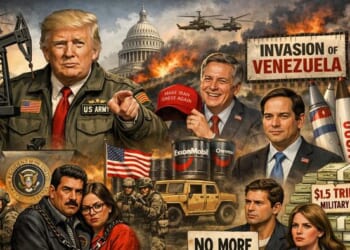
Similarly, the updated National Security Strategy in Latin America, and the Western Hemisphere more broadly, is not to advocate Western or American values, but to align with U.S. economic and strategic influence. It promises a renewal of the Monroe Doctrine—alongside a “Trump Corollary” to it—that seeks to turn back the involvement of competitors like China in the Western Hemisphere and to exert greater control over migration, drug flows, and regional stability. “We want to ensure that the Western Hemisphere remains reasonably stable and well-governed enough to prevent and discourage mass migration to the United States,” the document reads.
The 2017 NSS consistently cited the U.S. “commitment to liberty, democracy, and the rule of law,” arguing that “a world that supports American interests and reflects our values makes America more secure and prosperous”—including regarding Taiwan. The 2025 NSS explicitly states that the U.S. is no longer concerned with promoting democracy around the world, proclaiming in a section titled “Flexible Realism” that, when dealing with non-allied nations, the U.S. will not advocate for “democratic or other social change that differs widely from their traditions and histories.” The document only mentions the words “democracy” or “democratic” eight times, and four of those references come in the context of critiquing European allies, such as accusing European ruling parties of trampling “basic principles of democracy to suppress opposition.”
Daniel Fried, former U.S. ambassador to Poland and Assistant Secretary of State for European and Eurasian Affairs who is now at the Atlantic Council, was not impressed. “This document attacks the Europeans for suppression of free speech,” he said to TMD. “Compared to what? Russia? If you’re going to hit the Europeans and not the Russians, you look like idiots.”
Where the NSS portrays America’s historic foes as rational competitors, it is scathing about America’s traditional allies—and mirrors many of the criticisms made by Vice President J.D. Vance during his speech at the Munich Security Conference in February. Citing the “real and more stark prospect of civilizational erasure,” the NSS criticizes the immigration policies of many European countries, accuses the European Union of undermining political liberty, and warns that “should such trends continue, the continent will be unrecognizable in 20 years or less.” It warns against EU and NATO countries becoming majority “non-European,” a reference to growing immigrant and non-white populations in many Western European countries. “It is an open question whether [these countries] will view their place in the world, or their alliance with the United States, in the same way as those who signed the NATO charter,” the document reads.
During his February visit, Vance met with the leader of the far-right German Alternative for Germany (AfD) party. The NSS, in turn, praises “patriotic European parties” and pledges to cultivate “resistance to Europe’s current trajectory within European nations.”
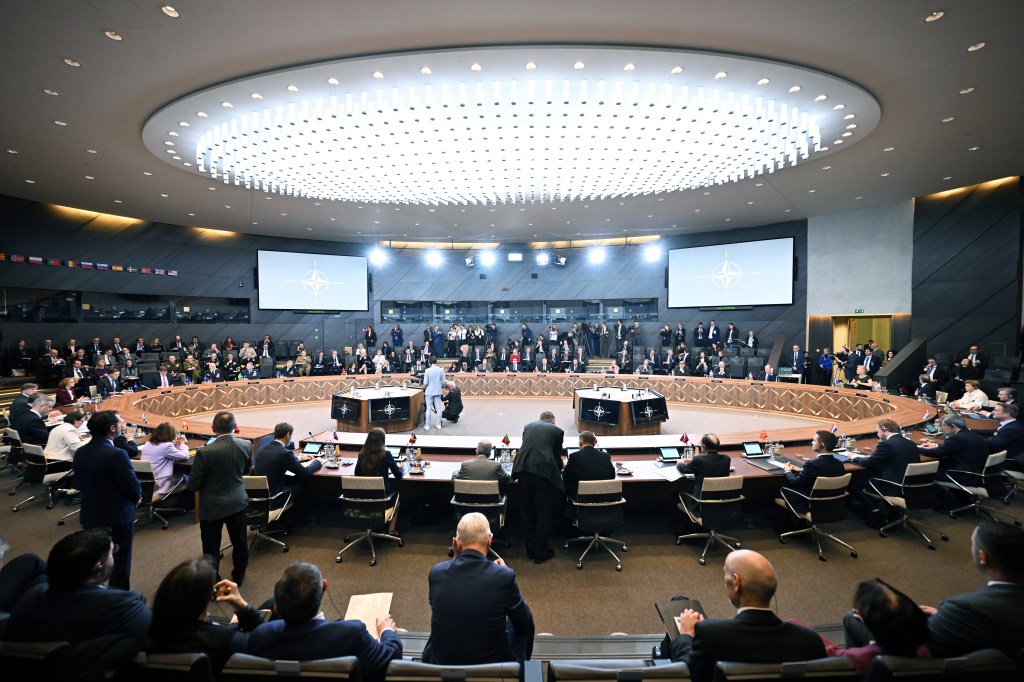
State Department officials continued to add the attacks over the weekend. “We cannot pretend that we are partners while those nations allow the [European Union’s] unelected, undemocratic, and unrepresentative bureaucracy in Brussels to pursue policies of civilizational suicide,” Deputy Secretary of State Christopher Landau posted upon returning from last week’s meeting of NATO ministers in Brussels. On Friday, Secretary of State Marco Rubio tweeted that the EU’s $140 million fine of X—for violations of the bloc’s Digital Services Act—was “an attack on all American tech platforms and the American people by foreign governments.”
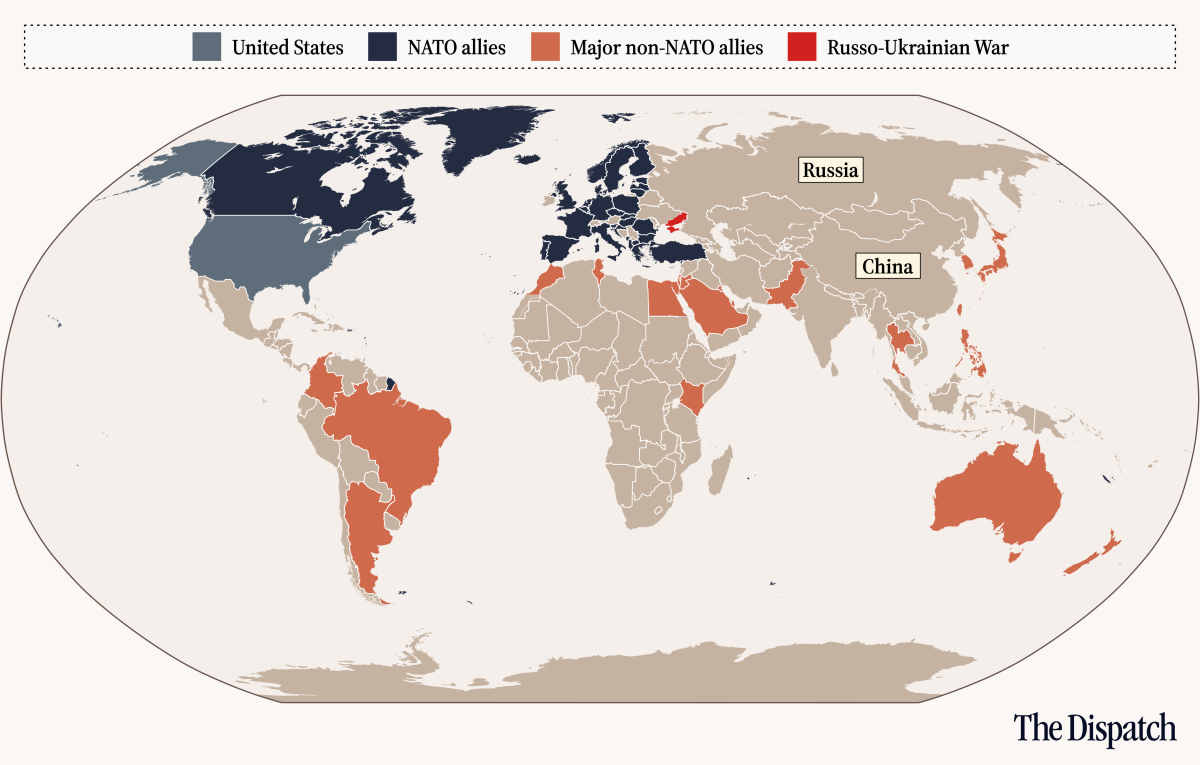
Such arguments may prove counterproductive. “If you’re going to attack Europe and treat them with hostility, what do you expect they’re going to do with their national security decisions?” Fried argued. And, as he noted, the NSS acknowledges that the White House will depend on Europe to achieve some of its goals. Its authors write that a resolution of the Russo-Ukrainian war that enables Ukraine’s national survival is a “core interest”—and admits that the U.S. cannot “afford to write Europe off” in its goal of restoring “strategic stability” with Russia.
The reaction from European leaders—whose economies and militaries still, in large part, depend on ties with the U.S.—has been mostly muted. Kaja Kallas, the EU’s foreign policy chief, said Saturday that “what we can take from that security strategy is that we are still allies with America,” even if “we don’t always see eye to eye on everything.”
On X, Polish Prime Minister Donald Tusk was less upbeat. “Dear American friends, Europe is your closest ally, not your problem. And we have common enemies,” he wrote. “We need to stick to this, this is the only reasonable strategy of our common security. Unless something has changed.”
While the NSS certainly marks a rhetorical shift, it is essentially a guidance document or statement of intent. When members of the federal bureaucracy receive new national security documents, Fried argued, they tend to fit their own policy priorities into the new framework, rather than radically reorient their preferences. “It’s sort of like writing an article for Pravda,” he said. “You always start with a quote from Lenin, and then you bury your real argument halfway down after you’ve established your ideological credentials.” There will still be plenty of room, then, for disagreement between the Trump administration’s disparate factions over U.S. foreign policy decisions.
Sacks also told TMD that the National Defense Strategy (NDS), set to be released in the coming months, will fill in many of the NSS’s broad statements with specifics. “The NDS is a little bit more important in terms of actually guiding resource decisions,” he noted, arguing that, while the NSS claims that deterring conflict over Taiwan is a U.S. priority, the NDS will demonstrate how much concrete assistance the U.S. is actually willing to dedicate to the island.
Much remains to be seen about how the Trump administration will implement its strategy over the next three years. But for all the concerns raised among U.S. allies, at least one country welcomed the White House’s new foreign policy plans. “The adjustments we are seeing, I would say, are largely consistent with our vision,” Kremlin spokesman Dmitry Peskov said on Sunday.