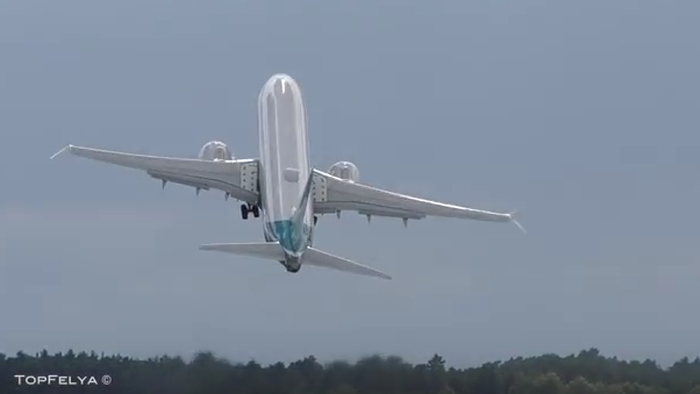
The S&P 500 Passenger Airlines Index has tumbled into a bear market since Operation Epic Fury unleashed flight disruptions across the Middle East and sent Jet A fuel prices sharply higher, with Deutsche Bank warning the fuel price shock could become an “existential threat” for the weakest carriers. The key question now is whether the worst of the selloff in US airline stocks is over, with UBS analysts beginning to ask if a bottom is near.
UBS analyst Atul Maheswari said that “most airlines will likely point 1Q towards the midpoint of the guidance” in the earnings season, adding, “Fuel spiked in early March, but airlines tend to hold two weeks of fuel inventory, implying higher fuel will impact only about 15 days of 1Q.”

“This should cushion the drag to 1Q EPS. Plus, airlines have been talking up demand through the course of the quarter, suggesting upside to 1Q RASM. With respect to FY guide, we expect airlines to suspend FY’26 outlook given the significant uncertainty around fuel costs for the rest of the year,” Maheswari noted.
The analyst said that airline stocks are approaching a 2022-style decline, similar to the Russia-Ukraine fuel shock, which may now imply a potential bottoming for airline stocks.
He explained:
How does the current decline in airline stocks compare to historical periods?
If we use share price performance in 1H’22 as a guide, then it suggests that the bottom might be near for these airline stocks.
Since 2/26, shares of ALK and smaller players are down around -30% while UAL, AAL, and LUV are down mid 20%. DAL is down only -17%. The decline in LUV, ALK and smaller players have already matched the peak to trough declines witnessed in 1H’22 – the last time jet fuel witnessed a spike of similar magnitude (following the Russia-Ukraine conflict) as we are seeing currently (full details in fig. 3).
The declines in share prices DAL/UAL have not yet matched the levels witnessed in 2022, but these players now have superior business models with relatively higher margins, suggesting better ability to deal with the fuel price shock.
However, there is a caveat:
Though, one needs to be mindful of the tail risk of this conflict persisting for longer than expected driving jet fuel even higher from current levels. There is also potential for inflation to pick up materially the longer the conflict persists and for consumers to start pulling back from travel and other spending. We don’t think this scenario of demand destruction is necessarily priced into the stocks even at these levels.
The S&P 500 Passenger Airlines Index is currently showing a drawdown of about 22%.

Maheswari lowered estimates and price targets for airline stocks within the UBS coverage universe:
-
DAL: We lower our FY’26 EPS estimate to $5.85 (was $7.17) assuming 50% pass through of higher fuel costs. Our FY’27 EPS estimate goes to $8.31 from $8.72. Our revised PT is $83, down from $87 previously based on 10x FY’27 EPS estimates.
-
UAL: We lower FY’26 EPS estimate to $10.22 from $13.56 while our FY’27 EPS estimate goes to $14.87 from $16.28. We assume ~45% fuel pass through rates for UAL for FY’26. Our new PT is $134 vs. $147 previously.
-
AAL: AAL has higher fuel sensitivity than DAL/UAL. As such, the decline AAL sees a greater decline in FY’26 estimates (now at $0.43 vs. $2.21 previously). Our FY’27 EPS falls to $2.13, down from $2.99. This drives a moderation in our PT to $15 from $21.
-
LUV: We lower our PT to $59 from $73, which is 11x (was 12x) our new FY’27 EPS estimate of $5.33 (was $6.07). Our FY’26 EPS moves lower to $3.59 (was $5.05).
-
ALK: We lower our PT to $60 from $77 based on 8x (was 9x) our new FY’27 EPS estimate of $7.48 (was $8.60). ALK also has high fuel sensitivity to EPS. As such, our FY’26 estimates move meaningfully lower to $2.19 from $5.21.
-
We lower lower price targets and estimates for JBLU, ULCC, ALGT, and AC. Full details in figure 1.
-
Sensitivity to higher fuel: We estimate that every $0.25/gallon increase in jet fuel would lower DAL’s EPS by around -15 to -17% and 20-25% for UAL/LUV (assuming no pass through in the form of higher fares). Fuel sensitivity is higher for AAL/ALK and smaller players. We calculate that for every $0.25/gallon increase in fuel RASM would need to increase by 200-250 bps to fully offset the fuel drag (see fig. 2).
Earlier, US airlines reported strong bookings, with Delta and American both posting some of their best sales days in history as premium leisure and corporate travelers rushed to lock in fares before fuel-driven price increases spread further.
Airlines also pointed to rising fuel costs, with Delta indicating that expenses have already climbed by about $400 million this month. JetBlue said first-quarter demand improved, but warned of reduced capacity amid fuel price shock.
Professional subscribers can read much more from the UBS note here at our new Marketdesk.ai portal.