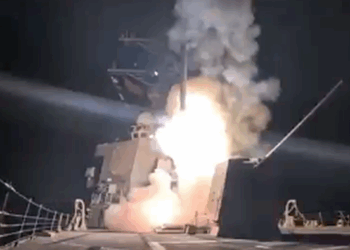
The Trump administration was already well into a monthslong campaign of striking boats in the Caribbean and eastern Pacific suspected of carrying drugs from Venezuela when the president approved a daring military action to remove dictator Nicolás Maduro. No congressional authorization was sought for the capture mission, just as none was sought for the boat strikes.
Toppling Maduro is the latest example of Trump’s and other presidents’ pushing the boundaries of executive power, especially with regard to warmaking, giving the American people’s elected representatives an ever decreasing role in foreign policy. In this case, Trump’s administration pushed Congress to the side in two ways: taking the military action without first seeking the green light from Congress and not being entirely clear in advance about what its goals were with regard to Venezuela in recent briefings with legislators.
The administration has not released a legal justification for the attack, so it is unclear what authority Trump is relying on for it. It has characterized the mission as a law enforcement operation assisted by the military. That is likely its strongest legal rationale for the raid, but it does have some problems, according to Mark Nevitt, a former judge advocate in the Navy and current professor at Emory University School of Law who specializes in national security law.
“I don’t think that’s a legal basis because Venezuela’s a sovereign country,” he told The Dispatch. “There’s no extradition treaty, there’s no clear legal basis to authorize the capture of another nation’s purported leader.”
Though Trump greenlit the operation without seeking congressional approval, this scenario was far from the first time a president has taken similar action. American history, especially in the last few decades, is replete with examples of presidents using military force under questionable authority—from Theodore Roosevelt sending warships to support an independence movement in Panama in order to build a canal in the country to Barack Obama waging war against Libyan dictator Muammar Gaddafi.
Marc Wheat, general counsel for Advancing American Freedom, a think tank founded by former Vice President Mike Pence whose leadership has voiced support for Maduro’s capture, argued that Article II of the Constitution enables the president to undertake military action and that the Founding Fathers would have understood the need for a president to use force on his own.
“From George Washington and James Madison and John Marshall … they were all familiar with these concepts, and they would have disagreed with the concept of the president first needing some kind of declaration of war from Congress,” he told The Dispatch.
Trump’s defenders have pointed particularly to President George H.W. Bush’s arrest of Panamanian dictator Manuel Noriega in Operation Just Cause in late 1989 and early 1990 as a precedent. Bush ordered troops into the country and brought Noriega, who had recently annulled election results he did not like, to the United States to face drug trafficking charges. Sound familiar? A month after Noriega surrendered to U.S. forces, the Democratic-controlled House overwhelmingly passed a resolution saying he “acted decisively and appropriately.” The Senate, which Democrats also held at the time, did not hold a vote on it.
While there is an apparent analogy, foreign policy experts noted some problems with using that precedent as a justification. For one, it is an open question as to whether Operation Just Cause itself was legal. It “raised some significant legal issues under both international and domestic law, and the legality of the operation remains contested,” Nevitt said.
The United States also had direct interests in Panama, including several military bases and thousands of American citizens there. Additionally, the Panamanian government had declared that a state of war existed between it and the U.S.
“The basis on which the U.S. went into Panama, I think, is quite similar in some ways to Venezuela, but I think there’s some differences as well,” said Eric Farnsworth, a foreign policy professional who worked in the executive branch for years, including in the State Department’s Panama office months after Operation Just Cause began. “… It’s the obvious comparison, but we have to be careful not to draw too closely.”
Regardless of whether Trump has the authority to attack Venezuela, he largely kept Congress in the dark about his plan to end the rule of a troublesome socialist dictator who had falsified the results of a 2024 election to remain in power.
As many Democrats and a few Republicans in Congress objected to Trump’s campaign to target alleged drug boats, members of the administration held briefings about it with relevant members of the legislature. Publicly, the administration was cryptic about what its long-term goal was in Venezuela. Trump said before the operation that Maduro’s “days are numbered” but never explicitly committed to regime change. Democrats have alleged that members of the administration, especially Secretary of State Marco Rubio, misled them about the administration’s intentions, assuring them in classified briefings before the operation that they were not looking to topple Maduro. “On three occasions, I asked Secretary Rubio whether or not the administration was seeking regime change in Venezuela,” Senate Minority Leader Chuck Schumer said in a Monday floor speech. “Three times, the answer was no.”
Accounts from Republicans as recently as three weeks ago indicate that the administration was not being forthcoming about its broad goal toward Venezuela as it was briefing lawmakers on the strikes. Published reports have indicated that preparations for capturing Maduro were well underway by then.
Rubio “said emphatically, repeatedly, this is only a counter narcotics operation,” Sen. Josh Hawley of Missouri told reporters after a December 16 briefing of senators. “This is not about regime change. This is not aimed at the government of Maduro. This is aimed at stopping the flow of these drug loads.”
Hawley said on Tuesday that he hoped to get answers on the administration’s policy toward Venezuela at another briefing for senators scheduled for Wednesday morning.
“All I can say is that the secretary was very clear there [in the December briefing] that that boat operation had nothing to do with trying to replace the leader,” he told The Dispatch. “Now, obviously, draw your own conclusions as to whether that’s accurate or not. Maybe I’ll know more tomorrow.”
Additionally, the administration did not notify Congress—including party leaders from each chamber and the top Republicans and Democrats on the House and Senate Intelligence committees, a group known as the Gang of Eight, which, by law, is supposed to be informed about even anticipated intelligence activities taking place—about the mission until after it had begun. Trump said it was due to concerns that the information would leak. “Congress has a tendency to leak,” he said at his press conference following Maduro’s capture. “This would not be good.” Meanwhile, the New York Times and Washington Post both learned of the operation before it happened and chose not to publish stories on it, according to Semafor.
Sen. Mike Rounds of South Dakota, a Republican who serves on both the Senate’s Intelligence and Armed Services committees, appeared unbothered by the lack of notification, noting the sensitive nature of the matter. “I did not expect to get briefed beforehand,” he told The Dispatch. “I do think members of the Gang of Eight may have expected to have some sort of an indication, but I’ll let them speak to what their expectations were.” Speaker of the House Mike Johnson, Senate Majority Leader John Thune, Senate Intelligence Committee Chairman Sen. Tom Cotton of Arkansas, and House Intelligence Committee Chairman Rep. Rick Crawford of Arkansas all defended the decision not to notify Congress.
Foreign policy professionals with experience working in the executive branch who spoke to The Dispatch said the decision not to tell Congress ahead of time was understandable.
“I think it makes quite a lot of sense that they wouldn’t notify Congress only because, right now, we have seen so much leaking coming from Congress that it could have really compromised the lives of the people who are on this mission,” said Carrie Filipetti, executive director of the Vandenberg Coalition, a hawkish foreign policy group, who served as the deputy assistant secretary for Cuba and Venezuela in the State Department in Trump’s first administration.
She recounted an experience during her time in the administration in which she was holding almost weekly calls with congressional staff about Cuba and Venezuela that contained information that was not classified but that she would not want to share with the general public. During one briefing, she asked if there were any questions, and a Cuban journalist associated with state media spoke up, she said. She then asked how he got on the call, and he responded that a Democratic staffer invited him; the team ended the call immediately. “We never did calls again with either side,” Filipetti told The Dispatch.
Farnsworth, who served in the State Department under George H.W. Bush and in Bill Clinton’s White House, would not criticize the administration’s decision.
“It seems to me that operational secrecy has to have been paramount,” he told The Dispatch. “I’ve got a kid in the Navy, and I certainly appreciate that. The politics of Washington are just really complicated these days, as you know.”
If Congress decides that it wants to stop Trump from conducting further military action in Venezuela, it has a couple of options. Sen. Tim Kaine of Virginia, a Democrat who last year forced two unsuccessful votes on war powers resolutions directing Trump to refrain from military actions in Latin America, has said he will force a vote on another this week. Whether it will pass the Senate is unclear, and while it could make it through the House’s narrow GOP majority, Trump would almost certainly veto it.
Congress has been known to cut off funding for acts of war that it disapproves of. Such was the case during the Vietnam War after the legislature nixed funds for it in 1973. However, given the general compliance of congressional Republicans and the support the chambers’ leadership have shown thus far, the prospect of it doing something similar is unlikely.
“There are few effective legal constraints when the president unilaterally uses force independent of Congress,” Nevitt told The Dispatch. “Historically, Congress can use the appropriations power to cut off funding for specific military operations, but I do not envision that occurring here.”