It’s been wild ride in crude over the past few days with Brent crude futures were capped near $84 a barrel on Tuesday afternoon before sliding down to the $81 level late Wednesday afternoon, only to surge back up to $84 this morning…

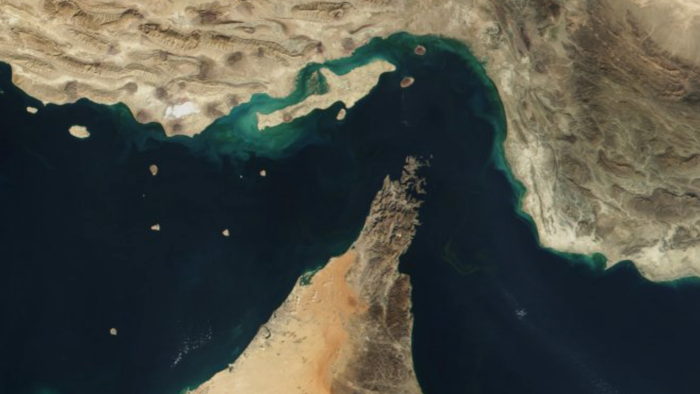
…as shipping industry insiders and Wall Street analysts await exact details on the Trump administration’s proposal to keep tankers transiting the Strait of Hormuz. The critical maritime chokepoint remains paralyzed, raising the risk of an energy shock in parts of the world that rely heavily on those flows, particularly in Asia.
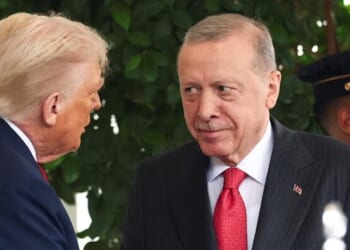
President Trump wrote in a Truth Social post that the U.S. will provide insurance for “ALL Maritime Trade” through the U.S. Development Finance Corporation (DFC) and will provide Navy escorts “if necessary.”
The shutdown is already hitting global energy flows:
Now comes the hard part, with the shipping industry and Wall Street analysts all asking the same question: how will every tanker transiting the Arabian Sea through the Gulf of Oman, into the Strait, and onward to the Persian Gulf be protected by U.S. or allied air or naval forces?
“Nothing is sure and we need immediate clarity,” said Khalid Hashim, managing director of Precious Shipping Pcl, a Thai firm that owns bulk carriers.
Hashim said, “Lives are at risk, cargoes are at risk, ships are at risk. We need immediate cover that protects us from all this.”
While some shipowners say they’re mulling over joining escorted convoys, many remain very cautious, noting that escorts do not eliminate the risk of the IRGC’s asymmetric warfare, such as the use of drones.
Analysts also question whether the Trump administration has done enough planning to make the proposal bulletproof in the near term. Overall, the market sees Trump’s plan as a temporary fix to restart flows in the Strait, with Brent crude futures capped at $84 since the announcement and currently trading around $81.

UBS analyst Benjamin Benson, “Improved risk sentiment following US President Trump’s announcement on maritime insurance and US Navy security support further aided the recovery in prices.”
Current activity in the Strait of Hormuz:
Tanker traffic through Strait of Hormuz down by 90%
Analysis of vessel activity indicates tanker transits are now around 90% lower than last week. Matt Wright, Principal Freight Analyst at Kpler, explains: “Unlike several other vessel segments where movements have largely… pic.twitter.com/JIhFoAkQKO
— MarineTraffic (@MarineTraffic) March 4, 2026
“The core thing shipowners are thinking about is the real risk of loss,” said Karnan Thirupathy, partner at Kennedys Law LLP, who specializes in commodities and shipping. “No one goes into the trade if the risk of loss is simply too high.”
RBC Capital Markets LLC analysts noted, “President Trump’s comments about insurance and tanker escorts caused a pullback in oil prices, we question how much planning has been done on the insurance backstop thus far and think there could be a number of challenges in executing this plan quickly.”
Wall Street Journal noted by late afternoon that the Trump administration was in talks with one major insurance broker about how to get ships moving through the Strait of Hormuz:
A team from insurance broker Marsh Risk met with administration officials Tuesday and offered to help the U.S. government create an insurance mechanism that could lower shipping risk and make insuring ships more affordable, said Marcus Baker, the firm’s global head of marine, cargo and logistics. Energy prices have soared since Iran warned it could start attacking ships in the strategic waterway, slowing oil shipping to a standstill.
“Providing protection for all tankers operating in areas currently threatened by Iran is unrealistic as this would require a very high number of warships and other military assets,” Bimco security analyst Jakob Larsen noted.
Let’s remind readers that the U.S. and its allies had a difficult time securing the Bab el-Mandeb chokepoint, where Houthi rebels repeatedly launched missiles and drones at commercial ships linked to the U.S. and Israel. That certaintly matters now. It also comes as the U.S. and its allies are burning through significant volumes of air-delivered munitions in Operation Epic Fury.
Loading recommendations…