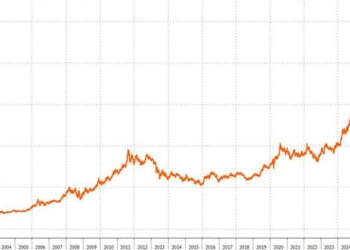
Oil prices spiked on Trump’s threat and Iran’s counterthreats, with analysts expecting markets to slide Monday morning. But two hours before the New York Stock Exchange opened, Trump delayed his self-imposed deadline in another Truth Social post. Trump wrote that the two countries had had “VERY GOOD AND PRODUCTIVE CONVERSATIONS REGARDING A COMPLETE AND TOTAL RESOLUTION,” setting a new deadline for strikes on energy facilities for five days from Monday—which just happened to be when markets close for the weekend.
Stocks bounced back, and oil prices dropped on Trump’s announcement—for less than half an hour. That’s when Iran’s foreign ministry denied that any such talks had taken place, causing oil prices to rise and markets to slump once more.
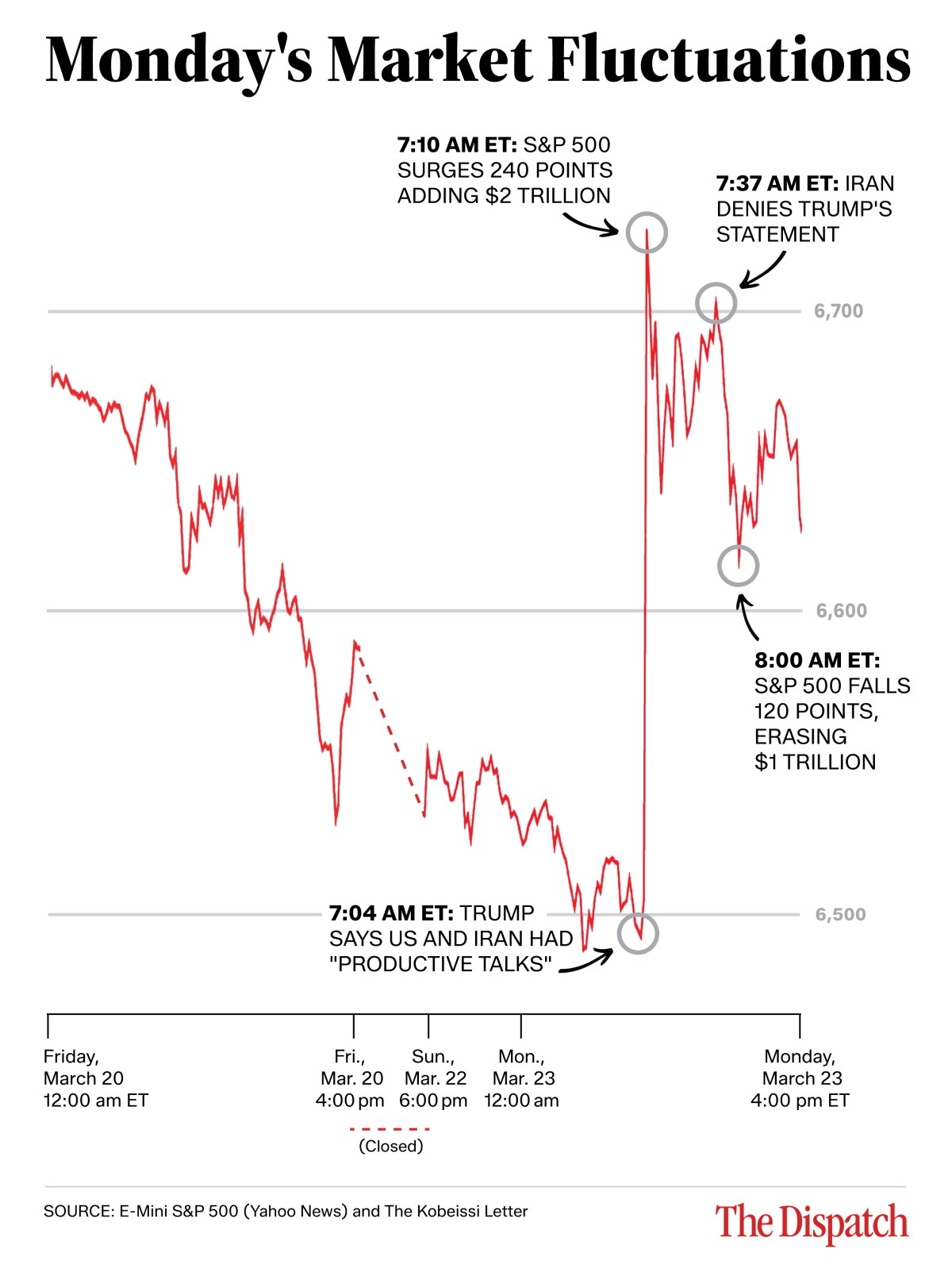
“Basically, it’s all verbal intervention at the moment,” Hunter Kornfeind, a senior macro energy analyst with Rapidan Energy Group, told TMD. But the underlying reality of the largest oil supply disruption in history continues almost entirely unabated.
Before the war, an average of nearly 20 million barrels of oil per day passed through the Strait of Hormuz. Now, that number is almost down to zero. With that fixed in the minds of traders, oil prices are likely to climb back up this week, unless “it looks like there is a concrete off-ramp for hostilities, which also resumes or moves traffic at the same time,” Kornfeind said.
One way to get merchant ships through is with financial incentives. During the conflict, merchant vessels face punishingly high insurance premiums, driven by the threat of Iranian attacks. Make insurance affordable, so the thinking goes, and some ships will at least make the voyage. Earlier this month, Trump offered U.S.-backed insurance rates at a “very reasonable price,” offered through the U.S. International Development Finance Corporation . On March 6, the agency announced a $20 billion “Maritime Reinsurance” plan.
But it isn’t quite as simple as writing a check, John Stawpert, the marine director of the International Chamber of Shipping, told TMD. “It’s the kinetic threat, it’s not insurance,” that’s choking off shipping in the Strait of Hormuz, he said. “It’s the threat that if you attempt to transit the strait, you will be attacked.” The International Maritime Organization—the U.N. agency charged with overseeing international shipping—gave a similarly negative response. “The solution IMO has called for is restraint and de-escalation for all the Parties involved,” an IMO spokesperson wrote in an email.
Given the limited effectiveness of messaging and financial incentives, the most obvious way to reopen the Strait is military force. Iran’s armed forces and proxy groups have proven a poor match for the combined U.S. and Israeli militaries, with U.S. Central Command chief Adm. Brad Cooper saying Saturday that the U.S. has struck more than 8,000 military targets inside Iran. Israel has hit a similar number, and together the allies have disabled large swaths of Iran’s naval and air forces, air defenses, missile stockpiles, and ports.
“They lose more of their comrades every day, their ability to conduct operations against shipping in the Strait goes down, their missile arsenal goes down. I mean, everything is deteriorating each day,” Kenneth Katzman, a senior fellow at the Soufan Center and a former U.S. government adviser on Iran, told TMD.
But, even with Iran’s military resources significantly degraded, the U.S. won’t necessarily be able to suppress Iranian strikes on merchant shipping. The Islamic Republic can use mines, low-cost portable drones, and raids with small boats—though the U.S. has deployed low-flying aircraft, including Apache attack helicopters and the A-10 Warthog, a Cold War-era jet originally designed for air-to-ground combat.
“We could guarantee [that] we can substantially reduce the probability of a successful attack,” Bradley Martin, a senior researcher at the RAND Corporation and a former surface warfare officer for the U.S. Navy, told TMD. But, crucially, “We’ll never be able to get it all the way to peacetime conditions.”
Shepherding merchant ships through the Strait—as the U.S. did during the “Tanker War” of the 1980s—is a potential option. Tankers would move in convoys, with naval vessels either escorting them directly or patrolling their routes. Trump has repeatedly urged the navies of European allies, Australia, Japan, and others to join in efforts to safeguard shipping. But even though some nations have deployed warships to the Mediterranean or the Arabian Sea, none have explicitly committed to an escort operation, not least because the U.S. has yet to deploy warships inside the Strait itself.
“It’s not as simple as sticking some gray hulls in there,” said Stawpert. While he noted that the businesses he represented would seriously consider utilizing security services offered by international navies, specific, actionable plans have yet to emerge. “At the end of all of this, at the pointy end, there are seafarers,” he said. The decision to brave the strait’s passage will ultimately come down to the willingness of civilian sailors to expose themselves to Iranian attack.
Finally, that leaves the most drastic option: ground operations in Iran that either secure the strait or threaten the Islamic Republic’s regime enough to make terms with the U.S. that would include reopening the strait.
In recent days, the 11th and 31st Marine Expeditionary Units—each composed of roughly 2,500 Marines—have started heading toward the region: the 31st is set to arrive Friday, the day of Trump’s deadline, with the 11th reportedly several weeks behind. The White House is also reportedly debating whether to deploy 3,000 troops from the U.S. Army’s 82nd Airborne Division to the Middle East. All three formations are trained in the rapid seizure of enemy territory.
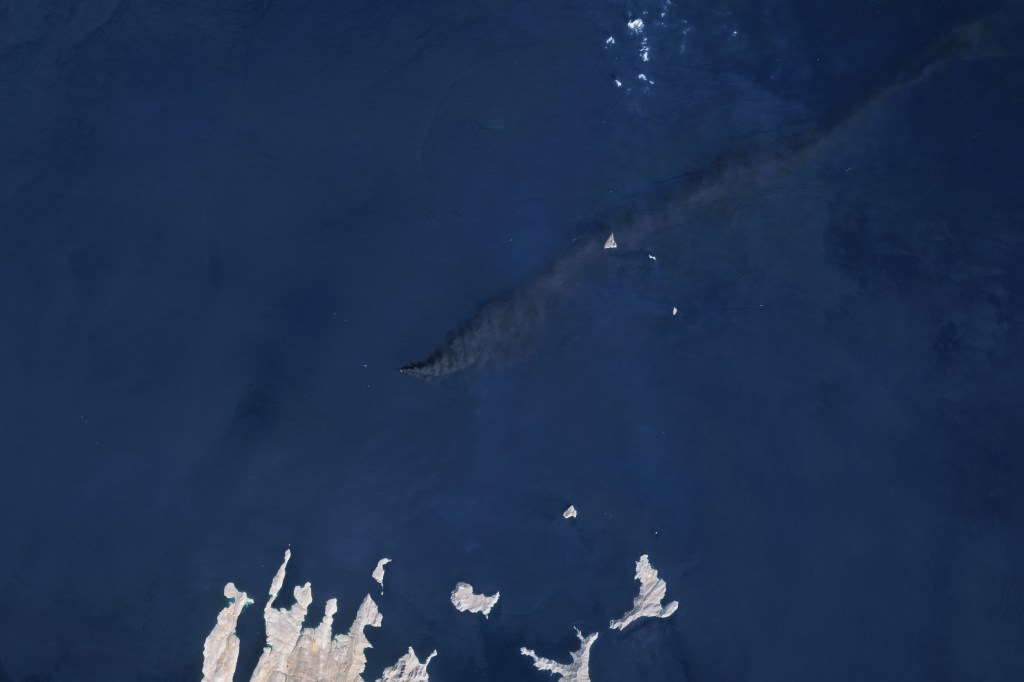
Kharg Island, 16 miles off the coast of Iran in the Persian Gulf, has loomed large in these discussions. The 7.7-square-mile island handles roughly 90 percent of Iran’s crude oil exports (and has already been struck by U.S. attacks), and some have posited that taking the island would force Iranian leaders to negotiate with the U.S. But the politics of sending U.S. ground troops into Iran are tricky. Trump has repeatedly disavowed plans to invade Iran, even if he has also reserved the right to change his mind.
“Once you start introducing ground troops into Iranian territory, there’s going to be momentum to keep going further,” Katzman said, noting that a major city, Shiraz, is only a four- to five-hour drive from the coast directly opposite Kharg Island. “Once you start putting ground troops into Iranian territory, then the regime realizes they really could be toppled, and all the calculations change.”
Thomas Juneau, a professor at the University of Ottawa and a former adviser to the Canadian military, told TMD that military realities would also possibly dictate a move inland. Because of the island’s low-lying terrain and coastal exposure, troops deployed there would be “target practice” for even limited Iranian artillery, missile, and drone fire. The only way to prevent high casualty rates would likely be to take positions on the Iranian mainland, he said.
But—for now—Trump says escalation won’t be necessary. On Monday, the president told reporters that the U.S. was currently “dealing with a man that I believe is the most respected, not the supreme leader, we have not heard from him,” and had reached “major” points of agreement. Iranian Parliament Speaker Mohammad-Bagher Ghalibaf tweeted that Trump’s claims were “fake news.” Members of the Iranian regime deny that any conversations have taken place—but Iranian Foreign Ministry spokesman Esmaeil Baghaei did say on Monday that “messages have been received from some friendly countries regarding the U.S.’s request for negotiations to end the war.”
At events in Memphis on Monday, Trump claimed that Iran had “one more opportunity to end its threats,” and said he believed there was a “very good chance” of a peace deal, and a reopened Strait.
And at the close of business Monday, oil prices were $88.13 a barrel—down about 10 percent from where they opened that morning. At the time of publication, it’s back up to above $91.