By Benjamin Picton, Senior Market Strategist at Rabobank
The DXY is dealing firmer this morning and precious metals continue to be flogged like the family silver after Donald Trump confirmed the nomination of Kevin Warsh as incoming Fed Chair. In defiance of the President’s oft-stated preference, markets are convinced that Warsh is a hawk. Consequently, zero-yield risk is taking a beating (bitcoin, ouch), equities are offered and US 5y5y inflation swaps have fallen by ~2bps since Wednesday of last week.
The Financial Times marked the occasion of Warsh’s nomination by saying ‘Arise, Shadow Fed Chair Stan Druckenmiller’, suggesting that the legendary hedge fund manager who counts both Kevin Warsh and Treasury Secretary Scott Bessent among his proteges is now the most powerful person in the global economy. The FT references ‘people familiar with the matter’ as describing Druck’s relationship with Warsh and Bessent as “akin to father-son relationships”, with Warsh in particular sometimes speaking with Druckenmiller “more than a dozen times a day”. Needless to say, markets will now be hanging off of Druck’s every utterance for direction on monetary policy.
While that will doubtless be the case, it seems absurd that much divination is actually required to determine where monetary policy in the United States is likely to go. The national debt burden is immense – soon to hit $39 trillion in dollar terms and now above 121% of GDP – and more than 3% of GDP is already dedicated to servicing interest expense. That – as Fed Chair Powell pointed out last week – comes at a time of healthy economic expansion with a labor market close to full employment.
With all the understatement of a career central banker, Powell described this cocktail as “unsustainable”. If something is ‘unsustainable’, logically it will not be sustained. So what is likely to change?
It won’t be the spending, as the largely futile efforts of DOGE and the fact that ‘mandatory spending’ (social programs, farm subsidies, student loan subsidies etc) plus interest expense plus defence spending accounts for almost 87% of US fiscal outlays. Interest expense will go up, not down, Trump wants to increase the defence budget by 50% and cutting entitlements is a practical impossibility that often gets talked about but never seems to happen. Besides, Trump campaigned on opposing cuts to programs like social security and Medicare.
What about the income side of the ledger? The Trump administration has already taken steps to increase taxes by introducing sweeping import tariffs, but if those tariffs prove effective over time in driving import substitution for domestically-produced alternatives it stands to reason that tariffs will become less and less effective as a revenue tool. Outright rises in direct taxation also seems unlikely given that Trump permanently extended his 2017 tax cuts that had been due to expire via the One Big Beautiful Bill in May of this year.
That leaves interest rates and growth as the only remaining levers to right the fiscal ship. Politicians always think that they are going to grow their way out of trouble, but in Trump’s case it seems likely that an inflationary boom is genuinely part of the fiscal strategy. All of the signs so far point to a willingness to ‘run it hot’ when it comes to the economy.
We have written previously about the strategy of driving adoption of US dollar stablecoins as a means to lower borrowing costs at the front end of the yield curve. Coupled with a sympathetic Fed Governor who is likely to reflect the President’s wish for a lower Fed Funds rate, this might be the best shot of the administration to move the fiscal needle. Indeed, in an era of fiscal dominance, the incoming Fed Chair may have little choice but to keep short rates low.
Along with moves to pressure mortgage relates lower through MBS purchases, threats of price caps (on credit card interest, for instance) and attempts to use tariffs as leverage to extract investment pledges from other countries, these sorts of measures veer into the realm of financial repression, where real interest rates are held negative and private savers carry the can for the government largesse.
Of course, some of these policy options are only available to the United States due to its status as the issuer of the global reserve currency. Abusing the “exorbitant privilege” of being the reserve currency issuer through erratic trade practices, financial repression and strategic currency devaluation is a high stakes gamble that could backfire spectacularly.
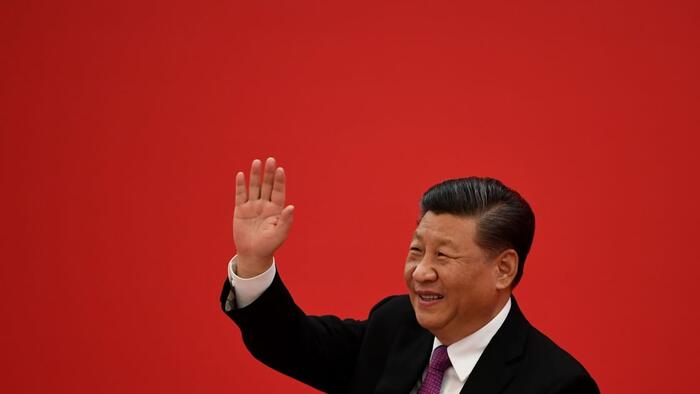
Xi Jinping is evidently well aware of the contradictions faced by the United States in attempting to leverage its position as reserve currency issuer without losing it. The FT yesterday reported on comments from Xi calling for the Chinese renminbi to become a global reserve currency by creating a “powerful (read: politicized) central bank” that would ensure a “strong currency” used widely in international trade, investment and foreign exchange markets.
The renminbi has been steadily strengthening against the dollar since Liberation Day last year, and the PBOC has accelerated its run stronger daily fixings from late November onwards. Xi was clear at the Shanghai Cooperation Organization summit last year that he wished to internationalize the role of the CNY and China has begun using its monopsony market power in commodities like iron ore to drive wider acceptance of its currency for trade settlement. Expect more of this in markets where China is the only buyer, or the only buyer of scale.
CNY is starting from a low base and still faces the Triffin Dilemma of not meeting the requirements of a reserve currency so long as China insists on running trade surpluses (there’s no sign of a change of heart on that score), but by boosting its adoption Xi could chip away at the reserve currency status of the dollar right at the moment when many other players in financial markets and the world economy are openly questioning whether the dollar’s writ still runs.
Though it still seems unlikely at this stage, if the reserve status of the dollar was genuinely threatened it would dramatically reduce the freedom to manoeuvre of US policy makers grappling with that “unsustainable” fiscal trajectory.
For the public finances of the United States, that might be the Warsh that could happen.
Loading recommendations…