Some obvious possible explanations for the silence end up collapsing upon contact with reality. For instance, maybe Iran’s regime is so monstrous that war critics are reluctant to go to bat for it by protesting. If that’s so, why were critics willing to protest a campaign targeting the every-bit-as-monstrous Saddam Hussein in 2003?
Americans don’t get upset about war until they feel the consequences personally. There’s something to that, as we’ll see below, but I’d say we’re well already into the “feeling consequences personally” stage of the conflict. Have you been to a gas station recently?
This war lacks a pat narrative about “settler-colonialism,” the core foreign policy grievance that motivates the post-Iraq left. Does it, though? Israel’s involvement provides a ready-made villain in that mold. Washington and Tel Aviv could easily be accused of trying to make the Middle East safe for Western hegemony by pushing so hard for regime change in Iran.
Anti-war leftists don’t want to make common cause with the “America First” right. I have no doubt that progressives would balk at co-sponsoring protests with Nick Fuentes or Tucker Carlson, but to eschew demonstrations altogether for that reason? C’mon. Some polls have Democratic opinion on the conflict at 7-89. There’s no way that would be true if the left were being negatively polarized by the anti-war right.
We need better explanations for why people aren’t protesting. Let’s see if we can find some.
No infantry. (Yet.)
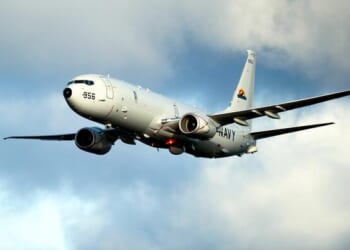
The obvious difference between the Iraq and Iran wars is that Bush’s operation called for placing 175,000 soldiers in harm’s way, while Trump’s has relied entirely—so far!—on airstrikes against an enemy whose defenses have been pulverized.
That’s the grain of truth in the point about Americans not objecting to wars until they feel the pain directly. A turkey shoot 30,000 feet above Iran with hundreds of casualties isn’t going to cause as much anxiety as a ground invasion and occupation in which U.S. fatalities might, and ultimately did, reach into the thousands.
In fact, I’m not sure the public considers air wars to be “wars” at all anymore. After Kosovo, Libya, the first Iran attack last year, and many, many drone strikes on jihadists all over the world since 9/11, raining death on enemies at a safe remove is just something America does now. It’s unremarkable. If you protested such things, you’d spend half your life out in the streets.
That’s the unspoken reason Trump was able to start this war without asking Congress’ permission and without anyone except Dispatch columnists getting too exercised about it. We’ve arrived at a constitutional modus vivendi in which the president gets to declare war on anyone he likes, provided that the risk of U.S. casualties during operations remains negligible. The public seems fine with it.
Beyond that, I think memories of Vietnam informed anti-war opinion in 2003 to a degree that memories of Iraq and Afghanistan haven’t matched in 2026. More than eight times as many American soldiers died in that earlier conflict as in the two more recent wars, and many were in theater involuntarily, because of conscription. They left behind a huge population of Gold Star families, friends, and sympathizers traumatized by their loss. That population is much smaller today due to the passage of time.
It would be too simple to call “no infantry, no protests” a hard-and-fast rule, but as long as Trump keeps boots off the ground in Iran, he’s considerably less likely to see mass demonstrations against the war. Stay tuned.
Trump’s fickleness is an asset to him.
Generally speaking, the president’s attitude toward governing is that he’s going to do the things he wants to do and, barring court intervention, Americans will have to live with it. Maybe they’ll like it, maybe they won’t, but how they feel doesn’t matter terribly much and so he won’t waste much time explaining himself. He won the election. Now he gets to follow his bliss until January 2029.
In some ways, that attitude works in his favor.
When George W. Bush set about making the case publicly for invading Iraq in 2002, he also placed anti-war activists on notice about his plans. That gave them time to formulate arguments against the war, agitate, and eventually organize the mass rallies that preceded the invasion. Trump, on the other hand, barely said a word about striking Iran—not even dwelling on the subject during his State of the Union address four days before the bombs began falling.
And so, go figure, there was no anti-war movement poised to rally against him when he gave the order to go.
Viewed that way, maybe it’s not so counterintuitive that Bush’s popular war produced mass demonstrations whereas Trump’s unpopular one hasn’t. In one case, the president invested heavily in messaging and created strong feelings on both sides of the debate. In the other, he attacked without warning and left Americans disgruntled—and disorganized.
In doing so, Trump might even have inadvertently robbed would-be protesters of a motive to rally. In 2003, broad support for Bush’s war gave demonstrators a reason to turn out and register their dissent. In 2026, broad opposition to Trump’s war has made that unnecessary. Most of the public already dissents; the anti-war crowd has, in a way, already won the debate.
Trump’s fickleness also distinguishes his war from Bush’s war in an important way. Unlike Iraq, this one could end at any moment, again without notice to the public of what’s coming.
I think most Americans expect it. The president’s comments about the state of the conflict have become a preposterous hash of happy talk about peace one minute and threats to plunge the Iranian people into darkness the next. (As I write this on Monday afternoon, we’re back to happy talk.) A bully by nature, he’s never seemed to have the stomach for a protracted fight that could end in humiliation. He prefers to dominate opponents who can be made to submit with little exertion, like Venezuela.
In other words, TACO is always a live possibility—and everyone understands that. In which case, why bother organizing an anti-war rally? Even if you manage to pull one together in a few weeks, the conflict will probably be over by the time the big day arrives.
Slacktivism and isolation.
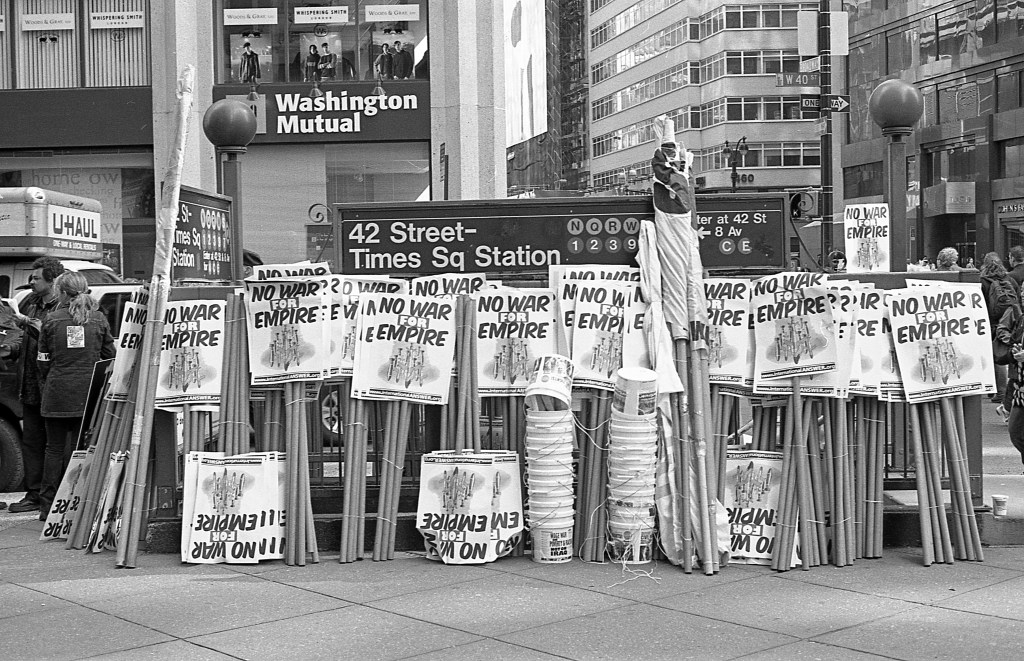
A relative in New York City told me there was a modest protest against the war there recently. In watching news coverage of it, she was struck by how many of the demonstrators seemed … old.
Last fall’s “No Kings” protests also appeared to draw a disproportionately high percentage of older people. (There’s no way to quantify it, of course, so “appeared” is the best we can do.) I suspect that’s more than a coincidence. Young adults were the engine of protest during the Vietnam era, but protesting requires, well, going outside and being around people.
And young Americans aren’t outside and around people much anymore.
I’m sure you’ve seen the statistics about this at some point. People, especially young people, don’t socialize face-to-face nearly as much as they used to, with predictable consequences. Pandemic lockdowns, social media, video games and streaming platforms, and dating apps have conspired to remove entertainment, companionship, and even courting from real spaces to virtual ones. You can get practically anything you need delivered to your door. If you work remotely, days might pass without once needing to leave home. (Don’t ask me how I know.)
A culture in which fewer people are comfortable gathering in public spaces, including restaurants, will by definition be a culture with fewer mass protests. Why bother carrying a “TRUCK FUMP” sign at a rally when you can register your dissent on Twitter or Bluesky from the comfort of your bed? In post-social America, activism is destined to give way to slacktivism to some meaningful degree.
The George Floyd/Black Lives Matter protests of 2020 are an interesting exception to the trend, although maybe not so surprisingly given the unique circumstances of the time. They were held during the height of COVID, when Americans who had hunkered down for months were desperate for an excuse to break social distancing rules. And their theme of racial equality recalled the civil rights movement of the 1960s, obviously by design. To draw a proper parallel with Martin Luther King Jr.’s marches, activists had to march as well.
For whatever reason, the legacy of Vietnam-era demonstrations hasn’t mattered enough to Iran war opponents (so far) to bring them out in the streets in emulation the way the legacy of the civil rights era did for BLM. Maybe that’s specific to protest culture, as King’s example in agitating for racial justice has no equal among anti-war agitators. Maybe race relations simply have more salience to Americans as an issue than foreign policy does. Or maybe, six years on, the trend toward isolation among younger Americans has reached the point where the BLM rallies simply couldn’t happen again today.
If they did, perhaps only the grandmas and grandpas who dimly remember Vietnam-era protests and who came of age before life was lived entirely online would show up.
Exhaustion.
But if it’s not isolation that’s keeping war critics at home, it’s probably exhaustion.
Exhaustion was one of the reasons I cited the last time I wrote about the curious decline of protesting in America. Given how unpopular the One Big Beautiful Bill was in polling, I asked last summer, why weren’t we seeing demonstrations against it?
My theory was that “10 years of authoritarian populist nonsense have … sapped the will of Americans to resist” and have so demoralized some of us that we “simply don’t take [our] government or [our] country as seriously as [we] did even eight years ago.” That’s why huge protests organized under the banner of the Women’s March greeted Trump the day after he was inaugurated in 2017, at the dawn of this experiment in postliberal madness, whereas only the came-and-went “No Kings” rallies have matched that in scale during his second term—despite Trump 2.0’s vastly more aggressive postliberal agenda agenda.
When he won reelection, many of us just gave up.
The Women’s March was a show of force aimed at communicating to the new president and his fans that the left wasn’t going anywhere. He may have won the election, but the traditional rules of politics still applied, and Democrats—whose candidate had won the popular vote—had the numbers. Those demonstrations were a sort of preemptive rejection of Trumpism, a way to signal participants’ belief that his first victory was anomalous.
No one believes his second victory was anomalous. Voters got a hard dose of his lunacy for four years and asked for seconds, and now they’re getting what they deserve. If one were to protest the Iran war, what would one be protesting, exactly? The unfairness of Americans having to live with the foreseeable consequences of reelecting an unbalanced authoritarian with delusions of grandeur?
It’s not clear to me who the target audience for such protests would be. Trump? He won’t listen. He’s “high on his own supply,” already eyeing his next regime-change operation in Cuba, and term-limited in any event. Congress? If they cared about public opinion, they would have already impeached him for launching an unpopular war without legislative approval. Congress functionally doesn’t exist anymore. The wider public? As noted earlier, they don’t need persuading because they already oppose this conflict. And the fact that they do seems to matter not a bit in our nominal democracy.
We don’t live in the sort of autocracy where you’re likely to get shot for protesting, but we do already live in the sort of autocracy where protesting is basically futile as a tactic to encourage policy changes. Even in Minneapolis, where local unrest caused Trump to shift tactics on immigration enforcement, I’m skeptical that anything would have changed if not for the caught-on-film PR catastrophe of two different Americans being killed by masked federal goons.
When you choose to be governed by a megalomaniac who yearns for autocracy, you implicitly also choose to reduce politics to a spectator sport in which we’re all along for a four-year ride that will go wherever our driver wants to take us. The fact that Trump ran against war as a candidate and then steered straight into another Middle Eastern snakepit less than 16 months later is an unwitting satire on how little influence The People have over their own destiny. Even when voters resort to electing a nutjob because he’s preaching peace, he turns around and becomes Bush on steroids anyway.
So why bother protesting? Why spend any more energy objecting to all of this unless you have the extraordinary privilege of making a living by writing a daily newsletter about it? The war will end when the president feels it in his bones. Accepting that is the extent of the civic engagement you’re supposed to have with the matter.
And given the lack of protests, I think most Americans do accept it. In 2026, there’s only a brief hiccup in the news cycle when the president celebrates a political enemy’s death because we’re all very, very tired and have come to expect nothing less. So too with Iran: Whether it’s “mean tweets” or new wars, the frogs have been boiled sufficiently by now that we’ve all gotten used to the heat. Quiet streets in a country where an illegal war is threatening to wreck the global economy is what giving up looks like.