Editorial note: this essay originally appeared at The Giving Review.
***
John O. McGinnis is the George C. Dix Professor in Constitutional Law at the Northwestern Pritzker School of Law and a prolific and influential writer and commentator in both the scholarly and popular press. He served as a deputy assistant attorney general in the Office of Legal Counsel at the U.S. Department of Justice from 1987 to 1991 and was an editor of the Harvard Law Review.
He co-authored Originalism and the Good Constitution with Michael B. Rappaport and authored Accelerating Democracy: Transforming Governance through Technology. He writes regularly for The Wall Street Journal, National Review, Law & Liberty, and City Journal, and his work has also appeared in National Affairs and Policy Review.
In his new Why Democracy Needs the Rich, from Encounter Books, McGinnis contests the seemingly increasingly common view that the ultra-wealthy are eroding the practice of democracy in America—contrarily arguing that they are actually vital to preserving, and in fact strengthening, democratic systems.
Wealth “is not democracy’s rival,” McGinnis concludes, “but one of its catalysts: the reserve of independence that checks conformity, the counterweight that steadies the scale against rival elites, the reservoir that funds excellence, and the restless engine that helps renew liberal democracy, generation after generation.” Offering examples, he frequently cites the wealthy’s philanthropy as part of its democracy-catalyzing.
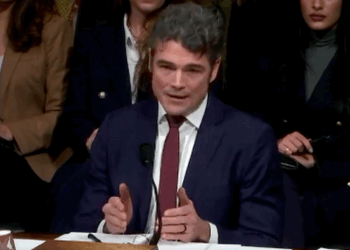
McGinnis kind enough to join me for a recorded conversation last month. In the first part of our discussion, which is here, we talk about the “clerisy” and how to think about the relationship of the wealthy and their philanthropy to it.
The just more than 14-minute video below is the second part, during which we discuss America as both a commercial republic and a philanthropic republic; the relationship between the civil society about which Alexis de Tocqueville wrote and the tax-incentivized nonprofit sector in its current form; the wealthy and artificial intelligence; and sensible regulation and who’s best positioned to formulate it.
Wealth that sustains and associations that improve
Describing the commercial republic, McGinnis tells me, our Enlightenment founding thought “commerce was really excellent,” because “it created wealth and therefore was sustaining of the republic by increasing the pie and not having people fight over a static or shrinking point. So that was good about it,” and it
put people in relation with one another in sort of joint enterprises and for mutual gain, and that made people think of one another as … at least commercial friends rather than antagonists and helped unite a country that might be divided across other axes, of religion or ethnicity. … That was an essential aspect of the founding of our society, and you look at the Constitution, the Commerce Clause tries to give the federal government, the power to open the avenues of commerce for that reason.
The philanthropic republic has always been part of America, as Alexis de Tocqueville noted, “right from the beginning,” according to McGinnis. It was “a sense of people’s self-image …. [T]hey wanted to improve the world and associate to improve the world.” Again citing Tocqueville, McGinnis continues,
[W]hen you had a limited state that was directing how social improvement went, people gathered together and had enterprises for social improvement and moral betterment. And of course, you need resources to do that and I argue in the book that you may even need more resources in the modern world.
The wealthy “have always been important to creating associations because, just like with companies, you need seed capital to create associations, and this is also an important aspect of America,” he says. “In fact, I don’t think you really can have a kind of limited government without a philanthropic republic because that allows public goods the government may not provide to be provided either by associations or directly sometimes by the wealthy funding them.”
Asked whether Tocquevillian civil society is the same as today’s tax-incentivized nonprofit sector, McGinnis answers, “Oh, absolutely not. But another point: there was not a large income tax back then.” He says the
deduction for philanthropy is saying that’s still something that we’re interested in, we value as a society. So I agree, it’s different, but you’re always struggling with translating one world to the next and you have a much bigger state than Tocqueville saw and much higher levels of taxation. So I think in that sense, it’s still a translation, an avenue, a channeling of some of the same impulses that Tocqueville saw almost 200 years ago.
Might civil society even benefit from being unconnected to the tax code? “You wouldn’t have the cues to do it and you’d have less of it. … The government would take up more of the slack. And is that good? I don’t think so,” answers McGinnis, saying he’s not making “an argument for a night-watchman state.” It’s an argument that “public goods and civil society encouraged by the government are a supplement and, in some sense, sometimes a correction to the government because the government says, ‘Well, this is working better and maybe that should change the way we deliver public goods.”
A worthwhile distinction and sensible regulation
Turning to technology in general, the topic of his earlier book Accelerating Democracy, and artificial intelligence in particular, McGinnis says “I’m sort of ambivalent and worried and excited and worried” and that “we’re at a hinge in human history” and “things may be fundamentally changing.” He is “of the view that our world might not be very recognizable in 20 years.”
Placing the topic in the context of his new Why Democracy Needs the Rich, he observes, that “we have actually a lot of wealthy people” who “are putting a lot of money into think tanks that are just focusing on this problem and it’s not a problem, I think, easily the government could solve on its own.” He says, “The rich are at the forefront both of its creation and of its, I think, ultimately its sensible regulation.”
According to McGinnis, “This is not obvious stuff. It’s not like regulating a carburetor or something like that—particularly given that if we regulated in bad ways, that may actually give power to China and to people in the world who then will be use it for a malevolent way.”
He thinks there’s worthwhile distinction to be drawn between the formulation of legal and regulatory blueprints by, on the one hand, politicians who are “elections specialists” and, on the other, “specialists in the best kind of policy,” whose work may be funded by the wealthy and their philanthropy.
“The left has a whole group of people at universities who are working full-time to create a policy menu for them, right? And what the right has done is create alternative institutions,” McGinnis says, “that actually make the right, once they when they get into power, act more sensibly in policy than they would be if they just were relying on the instincts of their raw politicians.”
Of what some may consider “sensible regulation” of the wealthy’s involvement in partisan politics through the charitable-nonprofit avenue specifically, he says, “I certainly think it’s a good idea to have a separation, insofar as we can.” If philanthropy has “a viewpoint perspective, that’s fine. But if it actually gets involved in actually trying to elect candidates with grassroots organizing, things of that sort, that strikes me as much more like politics. Now, I’m in favor of the rich being able to do that as well, but” we “might not want to have tax benefits for” it. “[T]hat strikes me as a sensible line that government could and should draw, and it may well be a difficult line, and one that is not always honored.”
Of Why Democracy Needs the Rich more generally, McGinnis says, “Not a lot of people are thinking about defending the rich. A lot of people are attacking the rich. So I thought this was a useful contrarian perspective.”