You’re reading Dispatch Culture, our weekly newsletter exploring the world beyond politics. To unlock all of our stories, podcasts, community benefits, and our newest feature, Dispatch Voiced, which allows you to listen to our written stories in your own podcast feed, join The Dispatch as a paying member.
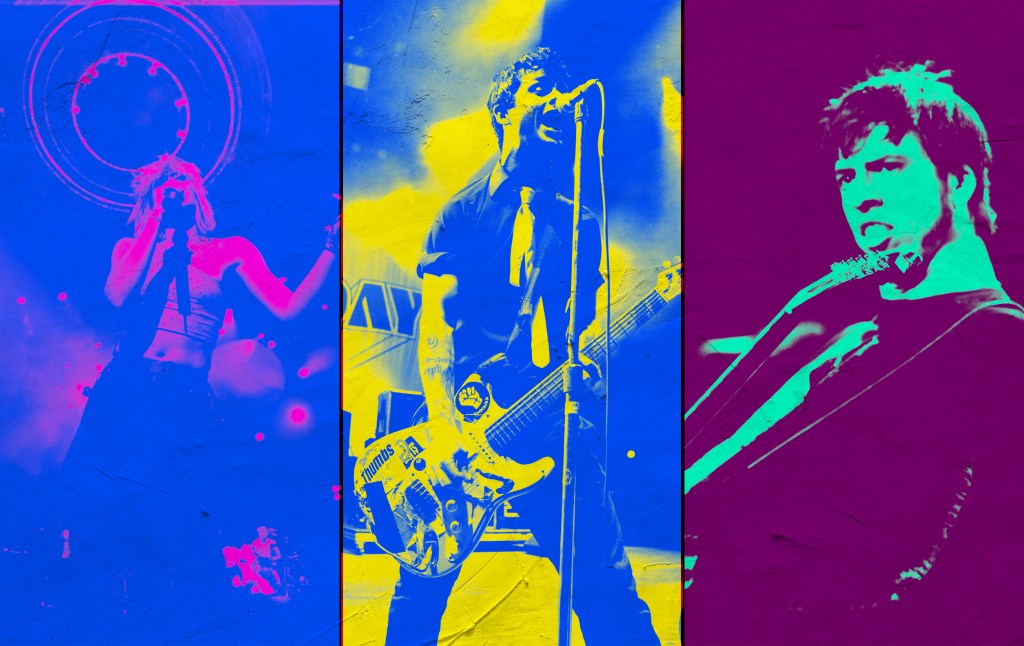
Back during the George W. Bush administration, frustrated punk rockers got political, releasing music from The War on Errorism to The Empire Strikes First to American Idiot. Should there be similar music during the second Trump administration? In today’s American Artifacts section, Joshua Tait asks this question, delving into the history of the Rock Against Bush scene and how politics—and ways of accessing music—have changed since then. Elsewhere in this newsletter, you’ll find a blog suggestion from yours truly, recommendations from Dispatch chief of staff Campbell Rawlins, a book review from the writer Nadya Williams, and a Work of the Week featuring that stalwart of American art, Edward Hopper.
We’re also introducing a new essay series: Where I’m From. Each week, a writer will share a meditation on his or her hometown—a bustling metropolis, distant desert outpost, quiet suburb, or somewhere in between—and what makes it unique. You can read our first entry here, from Dispatch regular Tim Sandefur. Look out for future editions on Saturdays!

In addition to Sandefur’s essay, we have three other pieces on the site today. In one, managing editor of The Lamp Nic Rowan reflects on the changing fortunes of the American mall. “No one, young or old, drives out to a vast suburban complex surrounded by endless parking lots to indulge in an afternoon of pleasure or, worse, to find meaning,” Rowan writes. “And yet, as the familiar mall has receded, new and even stranger versions have replaced it.”

Next, we have the writer Peter Biles on new, more conservative-coded indie presses—and how, while novelty is good, skilled writing is still crucial to reviving literary culture. “Am I writing a good story that will delight, entertain, and hopefully instruct?” Biles writes. “My work, after all, isn’t automatically worth reading. In other words, I can’t blame the liberal publishers for dismissing me when my stories aren’t compelling or interesting in the first place.”
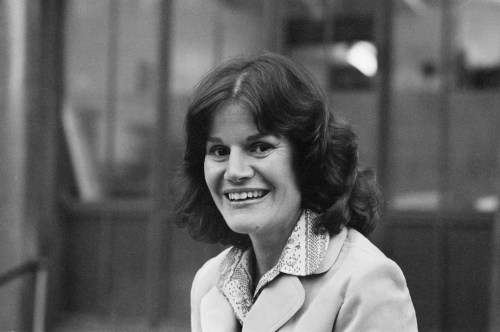
And finally, we have an excerpt of Judy Blume: A Life, a new book by Arc magazine editor Mark Oppenheimer. As Oppenheimer writes: “Being a famous author is work, and Judy—who still gives speeches, accepts prizes, mentors younger writers, helps run a bookstore—never stopped doing the work. She can’t stop. Her written responses to my questions probably run to over a hundred pages, making me wonder why she didn’t just write an autobiography. If she had, the audience would still be there.”
American Artifacts
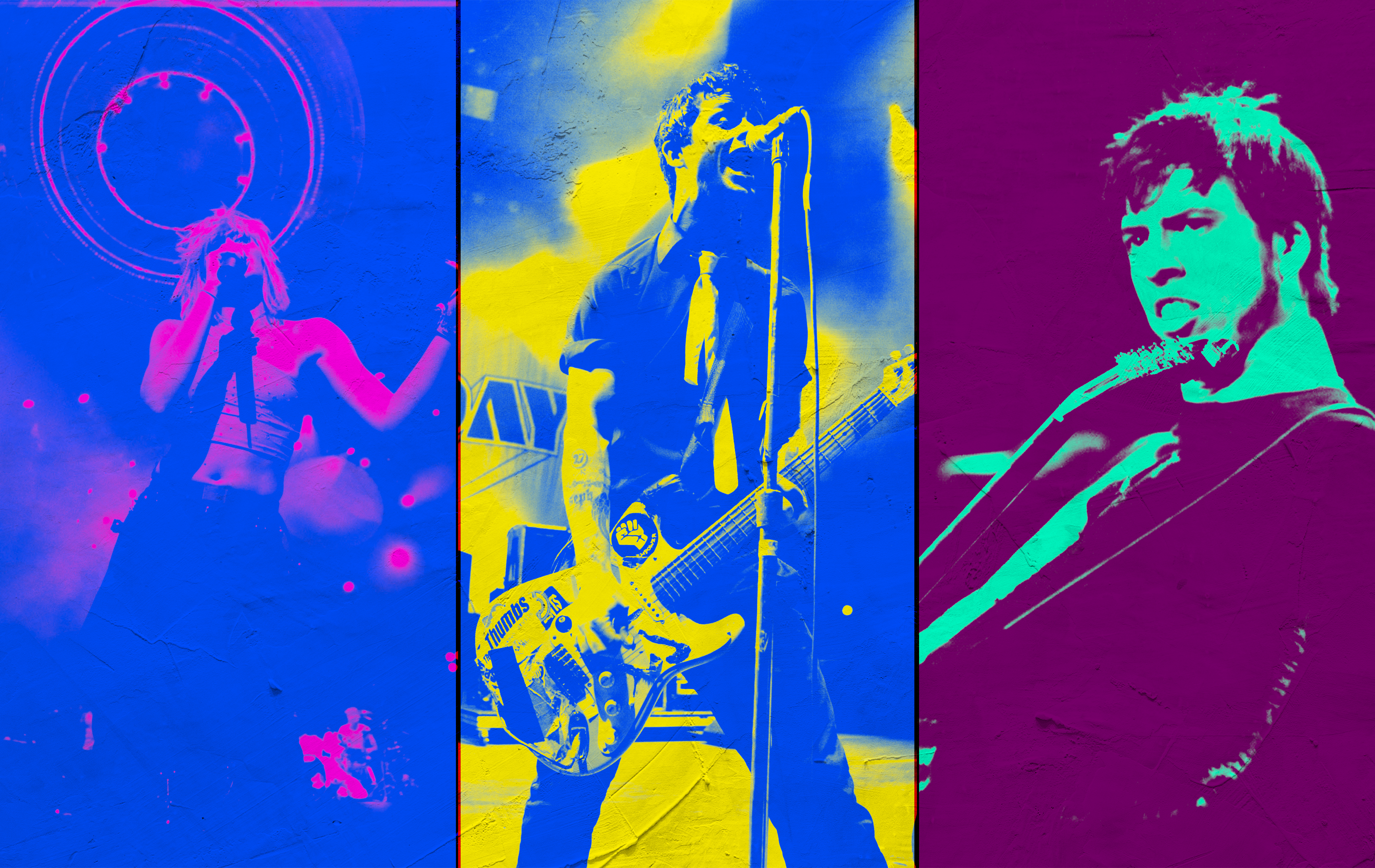
Why Is There No ‘Rock Against Trump’?
As a wannabe punk, I took my political cues in high school from the counterculture. I read Naomi Klein, watched Roger & Me, and I listened to Rock Against Bush.
The two-album compilation series was put out by the Southern Californian punk impresario “Fat Mike” (singer in the band NOFX) through his label Fat Wreck Chords in April and August of 2004. Fat Mike hoped to galvanize the typically white, male, and suburbanite punks against then-President George W. Bush. To overcome the default punk view that one politician was as bad as another—especially in the early-to-mid-2000s when terms like “Republicrat” and “Democran” were in currency—Rock Against Bush became pseudo-samizdat, loaded not only with songs and music videos, but political documentaries, standup comedy, and fact sheets. The compilations funded a tour where attendees could register to vote, and a “PunkVoter” website.
In the DIY, minor label-first punk scene of the 1990s and early 2000s, compilation albums were a vital commodity. Before we were constantly online and ruthlessly targeted by the algorithm, samplers let fans discover new music and labels display their sonic wares. You like The Distillers? Have you heard of Millencolin? Or maybe Tiger Army? Compilations were also great for other rarities like acoustic offcuts or esoteric covers.
Although they were really Punk Against Bush, the two compilations were pretty great for fans. Big names like Green Day, Foo Fighters, and No Doubt slotted alongside punk mainstays like Bad Religion, Rancid, and the Dropkick Murphys and virtually the entire SoCal punk scene. The relatively apolitical Alkaline Trio dropped a fan favorite; Yellowcard covered Lagwagon; Billy Bragg, the British protest troubadour, showed up on a track by the ska-punk outfit Less Than Jake.
Punk rock might be more associated with a nihilistic distrust of institutional politics, especially for a scene that was, broadly, more concerned with suburban ennui during the End of History 1990s than high politics. But there was a very specific political awakening during the early 2000s, fueled both by the war in Iraq and Howard Zinn readings. In a short burst, NOFX put out The War on Errorism, the more cerebral Bad Religion dropped The Empire Strikes First, and Green Day returned to the top of the charts with the era-defining pop punk rock opera, American Idiot.
For this scene, getting political made perfect sense. These bands all saw themselves within the longer tradition of punk rock and the wider counterculture. More so than contemporaneous rock scenes, SoCal punk had a strong political impulse embedded in its DNA. A very potent strain of political punk rock reshaped punk in the 1980s, setting kids against their Orange County Republican parents, and taking punk from the goofy dropout Ramones to a much edgier, sometimes bleaker, place. Rock Against Bush let bands who had missed this genre-defining epoch fight their own battles after the tame Clinton years. The Bush administration’s combination of evangelical moralism and war-on-terror domestic surveillance and warfighting made Bush the perfect target for a re-politicized punk scene.
What about now? Many musicians have refused to let Donald Trump or the Department of Homeland Security use their music. Others have pulled out of events at the Kennedy Center. The popular music world is clearly opposed to ICE. But apart from an anachronistic Bruce Springsteen protest song, nothing yet approaches the anti-Bush theatrics of mid-2000s punk. Perhaps that’s fine; the political punk of the era was not sophisticated political analysis. Nor was it effective: Bush served two terms.
Still, I wonder why there is no American Idiot for the Trump era. It may be because Trump’s personalist politics and irony-laden appeal make him a trickier target than Bush’s maladroit sincerity. So what if you accuse Trump of “Hy-poc-ris-y”?
Maybe the past decade has been too gonzo and Trump too bizarre to skewer in a shout-a-long. Or perhaps the music industry and monoculture—on its absolute last gasp in the 2000s—is too exhausted to contemplate anything but safe money-spinners. I spun my Rock Against Bush CDs all the time in part because I owned them. How does a protest song compete with the infinite flow of Spotify?
An Outside Read
Few days can pass without political readers picking up some new argument about coastal elites and regular ol’ folks, the vice president’s Hillbilly Elegy being one of the ur-texts of that discussion. More recently, the writer A.M. Hickman took a more unitive tack, arguing a) that it is indeed easier to have the trappings of la dolce vita in cities and b) that coastal and inland Americans do in fact need each other. “If we want the whole country to thrive, it is of the utmost importance that these various wings of the broader culture seek to understand one another, to tolerate one another, and to now and again borrow a few notes from their neighbor,” Hickman writes. “I’m sure that Malibu, Manhattan, and Cambridge could use a few more barn dances and a few more babies—and I’m quite sure that Sioux City and Bangor would do well to trade the Mike’s Hard Lemonade for a nice California Pinot now and again. The guy from Fargo should try out Manhattan, and enjoy it—after all, it’s not gonna hurt anything but his wallet. And no doubt, the high-end crowd in Santa Fe and San Francisco might find Kansas markedly more charming than they’d ever expect. After all, it’s all America, isn’t it?”
On Our Shelves
Editor’s Note: We’re trying out a new section in the newsletter this week, devoted to what I’m calling “micro book reviews.” As you may have heard, reading is down—and a number of publications are reducing or slashing their books coverage altogether. We at The Dispatch believe that reading is not only enjoyable, but a bedrock of society. So every Saturday, look out for a short blurb on recent fiction or nonfiction, from writers we trust to have good taste.
Winter is traditionally sickness season. In our playgroup, one family or another is out with something each week—the flu, a bad cold, and (everyone’s favorite) the unnamed mystery bug that’s been making its rounds through the local schools. “You just have to wait this out,” pediatricians confirm to nervous parent friends. In the meanwhile, we scrub floors and tables, steam carpets, sanitize towels and bedding, waging war on the invisible foe.
The war on germs is a very modern war, historian Susan Wise Bauer reminds us in her new book, The Great Shadow: A History of How Sickness Shapes What We Do, Think, Believe, and Buy. There are many excellent histories of disease—such as John Green’s catchy (but not contagious) Everything Is Tuberculosis, or ancient historian Kyle Harper’s mesmerizing history of the world from a germ’s point of view. “It’s a microbe’s world. We’re just living in it,” he quips.
Bauer’s quest is different. She’s not telling the story of infectious diseases themselves—not exactly, anyway. She’s more interested in how people have thought about these diseases since prehistory to the present. Until just over a century ago, human thinking about infectious disease had been most influenced by the ideas of Hippocrates, the fifth-century B.C. Greek physician, who saw sickness as invasion from outside. The body in equilibrium is healthy; sickness comes from outside. Keep those humors balanced!
Alas, it turns out germs are very real. They can grow within us and spread outwards and cause much damage—and thankfully, we have corresponding life-saving medications, many of them barely a century old. Now if only I could convince my children of germ theory. But I don’t suspect the five-second rule is going away in this house.
Stuff We Like
By Campbell Rawlins, chief of staff
- Guitars. They’re back! And I don’t mean the stomp-and-holler, banjo-for-a-car-commercial version of “rootsy.” I mean real rock n’ roll. Geese is one of the buzziest bands in the country right now, making distortion-soak chaos rock built on jagged guitars and menacing riffs. Mk.gee is warping guitar tones into something ’80s-coded but emotional. Royel Otis have revived jangly hooks, while MJ Lenderman has brought back guitar-solo-heavy Southern rock that feels like it was lifted straight out of a smoky bar. In a music era shaped by algorithmic flattening—songs engineered to slide neatly into “vibes” playlists—it’s refreshing to hear indie rock push the other direction. The guitars aren’t nostalgic or cliché; they’re driving the chaos, the friction, and the lack of polish. I’m here for it.
- Shrinking. I’m a father of two young boys, in a season of life that can feel all-consuming—work, dinner, bath, bedtime, repeat. So when the kids are finally down and the laptop shut, I’m not looking for prestige TV. I want something that feels good. Since the first season, Shrinking has played that role for me. Sure, it’s a bit soapy. The friendships stretch plausibility. But the characters are deeply relatable. Ted McGinley cracks me up nearly every episode as Derek. Michael Urie has clearly become a star. And Harrison Ford gives one of the funniest, most earnest performances of his career. At its core, it’s about family, friendship, and people choosing to show up for each other. I think we could all use a little more of that.
- Filterworld. Do you ever feel like technology is quietly closing in around you? I do … especially since I’ve integrated AI into my workflow at nearly all hours of the day. Kyle Chayka’s Filterworld isn’t really about AI so much as algorithms, and how recommendation engines subtly shape what we see, hear, and eventually like. Feeds replace chronology. Prediction replaces discovery. Culture starts drifting toward what’s most easily consumed and least likely to offend. Reading Filterworld changed how I move through the world. I’m more aware of when something feels optimized versus chosen. And I find myself gravitating toward art that resists the feed: things with friction, texture, even a little inconvenience. It’s hard to overstate how much this book has changed the way I see the world.
Work of the Week
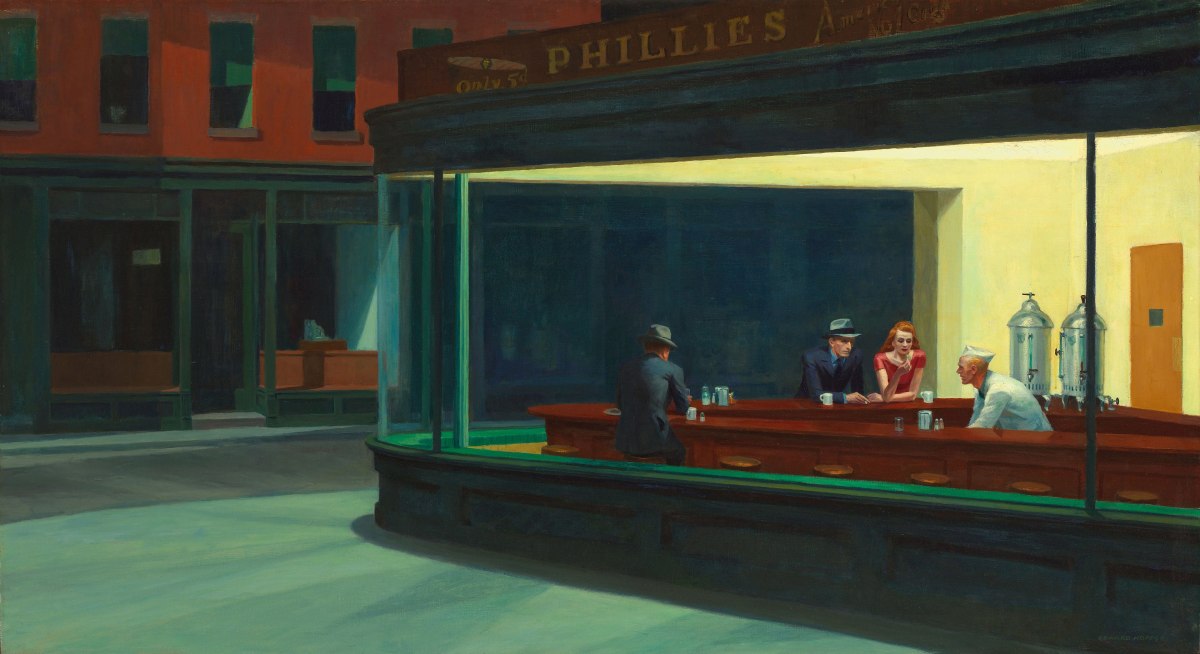
Name: Nighthawks, Edward Hopper, 1942
Why I’m a Dispatch member: I found The Dispatch through David French’s French Press Sunday newsletter. David was saying all of the things I was thinking, and from there, I took the plunge. I’m a political nomad, and The Dispatch is my oasis where I tangle with other nomads. Sometimes, we disagree, but we do it with grace in our hearts for one another.
Also, Jonah’s giggle on 1.5x speed is one of my kids’ favorite sounds while driving. That’s worth a subscription right there.
Why I chose this work: There is something wonderfully calm about Nighthawks. It reminds me of the many late nights my friends and I spent at hole-in-the-wall diners in our high school and college days, but unlike any of those nights out, no one in Nighthawks is speaking, which contributes to the quiet of the piece.
I can’t explain it, but I’m drawn to the man whose back is to the viewer. He seems alone. I wonder what his day was like and what drew him here. I would like to draw up a stool next to him and maybe sit together quietly while sipping something warm.
I have a small print of this in my office, and I often pause to peer once again at these four and wonder about their lives.
Interested in being featured in this section? Submit a work of art here.
Interested in being featured in this section? Become a Dispatch member here.