The Philippines’ geographic positioning along the Pacific’s First Island Chain makes it a partner of fundamental importance to the United States. So, when the government in Manila sends signals about its warming ties with Beijing, as they have in the last few weeks, U.S. officials must take notice.
Despite a consistent partnership since Philippine independence, the U.S.-Philippines relationship hit a rocky patch following Rodrigo Duterte’s ascension to the presidency in 2016. Duterte’s tenure saw a chill in bilateral ties with the United States, as he entered into an alleged “gentlemen’s agreement” with Chinese President Xi Jinping. This included granting Chinese vessels a legal grey area through which to expand maritime incursions into Philippine territory.
Meanwhile, in the commercial realm, Duterte’s tenure saw a substantial increase in trade between the PRC and the Philippines. In 2018, China Telecom became a major player in the Philippines’ telecoms sector after Duterte assembled a Filipino-Chinese joint venture to challenge a previous telecoms duopoly. More broadly, the Philippines’ imports from the People’s Republic of China (PRC) roughly doubled between 2016 and 2021.
>>> Why China’s Growing Economic Ties With Egypt Matter
President Ferdinand “Bongbong” Marcos Jr.’s election in 2022 saw a return to the status quo between the United States and the Philippines, and a rejection of China’s aggressive behavior in the South China Sea.
However, recent statements by the president suggest he, too, may be considering a thaw in ties with Beijing for unfortunate reasons largely beyond his control. Manila is currently experiencing an energy crisis due to supply chain disruptions in the Strait of Hormuz stemming from the conflict with Iran. The Philippines is highly reliant on imports for its energy supply and thus highly vulnerable to energy price shocks.
In late March, President Marcos stated that a “very, very serious restructuring” of relations with China is “certainly going to happen,” before adding “there will have to be a new normal.” His comments came alongside a statement that there could be impetus for the Philippines to co-explore energy reserves with China in the South China Sea. Marcos was clear that any such efforts would necessarily respect Philippine territorial sovereignty. Still, the signals are unmistakable: Manila’s energy predicament leaves it pondering a menu of options to achieve greater energy security.
It’s understandable for President Marcos to assess his options given the downward economic effects of energy price spikes. It’s already resulted in Filipino farmers being forced to abandon their harvests, the reining in of GDP projections for 2026 and 2027, and the temporary imposition of a four-day work week to alleviate energy demand.
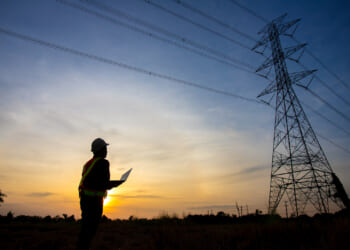
Given the Philippines’ non-trivial concerns, the United States should work with Manila and friendly Association of Southeast Asian Nations (ASEAN) partners to bolster the Philippines’ energy security. Washington has options in this initiative. The ASEAN power grid—which seeks to enhance Southeast Asia’s energy security through a more integrated regional energy structure—can benefit from American development finance tools and technical expertise. Other energy-adjacent opportunities for development cooperation include submarine cable interconnections across the archipelago, which would help reduce the logistical costs of transporting energy between island population centers.
The dismantling of USAID in 2025—a necessary overhaul of a bloated bureaucratic organ—was misinterpreted by many, leading to the false assumption that the Trump administration doesn’t care about investing in its allies’ socioeconomic development. Such assumptions are misguided, as evidenced by the recent increase in the Development Finance Corporation (DFC) investment cap to $205 billion, up from $60 billion. The Trump administration’s actions have streamlined America’s ability to invest in allies, and few countries are more deserving of expanded investment than the Philippines.
>>> The KMT Goes to China: Assessing the Political Stakes of Cheng Li-Wun’s Visit
Joint energy exploration with China may seem appealing amid current constraints. Still, any such endeavor will be exposed to the same risks that Beijing brings to bear elsewhere: short-term gains that inevitably cannibalize local industry and self-sufficiency, leading to long-term losses and unhealthy economic dependency on an actor that repeatedly violates the sovereignty of its economic partners. The State Grid Corporation of China, a state-owned enterprise, already holds a 40 percent stake in the National Grid Corporation of the Philippines—Manila countenances a serious risk to its sovereignty by further embedding itself within a Chinese-controlled energy order.
There are other concerns farther off on the horizon. Bound by term limits, Marcos will eventually step aside, and Sara Duterte, the daughter of former President Duterte, has emerged as an early frontrunner. While Sara has distanced herself from several of her father’s more explicitly pro-China policies, the Duterte family’s political base in Mindanao is not as firmly or traditionally pro-American and China-skeptical as the class of Manila-based political families such as the Marcos family.
The Philippines is still two years away from its 2028 presidential elections. Still, the timing of the current energy crisis will only further intensify China’s efforts to intertwine itself with the Philippines’ economy. The archipelagic nation has consistently proven itself a reliable ally of the United States, and its people look to America as a fraternal partner and supporter: its ties to the Americas stretch back for at least half a millennium.
Nonetheless, policymakers in Washington, D.C. must not take key Indo-Pacific alliances for granted and must keep working to help address Manila’s legitimate energy security concerns, providing alternatives to China while advancing mutually beneficial goals in security and industrial development.
This piece originally appeared in The National Interest.