When I attended SERE (survival, evasion, resistance, escape) school, a course intended for service members at greater risk of finding themselves behind enemy lines, the portion of the course that simulated captivity in a prisoner of war camp included a metaphorical Whitman’s Sampler of the kind of sadism and punishment one might expect if one fell into the hands of America’s enemies.
These covered various kinds of discomfort and displeasure, usually exposing the student to each different punishment once—that is, unless the student showed obvious fear, pain, or dislike of one of these or another. In other words, if you let your captors know the specific thing they could do to you to elicit an adverse reaction, they are more likely to do it if they wish to pressure you. No matter how bad something is, do not let the enemy know what bothers you most.
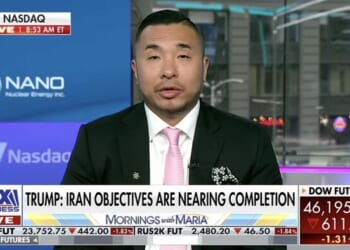
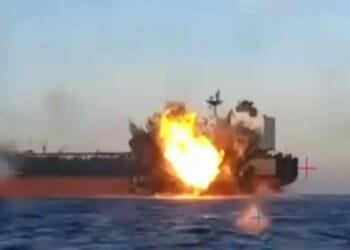
Most Americans will never experience anything like SERE training, but the lesson is broadly applicable: It’s best not to demonstrate in either words or actions that your adversary has you over a barrel, unless you want that adversary to continue to use that leverage. This obvious lesson seems to have escaped the grasp of the man who has labeled himself a master dealmaker, as he, in both words and actions, lets the Iranians know that, to use a phrase of which he is so fond, the one card they do hold is the one that elicits the pain and discomfort that may motivate him to agree to a wholly unsatisfactory ending to the conflict: threatening shipping through the Strait of Hormuz.
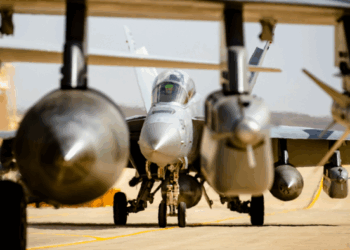
Operation Epic Fury, initiated over nine weeks ago via nocturnal social media announcement, has ground to an odd pause. Our forces remain in theater, the combatants’ respective navies restrict passage through a critical waterway, and we are not making progress toward bringing about any of the various conditions that the Trump administration claimed would exist at the end of it. A war that started muddled in its purpose has now become muddled in its progress.
Just over a month into the conflict, and seemingly frustrated with Iranian resistance in general and blocking the Strait of Hormuz in specific, President Donald Trump had issued a series of escalatory threats, declaring that he would order the destruction of everything from power infrastructure to Iranian civilization as a whole, and that this level of wholesale carnage might be accomplished in as little as four hours if the Iranian regime did not accede to his demand to open the strait. His original deadline of 48 hours was extended for five days, then that deadline was extended for 10 days, then that deadline was extended for an additional day, then, two hours short of the final final—for real this time final—deadline, the president announced a Pakistani brokered, two-week ceasefire to allow for talks and negotiations. All these extensions came with no substantive concessions from the Iranians.
More than three weeks into the two-week ceasefire, which began April 8, the two sides are at an impasse. An initial attempt at in-person talks in Islamabad that weekend proved largely performative and half-hearted, as the two parties each showed up with a list of non-negotiables that would be difficult to overcome through weeks of negotiations and therefore impossible with an effort wherein Vice President J.D. Vance spent more time in transit to and from the meeting site than in Islamabad itself.
The only indications of Iranian eagerness to seek peaceful resolution come from Trump—who has a less than firm relationship with the truth—claiming that the Iranians have told him privately they are desperate to give in to each of our demands.
After the failed Islamabad meeting, the Iranians demonstrated no earnest desire for negotiations. In the face of this Iranian intransigence, the administration could have allowed the April 22 deadline, and with it the ceasefire, to expire. Instead, it showed an amateurish eagerness, making contradictory statements about Vance’s imminent departure the day before the deadline for follow-up negotiations. One could imagine Vance moving to and from his motorcade like he was doing the hokey pokey with each new pronouncement. Ultimately, he stayed in Washington, and Trump extended the ceasefire.
Even the alternate plan of special envoy Steve Witkoff and presidential son-in-law Jared Kushner leading negotiations last weekend was halted at the last minute, potentially as a face-saving measure when Iranian Foreign Minister Abbas Araghchi departed Pakistan without any interest in meeting with the American representatives.
While we should not trust any public pronouncements made by the Iranians (nor should our government take private ones at face value either), the regime has effectively acted in keeping with the perception it wishes to create: Iran’s leaders are not impatient for negotiations, nor do they seem willing to make accommodations in advance of any, while simultaneously demanding preconditions from the United States. The only indications of Iranian eagerness to seek peaceful resolution come from Trump—who has a less than firm relationship with the truth—claiming that the Iranians have told him privately they are desperate to give in to each of our demands.
That would strain credulity under any circumstances, but especially after the president has made many, many claims of Iranian surrender or concession over the course of the nine-week conflict, all of which have proven to be demonstrably false. From promising a complete surrender of retained nuclear material, to saying the Iranians would halt executions that have continued, to assurances that the Strait of Hormuz was open as international ships came under attack, the sad truth is the American people can put no stock in anything the White House claims about Iranian compromise and, in fact, should probably assume the opposite is true in most cases.
Trump is obviously aware that the Iranians, whom he is supposed to be pressuring to create a satisfactory resolution, know he is lying. But these statements aren’t meant to influence the Iranian regime; they are meant to try, just one more time, to pull the wool over the eyes of the American people, to whom he never made the case for war, upon whom the increased economic burdens fall, and from whom a growing disapproval is making urgent the president’s desire to move past a conflict he believed would be simple.
It is true that the United States has done exponentially more damage to the Iranian military than it has done to ours. And it is true that the recently imposed American reciprocal blockade is far more deleterious to the Iranians than their original one is to the U.S. But neither of those may matter in adjudicating an end to the war. The Iranians seem willing to endure more military damage than our president is willing to inflict and more economic pain that our president is willing to absorb—and this is far more likely to be the determining factor.
With each new over-the-top proclamation of pending violence, every deadline extension rewarded with nothing in return from the Iranians, and all the false claims of Iranian backchannel surrender, the Iranians’ belief that they can outlast the president is reinforced.
It’s worth remembering any of the myriad reasons for war that Trump and his acolytes have articulated and vacillated between. In January, we were going to stand up for the Iranian people, yet now there is no discussion of their fate. In February, we were going to end Iranian support to their proxy networks, yet the president has pressured Israel to stop striking Hezbollah. In March, we needed to degrade the Iranian missile and drone systems so they would number fewer than our interceptors in theater, yet the Iranians retain more of these capabilities than previously thought—while we have depleted key stocks of our interceptors and precision guided missiles.
Meanwhile, the Iranians are not publicly backing down from their maximalist demands, having submitted a new 14-point proposal that includes many of the unreasonable conditions they had previously submitted in Pakistan, including withdrawal of American forces in theater, significant financial reparations, protection for Hezbollah in Lebanon, and some recognition of Iranian control over the strait. This Iranian proposal would also separate discussions about reopening the strait from those regarding the disposition of its nuclear weapons program. While the president originally seemed to reject this proposal outright on Friday, by the next day he seemed to be softening to the idea of entertaining portions of the Iranian language. It does not seem likely the White House would agree to all, or even most, of the Iranian demands, but any of these should be viewed as unacceptable—and even entertaining them as a basis for negotiation plays into Iran’s game plan.
We have gone from grand proclamations of “unconditional surrender” and telling the Iranian people “the hour of (their) liberation is at hand” to now sheepishly looking for any agreement, including one that does not liberate the Iranian people, does nothing to diminish Iranian support for its proxies, likely will not not end the Iranian ballistic missile program, may not secure the remaining highly enriched uranium, and at best, reopens the strait to a condition less advantageous for the U.S. and international community than status quo ante.
The president is now dealing with the realities of neither explaining to the American people why the war was necessary and what its goals were, nor focusing on those goals himself. The former has created a domestic reaction that pressures the president to make a hasty deal. The latter means he may be willing to give away the farm to secure that deal.
Regardless of the timing of or forethought put into the conflict, America is currently engaged in a war, and it is better for us, our allies, and the world as a whole that it is resolved with an American victory rather than the perception of an Iranian one. As of yet, the means Trump thought would be adequate to bring about this victory have proven insufficient, and he should adjust accordingly—generally speaking, this would likely require a long-term imposition of the mutually painful blockade or an escalation of combat operations, potentially including ground-based options. However, escalation or resumption of combat operations may now be complicated by the president’s attestation to Congress that the war has “terminated”—his short-term cute trick to skirt the War Powers Act potentially hindering his options over the longer term.
Either one of these requires him to do two things he has, as of yet, been unwilling or unable to do—explain to the American people the sacrifices and difficulty to come, and why those sacrifices are worth it, and demonstrate to the Iranian regime that he is willing to endure them.