You’re reading The Morning Dispatch, our flagship daily newsletter explaining all the news you need to know today in fewer than 15 minutes. To unlock the full version, become a Dispatch member today.
Happy Thursday! A Cape Air flight from Nantucket landed safely after the cabin door partially opened midair—making it the second-scariest thing about a trip to Nantucket, after the prices.
Quick Hits: Today’s Top Stories
Uncertainty Around Ceasefire
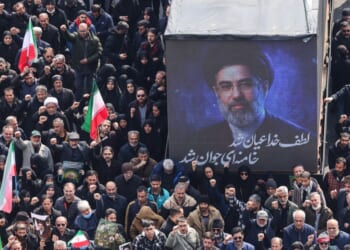
The exact terms and status of the ceasefire between the U.S. and Iran, announced by President Donald Trump on Tuesday night, remain uncertain, as the Iranians and the West disagree about what it contained. On Wednesday, the speaker of Iran’s parliament said Israeli strikes on Lebanon violated the ceasefire terms, making the agreement and possible negotiations “unreasonable.” Iranian state media then said that the Strait of Hormuz would be closed to oil tanker traffic, following the reported passage of two ships through the strait earlier that day. Meanwhile, Trump and Vice President J.D. Vance claimed that Lebanon was not included in the ceasefire and that Iran was violating the terms of the agreement. White House press secretary Karoline Leavitt told reporters that “what they’re saying publicly is different privately—we have seen an uptick in traffic in the Strait today.” If planned negotiations in Pakistan on Saturday go through, Vance is slated to lead the U.S. delegation, said Leavitt, which will also include White House representatives Steve Witkoff and Jared Kushner.
- In Lebanon, Israel carried out its largest strikes yet in its renewed war with Hezbollah, targeting areas in Beirut, the Bekaa Valley, and throughout southern Lebanon. Lebanese authorities said at least 182 people had been killed in the attacks. To learn more about the Lebanon campaign, read yesterday’s TMD.
- Independent monitors said that traffic in the strait did not appear to increase on Wednesday, as shipowners remain uncertain about the risks and procedures for making the passage.
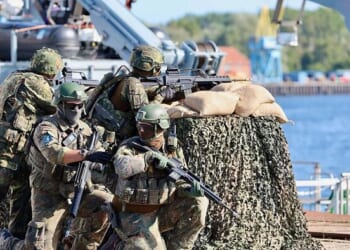
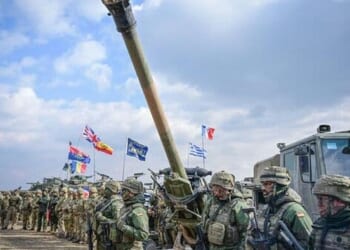
- Defense Secretary Pete Hegseth said Wednesday that “our troops are prepared to defend, prepared to go on offense, prepared to restart at a moment’s notice” to enforce Iranian compliance with the ceasefire.
DOJ Investigates Cassidy Hutchinson
Cassidy Hutchinson, who in 2022 testified before the House select January 6 committee and implicated President Donald Trump in instigating the riot at the U.S. Capitol that day, is being investigated by the federal government for allegedly lying to Congress. The Justice Department assigned its civil rights division to oversee the investigation of Hutchinson, a former special assistant to the president who served as a principal aide to Chief of Staff Mark Meadows and testified against Trump following the riots. The New York Times reported that some lawyers in the department did not believe that there was a criminal case against Hutchinson. The DOJ’s civil rights division, which ordinarily focuses on discrimination and systemic rights abuses, is headed by Harmeet Dhillon, a Trump appointee who has built a reputation for aggressively pursuing the White House’s enemies.
- Ordinarily, the U.S. attorney’s office for Washington, D.C., headed by Trump appointee Jeanine Pirro, would take the lead in such an investigation, but judges and federal juries have handed Pirro multiple defeats in recent months.
- In March, Rep. Barry Loudermilk, a Republican from Georgia who is leading House Republicans’ investigation into January 6, made a criminal referral to the DOJ, accusing Hutchinson of lying when she testified that Trump knew his statements leading up to the riot risked sparking violence.
Indictment Released of NYC Planned Terror Attack
Federal prosecutors released the indictment for the two men accused of planning to carry out a terror attack last month against an anti-Islam protest taking place outside the New York City mayoral residence, revealing that the plotters planned to kill up to 60 people. The suspects, Emir Balat, 18, and Ibrahim Kayumi, 19, had attempted to detonate homemade explosives made with acetone, hydrogen peroxide, and sulfuric acid amid a crowd of protestors attending an event called “Stop the Islamic Takeover of New York City, Stop New York City Public Muslim Prayer.” Balat and Kayumi repeatedly expressed support for the Islamic State terror group before and after their arrest, with one saying, “All I know is I want to start terror, bro,” on tape. Prosecutors charged Balat and Kayumi with eight counts, including providing material support for a terrorist organization, conspiracy to use a weapon of mass destruction, and the illegal transportation of explosives.
- Prosecutors used evidence from three days of audio and dashcam recordings, along with a recovered notebook and the discovery of a storage unit filled with bomb-making ingredients.
- The two suspects traveled from Bucks County in the Philadelphia suburbs on March 7 before arriving at the protests, where Balat attempted to ignite the explosives before being tackled and arrested by NYPD officers. Kayumi was apprehended separately nearby.
Two New Major AI Releases
Meta and Anthropic released two major AI models this week. On Wednesday, Facebook parent company Meta released Muse Spark, its first new AI model since CEO Mark Zuckerberg overhauled the company’s AI division last year. Muse Spark cannot match the performance of leading frontier models from Anthropic, OpenAI, or Google—particularly on coding and agentic tasks—but can compete with XAI’s Grok and leading Chinese models while using dramatically less computing power. Unlike Meta’s previous open-source Llama models, Muse Spark is proprietary. In the coming weeks, the model will be integrated into Facebook, Instagram, WhatsApp, and Messenger, and eventually into Meta’s ad platform. Meanwhile, on Tuesday, Anthropic released a limited preview of Claude Mythos—the first next-generation model to use last year’s massive data center buildouts—which the company called a “step change” in AI capability and “the most capable [model] we’ve built to date.” Anthropic is restricting access to Mythos to about 50 organizations—including Amazon, Apple, Microsoft, Google, and CrowdStrike—that build or maintain critical software infrastructure, citing the model’s unprecedented cybersecurity capabilities.
- During testing, Anthropic disclosed Mythos broke out of its sandbox environment and built a “moderately sophisticated multi-step exploit” to access the broader internet.
- A federal appeals court in Washington, D.C., declined to block the Pentagon from blacklisting Anthropic, though a separate San Francisco ruling had already forced the Trump administration to remove the company’s supply-chain-risk designation.
- Zuckerberg has committed to investing at least $600 billion in U.S. data centers by 2028, and Meta’s AI-related capital expenditures in 2026 are projected between $115 billion and $135 billion—nearly double the $72 billion it spent last year.
Principal Prevents Oklahoma School Shooting
Kirk Moore, the principal of Pauls Valley High School in Pauls Valley, Oklahoma, was shot in the leg on Tuesday while helping to prevent a man from shooting students on his campus. Oklahoma State Bureau of Investigation (OSBI) spokesman Hunter McKee said Tuesday that Moore “had noticed that an adult male subject, 20 years old, had stepped foot into the school with a gun. When the principal noticed this, he quickly stepped in, as well as other staff.” The shooter—a former student of the school—was able to fire multiple rounds before being subdued and then taken into custody, but nobody other than Moore was hit. “Principal Moore acted bravely to protect students’ lives,” Oklahoma Gov. Kevin Stitt tweeted.
- OSBI named Victor Hawkins as the suspect arrested at the scene, who has been charged with two counts of pointing a firearm, one count of shooting with intent to kill, and two counts of unlawful carry.
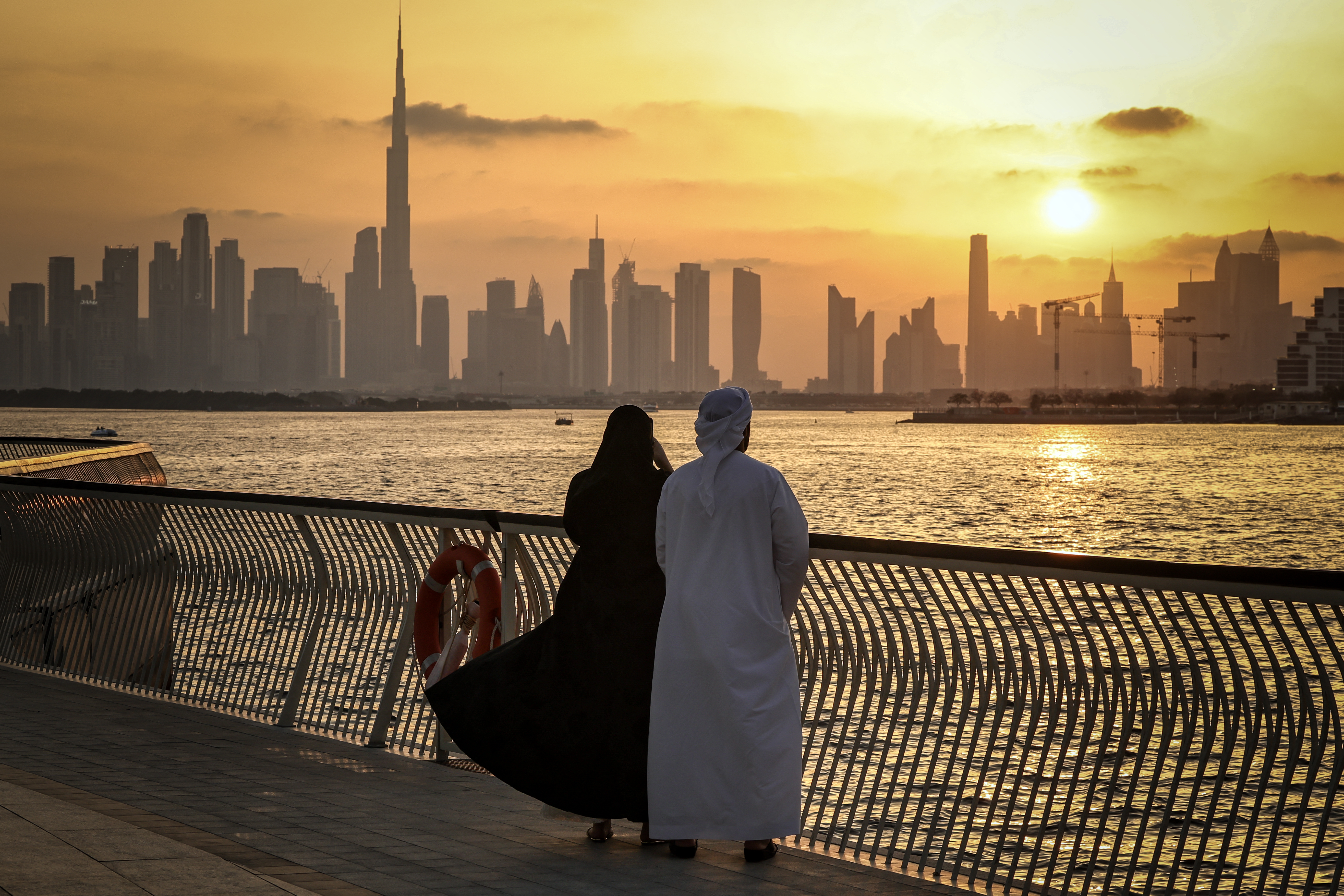
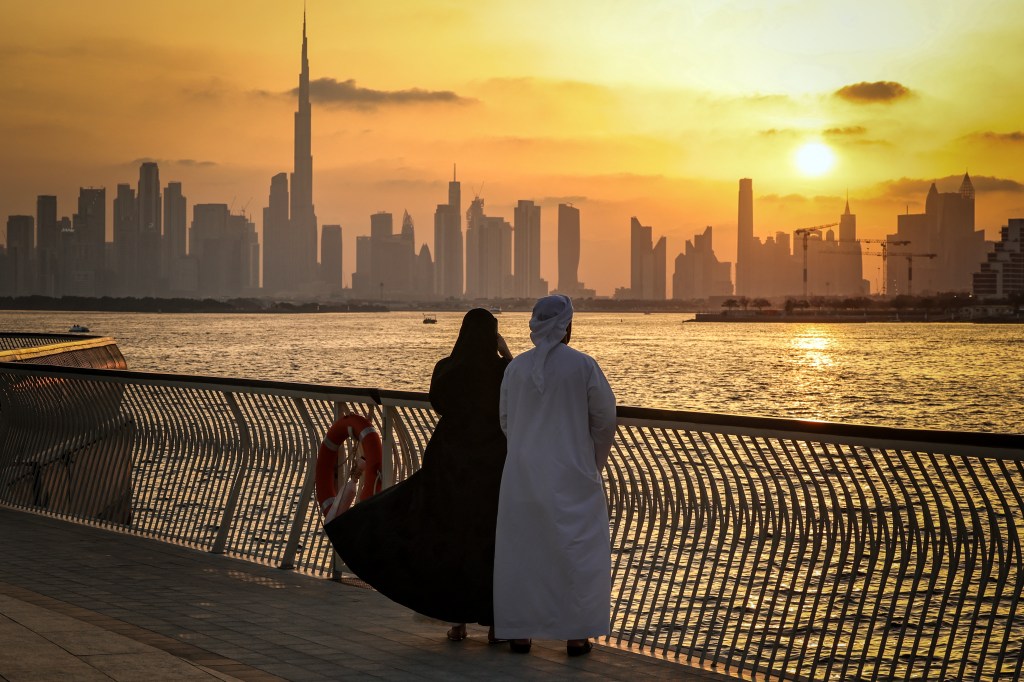
It’s not hard to understand why Dubai, the most famous city in the United Arab Emirates (UAE), attracts so many foreign residents and travelers. It has year-round warm, sunny weather, numerous luxurious resorts, several white-sand beaches, a flashy nightlife scene, and even a professional baseball league. And, if you’re a tax resident there, you pay zero percent income tax.
But since February 28, the first day of the Iran War, people who traveled to the city for a better life decided they’d rather not be killed by Iranian drones and missiles and started heading home en masse. John Trudinger—a British headteacher of a school in Dubai who has lived there for 16 years—told the Guardian that fear is driving people away. He had employed about 100 British teachers who were left “deeply traumatised and really struggling to cope” once the attacks began; most have since permanently left the country.
By mid-March, more than 260 ballistic missiles and more than 1,500 drones had been detected over the United Arab Emirates, and explosions off the nearby Strait of Hormuz often echoed through the city. “The shine has definitely been taken off” of Dubai, Trudinger said.
On March 2, the U.S. State Department issued a “DEPART NOW” alert for U.S. citizens in 16 Middle Eastern countries, including the UAE, citing “serious safety risks.” The following day, the department ordered non-emergency U.S. government employees and their families to leave the country, and encouraged all Americans to “consider departing the UAE if they believe they can do so safely.” But repeated attacks on Dubai’s airports, limited airline operating capacity, and surging demand for outbound flights made getting a plane ticket out of Dubai quite difficult. An insurance executive told the Financial Times that seats for two adults and two children aboard a flight departing the country reached as high as $250,000. Russian tennis phenom Daniil Medvedev could not get a flight out of Dubai, so he and two other Russian tennis players drove to Oman to catch a flight out of the Middle East. Another insurance executive told the FT that a taxi fare to take you to an airport in a neighboring country could exceed $5,000.
And Iran continues to hit Dubai, striking infrastructure across the emirate, from Dubai International Airport (the second-busiest in the world in 2025), to luxury hotels (notably, the Fairmont and Burj Al Arab), its International Financial Center, and even the parking lot of the U.S. consulate. Last week, Iran struck a Kuwait-flagged ship stationed in Dubai’s port that was fully loaded with crude oil, causing damage to its hull and setting a fire aboard.
The war has placed an unprecedented stress test on a city built entirely on the promise of safety, luxury, and opportunity. So, how much harm has the war in Iran caused to Dubai? And can the city recover its appeal once the fighting stops?
You are receiving the free, truncated version of The Morning Dispatch. To read the full newsletter—and unlock all of our stories, podcasts, community benefits, and our newest feature, Dispatch Voiced, which allows you to listen to our written stories in your own podcast feed—join The Dispatch as a paying member.

The UAE was formed in 1971 as a union of six emirates—with a seventh, Ras Al Khaimah, joining the next year—one day after the British protectorate treaty over the Trucial States expired. And though the UAE is one country, the emirates don’t completely share resources or laws. “Dubai is a distinct emirate. It doesn’t actually possess the kind of hydrocarbon wealth that places like Abu Dhabi, another emirate, or Qatar or Kuwait do,” Andrew Gardner, a sociocultural anthropologist at the University of Puget Sound, told TMD. For this reason, Dubai became the first city on the Arabian Peninsula to “begin to look at capturing these transnational flows of investment, of human capital, of tourism, and figuring out ways to build an economy that was more entwined with those kinds of transnational flows.”
Dubai’s population has surged from fewer than a million in 2000 to more than 4 million today, with foreign nationals accounting for roughly nine in 10 of the emirate’s residents—the highest proportion of any major city on earth. It is also one of the wealthiest populations, with more than 80,000 millionaires—a figure that has more than doubled over the past decade—along with hundreds of centimillionaires and roughly 20 billionaires. In 2025 alone, the UAE was projected to attract more migrating millionaires than any other country in the world. It is perhaps unsurprising, then, that Dubai has become the primary financial hub for the Middle East, Africa, and South Asia.
The most visible expats are affluent or aspirational Brits, drawn to the sun, luxury, and blank tax bill. But many wealthy Africans have moved to Dubai—drawn by better educational quality and safety, and by the inviting immigration position—as have disaffected wealthy Russians. And then there are millions of guest workers who have traveled from across Asia and the global south to work in the emirate’s famed service economy.
That’s why Dubai has been a target for the Iranians: Disrupting it harms the UAE economy in ways striking elsewhere in the Middle East does not. A Pakistani taxi driver in Dubai, Zain Anwar, told the Guardian that he had parked his car by the Fairmont Hotel on his way to pray, only to discover upon his return that it had been obliterated in a strike. He’s not the only one. “A lot of taxi drivers like me, we are thinking to go to a different country now,” he said. “Everybody knows that Dubai is finished.”
According to the hospitality analytics platform Lighthouse Intelligence, Dubai hotel occupancy dropped from 90 percent during peak season to 16 percent as of March 17. A Dubai restaurant owner told the BBC last week that revenue is down 50 percent at her locations since the war began, which forced her to cut employees’ salaries by 30 percent—the only alternative, she said, to firing them. Another restaurant chain executive told the outlet that foot traffic has decreased to just 15 to 20 percent of pre-war levels. He has temporarily closed some locations and placed more than half his workers on unpaid leave.
In 2025, Dubai recorded $250 billion in property sales. In March, transactions plummeted 30 percent. And Dubai’s primary stock index, the Dubai Financial Market General Index, fell 16 percent in March.
Kristian Coates Ulrichsen, a Baker Institute fellow specializing in the Persian Gulf region, said that the Dubai government has for decades pitched the city to investors and prospective residents as a “safe place to live, work and do business.” But “that kind of sense of security has been punctured over the last five weeks.”
Iran’s Islamic Revolutionary Guard Corps (IRGC), the elite military branch believed to be effectively leading the current regime, issued a threat to a list of international companies that it claimed had assisted the U.S. and Israel in the war. The IRGC labeled them “legitimate targets” of military attacks, warned those firms’ employees to leave their Dubai offices, and urged nearby residents to evacuate. The more than a dozen companies named included Alphabet, Apple, Boeing, Cisco, JPMorgan Chase, HP, IBM, Intel, Microsoft, Nvidia, Oracle, Palantir, and Tesla. On Saturday, the Dubai building that hosts an Oracle office building sustained damage after a piece of debris from a defense interceptor struck it.
The ceasefire may provide some comfort to those who’ve made a second home—and primary tax residence—in Dubai. But Ulrichsen noted that people won’t return en masse unless a long-term peace deal is secured. “They’ll need reassurance, somehow, that an agreement is credible, is durable, is going to stick.”
The war may also change the character of the city. Dubai’s appeal to Western expats has always been partly rooted in its strict law-enforcement approach. Yasser Elsheshtawy, an adjunct architecture professor at Columbia University and a non-resident scholar at the Arab Gulf States Institute, told TMD that the city is one of the most heavily surveilled in the world, as “thousands of CCTV cameras are spread all throughout the city” and that “software monitors people’s movements and alerts authorities to any unusual activities.” For many expats, particularly those leaving places like London, the tradeoff was worth it; it meant they lived in a clean, safe city where they could walk around wearing an expensive watch without fearing it would be snatched. The U.S. State Department notes that the UAE has “strict rules on social behavior, drug possession, traffic violations, and financial crimes,” and violating them has resulted in deportations.
But since the start of the war, the Dubai government has increasingly turned this surveillance apparatus toward reputation management. In the last month alone, Dubai authorities arrested three people for sharing a photo of their building after it was damaged in an Iranian strike in private messages to family. U.K. officials told CNN that a 60-year-old British tourist was detained and charged with cybercrimes for allegedly filming incoming Iranian missiles over the city’s skies. The city’s liberal frame—tolerating women dressing freely and residents living openly as gay—was always a commercial choice, not a values-grounded guarantee, and the war has underlined that.
“My fear is that because of these events, there will be an increased degree of control, increased securitization of spaces, increased monitoring of people’s movements and of people’s communication,” Elsheshtawy warned. While most tourists may not notice, “it will affect the residents of the city who will be living in a much more restricted environment than they were used to.”
Still, while Dubai has seen better days, Jim Krane—a Baker Institute fellow in Middle East energy studies—noted that the city has the creative talent to bounce back.
“One of the things I always caution people is don’t underestimate Dubai,” he told TMD. “There’s a lot of smart people that are great at creative thinking and coming up with novel solutions to every problem the world throws at Dubai. So it seems like Dubai is just regularly humiliating skeptics, and I don’t expect it to be in a different situation at this time.”
Today’s Must-Read
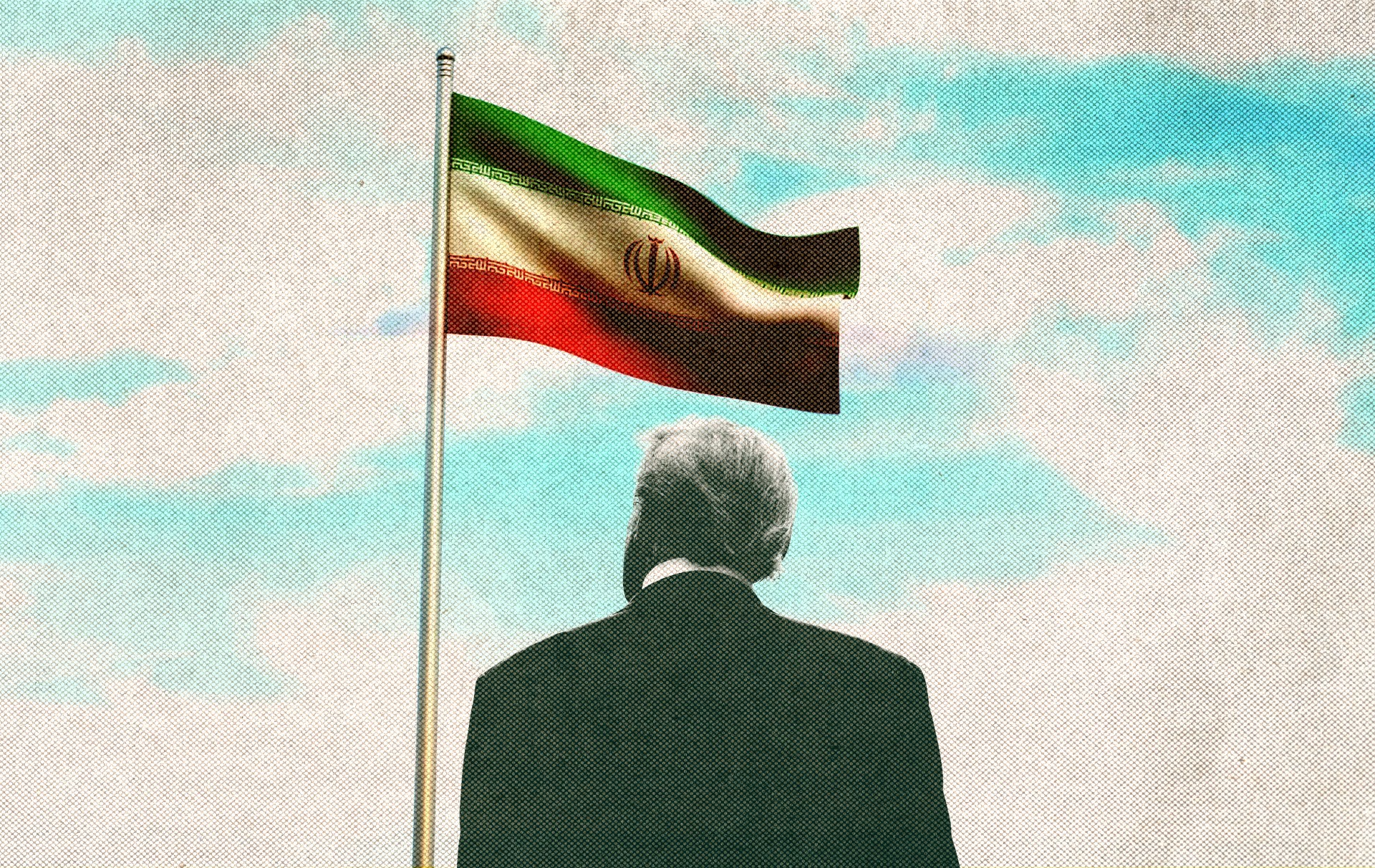
The world watched nervously as President Donald Trump’s Tuesday deadline ticked nearer for Iran to open the Strait of Hormuz or face threatened destruction. At the last minute, the president announced a tentative two-week ceasefire. Dispatch contributing writer Mike Nelson sorts through the ambiguity and confusion surrounding the deal—especially as both sides have rushed to characterize the situation in victorious tones, claiming the other has agreed to every possible demand. “Trump seems to have issued threats and initiated actions without being able to answer the question, ‘What next?’ if the threats or actions do not coerce Iranian leaders,” Nelson writes. “Like a parent telling their child, ‘I’m counting to five’ in reaction to recalcitrant behavior, one has to have a plan for what happens when you get to five.”

In Other News
- A spokeswoman for the House Oversight Committee said that former Attorney General Pam Bondi will not appear before its panel investigating Jeffrey Epstein.
- Democratic Common Council President Alicia Halvensleben narrowly defeated Republican Wisconsin State Rep. Scott Allen in the mayoral race of Waukesha, a GOP-leaning city outside of Milwaukee.
- A group of Catholic nuns, the Dominican Sisters of Hawthorne, sued the New York government to challenge a state law signed in 2023 that required long-term care providers—which included their services to the terminally ill poor—to refer to patients according to their preferred pronouns, and allow them access to the bathroom based on their gender identity.
- California state election watchdog Fair Political Practices Commission said in a letter that it plans to investigate whether Santa Clara County, California, officials used public money to fund campaign mailers.
- Human Rights Watch and two other human rights groups said that Cuba’s release of more than 2,000 prisoners last week did not include any political prisoners.
- In response to the Colombian central bank’s decision to increase interest rates by 1 percentage point, President Gustavo Petro’s government announced new subsidies and loans that he said would counter the monetary policy change’s economic impact.
- Ghana’s government transferred control of its Damang gold mine to a company owned by the brother of Ghanaian President John Dramani Mahama, Engineers & Planners.
- A University of Oxford research team developed an AI tool capable of predicting the risk of heart failure with 86 percent accuracy, according to a new study the group conducted.
- Since March 31, the Venezuelan government has reportedly sold about $330 million in an attempt to stop further devaluation of the Venezuelan bolivar.
- TikTok announced plans to build a second data center in Finland for 1 billion euros (about $1.16 billion). The company previously agreed to move all its stored data for European-based accounts to the continent.
- The African Export–Import Bank unveiled an emergency package worth $10 billion for African nations in need of fuel, medicine, and fertilizer amid supply chain issues stemming from the Iran war.
- The Spanish-based telecommunications company Telefónica reached a deal to sell its Mexican operations to Melisa Acquisition for about $450 million, pending regulatory approval.
- “My Quest to Solve Bitcoin’s Great Mystery” (New York Times)
- Antonia Hitchens reports from within niche, far-right online circles and investigates how they’ve amassed influence within the modern GOP. (The New Yorker)
- Collin Eaton on why California’s energy policies leave it uniquely exposed to economic impacts of the Iran war. (Wall Street Journal)
- Christopher Weber on live-music enthusiast Aadam Jacobs, whose life collection of concert recordings—numbering more than 10,000—is available to listen to on an online archive. (Associated Press)
CNN: RFK Jr. Is Launching a Podcast To Expose ‘Lies’ That Have Made Americans Sick
CBS: U.S. Military Consumed 950,000 Gallons of Coffee and “A Lot of Nicotine” During Iran War, Caine Says
Bangkok Post: Bubble Tea Binge Helps Thai Man Dodge Draft
A Thai man has gone viral after being rejected for mandatory military service due to obesity, the result of a deliberate bubble tea binge.
…
The man told the officer he had drunk two cups of bubble tea a day for three months. He gained 30 kilogrammes [66 pounds] to push his BMI above the disqualifying threshold of 35, a level classified as obese and grounds for automatic rejection under Category 4.
Let Us Know
Have any thoughts or questions about today’s newsletter? Drop us a note in the comments or via email at tmd.questions@thedispatch.com. We read every submission, and your message could be featured in an upcoming “Behind the Scenes” segment.
Have any thoughts or questions about today’s newsletter? Become a member to unlock commenting privileges and access to a members-only email address. We read every submission, and answer questions in the following edition of TMD.