Ahead of now-foundering ceasefire negotiations with the Islamic Republic, President Donald Trump sought to frame Iran’s new leaders as more viable partners in peace than their predecessors. “We never said regime change, but regime change has occurred because of all of their original leaders’ death.
They’re all dead,” he said in an address to the nation earlier this month, describing the new guard as “less radical and much more reasonable.”
Yet Trump’s attempt to distinguish the next generation of the regime from the reign of Ali Khamenei overlooks the deeply entrenched nature of the hardline theocracy that rules Iran today—at the peril of both American interests and Iranians striving for freedom.
Iranians have long pleaded for the outside world to see the Islamic Republic for what it is: a true Handmaid’s Tale, an occupying force, an imperial state with a stranglehold on the Middle East, a genocidal force intent on annihilating Israel, and a global mafia leveraging its oil and financial ties to propagandize for its survival.
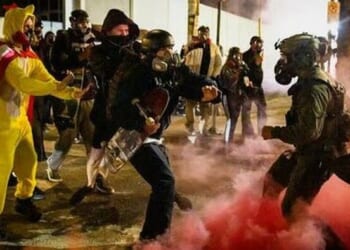
When millions took to the streets in late 2025 to call for an end to the regime, the moral imperative of U.S. military intervention was initially to help prevent the massacre of demonstrators yearning to join the democratic world. Trump encouraged protesters to mobilize in a series of social media posts, telling them that America would come to their rescue if the regime started shooting again. When Trump failed to deliver the help he promised in time—and the killing of tens of thousands and the torture, rape, and execution of countless more proceeded—the rationale for U.S. intervention hardened. The question was no longer simply how to protect the Iranian people. It became how to remove a regime that had already demonstrated what it would do if left in place.
The regime tried to prevent intervention by luring the U.S. back to nuclear negotiations, which once more proved a ruse, and Trump moved ahead with a full-fledged attack on February 28.
Aided in part by the regime’s extensive lobby network abroad and in part by the political polarization endemic to the West, much of the media coverage of the war was critical from the start. Just days into the operation, left-leaning outlets and commentators were already framing the war as a lost cause and the Islamic Republic as the winner, a secure and stable power resilient to outside pressure. Meanwhile, the Iranian people’s democratic aspirations were quickly tossed aside by the Trump administration as it pursued a deal with the regime that had just massacred them, with Venezuela viewed as a model for keeping the Islamic Republic in power but with American control over the regime’s decisions and energy exports.
The Islamic Republic is not a fragile personalist system. It is an entrenched revolutionary Islamist state with apocalyptic certainty and a durable coercive apparatus.
But a war that ends with the Islamic Republic humiliated yet still in power cannot be called victory or “regime change” as the president claims, despite the deaths of Supreme Leader Ali Khamenei and other top officials. The men Trump calls “more reasonable” are as culpable for the regime’s crimes as any iteration of its leadership.
Take Mohammad Bagher Ghalibaf, for example. The speaker of parliament and longtime member of Iran’s security elite is today one of the Trump administration’s main interlocutors in negotiations. In his capacity as an Islamic Revolutionary Guard Corps commander, Ghalibaf pressured President Mohammad Khatami to crack down on student protestors in 1999. Later, as mayor of Tehran during the 2009 Green Movement, he boasted of crushing the millions-strong demonstrations. Ghalibaf has called peaceful protesters massacred in January “traitors” and “terrorists.” If the likes of Ghalibaf are to be legitimized by Trump as somehow reasonable and worthy of American cooperation, the Iranian people, deeply hopeful for the prospect of liberation from nearly five decades of brutal repression, will be profoundly betrayed. Massacre will resume.
To be clear, the war has left the regime severely weakened. It continues to throttle internet access to prevent its rank and file, the Iranian people, and the world at large from discovering the true scale of its losses. Still, early reports show that its military infrastructure and ability to deter future strikes are significantly degraded, its internal communications and command-and-control are compromised, and its proxy networks are severely strained. It has no global allies willing to fight alongside it, and its diplomatic space has narrowed in ways not seen since the 1979 revolution. Capital flight and economic collapse are all but certain. Most significantly, the regime still faces the unity of millions of Iranians calling for its overthrow. None of those problems are going away, no matter who is in charge of the jihadist state.
But the question is not whether the regime has been weakened. It is what it learns from surviving.
Totalitarians do not interpret survival under outside pressure as a warning to moderate; rather, they interpret it as proof of viability. The Soviet Union did not liberalize after the Cuban Missile Crisis; it tightened internal repression and, over the following decade, expanded its reliance on proxy warfare—from Vietnam to the Middle East and Africa. North Korea emerged from isolation and famine not chastened but nuclear-armed and more aggressive in its cyber and coercive tactics. China, after the Tiananmen Square protests and massacre, did not move toward political opening but built a far more advanced system of surveillance and control. In each case, endurance reinforced ideological certainty and insularity.
If the Islamic Republic survives this war, the most likely outcome is not moderation but adaptation through greater domestic brutality and a more systematic reliance on indirect conflict, namely terror.
Internally, with every major wave of protest since 1979, the regime had already grown more sophisticated in its repression: tighter surveillance, faster prosecutions, broader criminalization of dissent, higher rates of execution, a stronger cyberarmy, mounting transnational repression, and a larger-scale use of lethal force against protesters. Ending the war without removing the regime will only accelerate this trajectory of repression. In the brief windows that they’re able to contact friends and family members outside the country, Iranians of all political leanings warn that leaving the regime intact will mean more brutality. More than ever, opposition will be framed as collaboration with the United States and Israel.
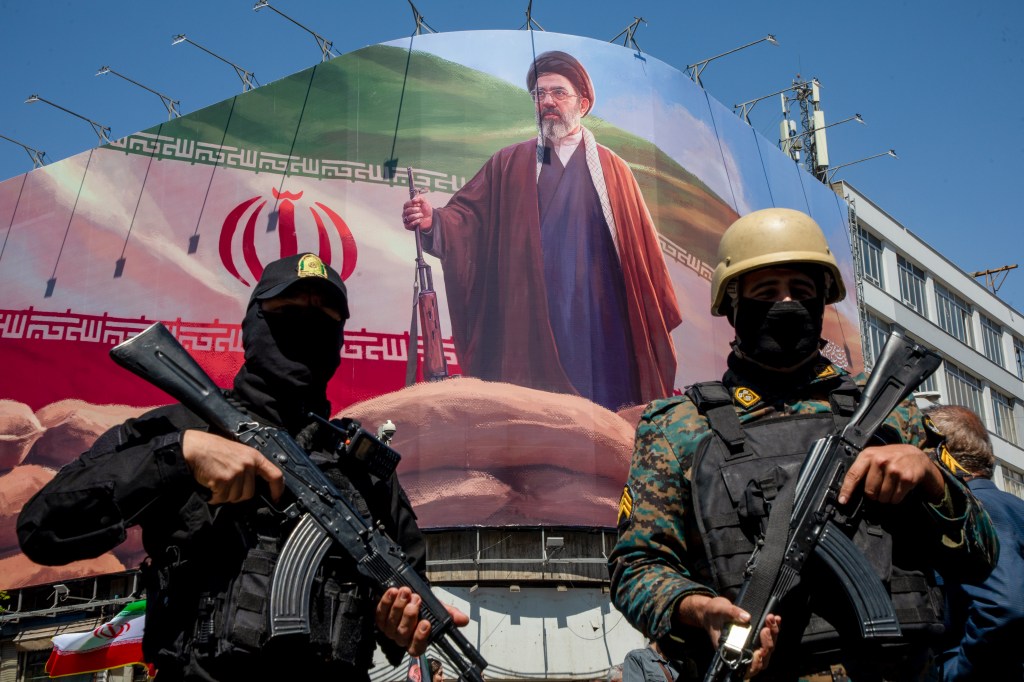
Among the most popular and effective strategies in the war against the Islamic Republic has been the targeting of Basij units responsible for the killing of innocents. Ending the war prematurely risks keeping that repressive apparatus in place and stabilizing the regime at the moment it is most vulnerable. It will also leave behind a more paranoid, more calcified Islamic Republic for the Iranian people—and future U.S. presidents—to confront.
Externally, the Islamic Republic has long relied on terror to project power and shield itself. From Hezbollah in Lebanon to Shiite militias in Iraq and Syria to the Houthis in Yemen, it has built a network designed to extend its reach without direct confrontation. It has also demonstrated a willingness to conduct or support attacks far beyond the region, including terror operations and assassination plots in Europe and the Americas.
If its conventional capabilities are degraded but its structure survives, terror will become even more indispensable. A weakened but surviving regime will compensate through deniable violence: proxy attacks, covert operations, cyber disruption, and targeted assassinations. This is not a retreat from conflict. It is a shift toward asymmetric forms of conflict that are harder to detect, prevent, deter, and attribute.
Israel will face an adversary more determined to restore deterrence through terror operations and bombings. The Persian Gulf states will face a similar reality. A surviving regime will have strong incentives to demonstrate that it can still threaten them—through control of the Strait of Hormuz, sabotage of oil and gas infrastructure, proxy cells, and terror attacks. The message it will seek to send is that even after it survives significant military damage, it retains the ability to impose costs on civilian life and the global economy.
The regime’s alignment with Russia includes the provision of Shahed drones for use against Ukraine and, in turn, the Putin regime’s surveillance of U.S. and Israeli military movements for the Islamic Republic—not to mention the sharing of broader intelligence, radar systems, air defense, and military strategy. This relationship reflects cooperation among anti-American totalitarians operating under sanctions, and China, too, is reportedly supplying weaponry to the Islamic Republic and buying its oil.
If the Islamic Republic survives but remains isolated from the West, its dependence on and support to Russia and China will grow. The regime will function as a strategic asset for China: a continued source of discounted energy, a driver of instability that absorbs U.S. attention, and a partner in building sanctions-resistant networks. Its persistence would not simply prolong a regional threat—it would strengthen the geopolitical conditions in which Beijing thrives.
Tehran will also internalize a critical lesson: The threat of outside intervention has limits. This is not a formal security guarantee, but it will function as one. The regime’s security elite and its partners will conclude that even after provoking significant military action, it remains secure from removal.
The idea that a Venezuela-style outcome—gradual internal change under pressure—can be replicated in Iran underestimates the depth and structure of the regime’s security institutions and its ideological fanaticism. The Islamic Republic is not a fragile personalist system. It is an entrenched revolutionary Islamist state with apocalyptic certainty and a durable coercive apparatus.
Tens of thousands of Iranian protesters did not give their lives so that an even more repressive form of the Islamic Republic might rule over them, and with American buy-in and approval at that. Victory, if it is to mean anything, must address not only the regime’s capabilities, but the regime itself.