Editor’s Note: This is the ninth entry in a Dispatch series titled “Where I’m From.” Every Saturday, a writer shares a meditation on his or her hometown—a bustling metropolis, distant desert outpost, quiet suburb, or somewhere in between—and what makes it unique. The goal? Highlight voices—and good writing—from every corner of these United States.
On Sunday nights when The Ed Sullivan Show was airing, my parents often gave me the job of jumping up from the couch to adjust our television’s volume every time a plane took off or landed at O’Hare International Airport, which was located about 6.5 miles due south of our duplex in Des Plaines, Illinois. They didn’t want my sister and me to miss a syllable of puppet Topo Gigio’s schtick, and they cherished Ed’s cavalcade of veteran Borscht Belt standup comics and musical acts like Steve Lawrence and Eydie Gormé.
Other than the daily soundtrack of the jets flying so low over our house that I could almost count the rivets on their silver bellies, much of my 1960s childhood in this suburb just northwest of Chicago unfolded amid a sea of interchangeable, brand-new, beige aluminum-sided housing stock that matched the demographic and economic homogeneity of the community.
Like many suburban boomers, I had a free-range childhood that included 347-inning baseball games on our cul-de-sac, bike rides with neighborhood pals to view the new crop of parakeets in the pet department at Kmart, and Slurpees and Milky Way bars purchased from the local convenience store. We shopped for school clothes at the nearby Sears. There was even a 1,600-seat theater-in-the-round at a local shopping center, where my parents would occasionally have a date night to see Ed Sullivan Show favorites like Steve and Eydie, right in our backyard.
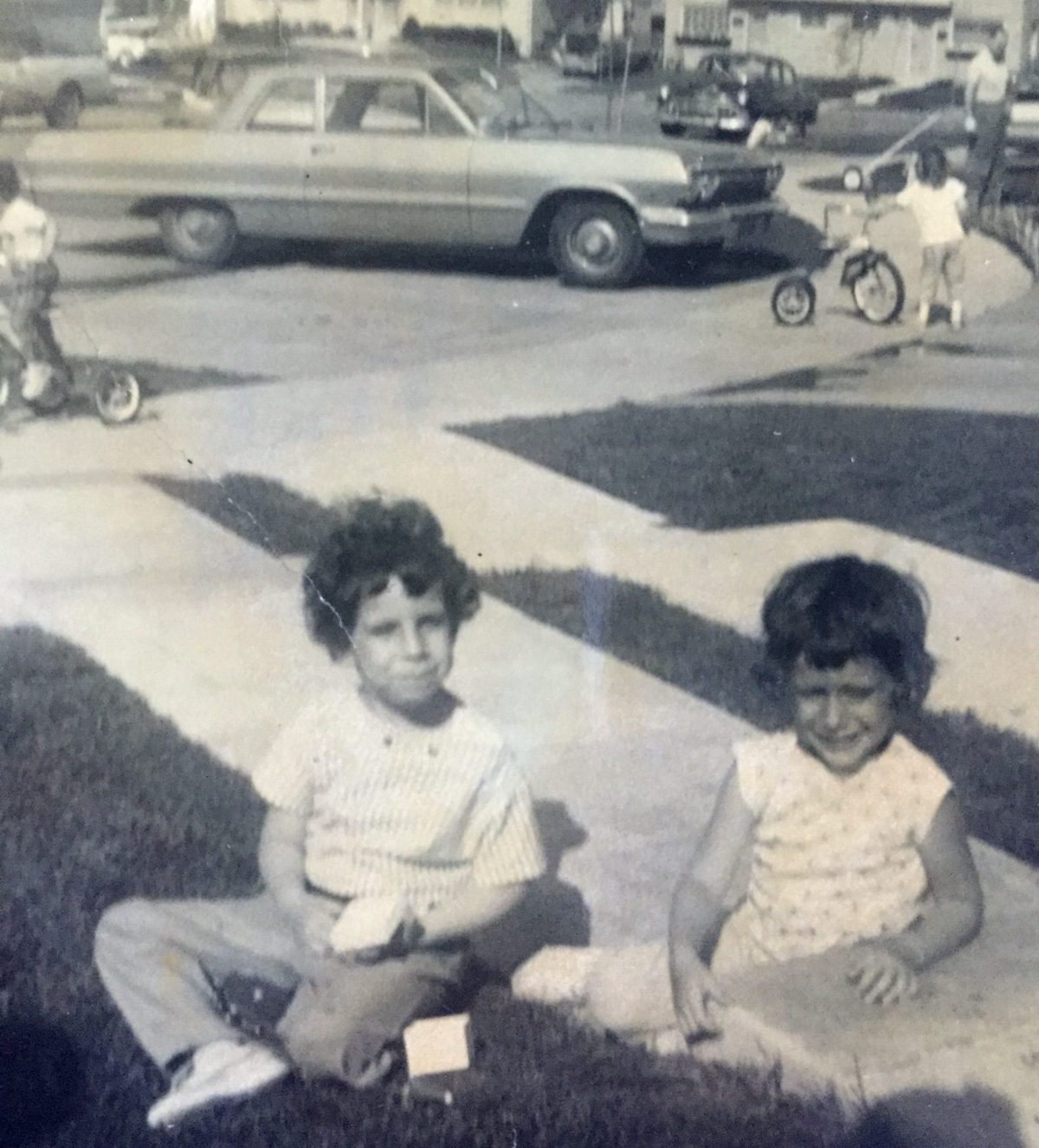
But when I remove the ill-fitting lenses of nostalgia, what I see in hindsight was that though Des Plaines left me with some happy memories, it was also a place marked by a sense of existential loneliness that was a function of its cookie-cutter sameness. I didn’t have language for it then, of course, but I remember feeling as though I was an outsider somehow, even though I tried every day to fit in, to match, to belong. The homogeneity communicated that anyone who colored outside the lines in any way was a problem. While I matched the external demographics of the community around me, I was bookish, spiritually curious, and socially awkward. I hoped there was a wide world outside my insular community that might be more welcoming to a square peg like me.
Five months ago, my husband and I moved back to Des Plaines after one too many wild storms and some health issues chased us from our home in hurricane-prone Florida. It’s been more than 50 years since I last lived here. The bones of the city are both as familiar as long-buried childhood memories and as unrecognizable as if an entirely new civilization were built on top of ancient ruins.
This isn’t the first time the area has been reinvented. This was once the land the Ojibwe, Ottawa, and Potawatomi peoples called home, rich forested flatland cut by a waterway the Potawatomi called the Soft Maple Tree River. By the mid-1800s, the indigenous people had been cleared from the area just as its timber had, and the river was renamed the Des Plaines River. It was for years a quiet farm and mercantile center. A Methodist campground drew people to the river to hear preachers like Dwight Moody and Billy Sunday, while the Catholic Church planted parishes, established an orphanage, and dedicated land for a cemetery nearby.
After World War II, the parents of boomer babies needed affordable housing near the good jobs in the area, with access to transportation via commuter rail and the tangle of highways leading into nearby Chicago. Once-sleepy Des Plaines became a developers’ mecca, with dozens of new subdivisions sprouting across the city’s sleepy farmland. In 1960, just before my family and I moved to an unincorporated section of Des Plaines, the population of the city was 34,000. Ten years later, swollen by boomer kids like me, the population had nearly doubled to 57,000.
Schools were built in the city at a brisk pace to educate us kids, only to have echoing halls a few years later. One local high school, Maine Township High School North, opened in 1970 and closed just 11 years later as the demographic bubble of boomers aged out of the school system. The empty building served as the setting for the fictional Shermer High School in the 1985 classic, The Breakfast Club.
Today, the city clocks in at around 60,000 residents, so it hasn’t grown much. There are pockets of newer multifamily housing mixed into the tired midcentury tract duplexes and townhomes. The Sears is an abandoned shell. The shopping center is long gone. The old McDonald’s eventually became a McDonald’s museum that was torn down a few years later after one flood too many from the nearby river.
My husband Bill spent part of his childhood at the far end of Des Plaines that abutted O’Hare. It has been surreal for both of us to be back in the area. Thomas Wolfe famously noted that none of us can go home again, and the truth is, Bill and I have no interest in trying to return to the Des Plaines of the past. We chose to live here in part because of proximity to family, but we selected the city precisely because it was no longer the homogenous white community of our respective childhoods.
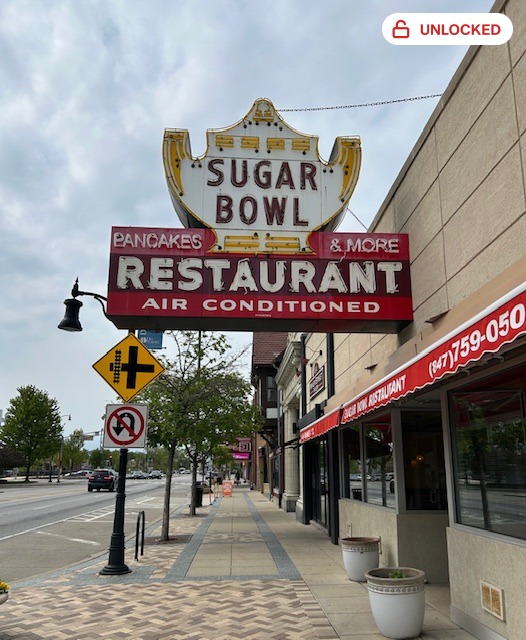
Recent demographic data for the city reveals that 53 percent of the population speaks only English in the home. The remainder of my new neighbors speak Spanish (17 percent), a mix of Eastern European tongues (11 percent), Indo-European languages (8.3 percent), Asian languages (nearly 5 percent), Tagalog (2.5 percent), and Arabic (0.9 percent). The Sugar Bowl diner I recall from my childhood is still here, but it is now neighbored by Korean and Vietnamese restaurants. Des Plaines today reflects the reality that suburbs ringing many urban centers have become far more ethnically diverse in the last generation. Though some of my immigrant neighbors may well be struggling to find their place in American life at this juncture in our history, the diversity of this community has mercifully diffused the social pressure to conform that once existed in the post-war suburbs of my youth. While I’ve matured from the insecure, square-peg young girl I once was because of a half-century of lived experience, I also recognize how much this town has changed. Though I am the new kid here (albeit a Medicare-eligible “new kid”), this version of Des Plaines feels a lot more like the America I call home than the homogenous suburb I experienced as a child.