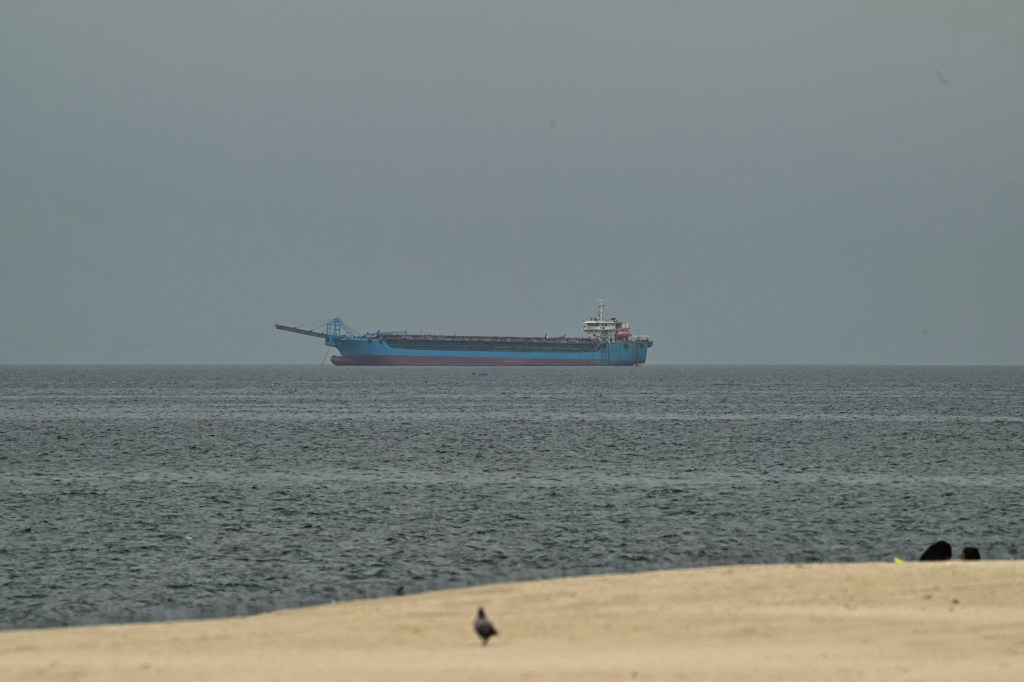
When he announced the ceasefire last week, Trump claimed on Truth Social that Iran had agreed to the “COMPLETE, IMMEDIATE, and SAFE OPENING of the Strait of Hormuz.” But in the following days, only a trickle of non-Iranian commercial ships got through—four crossed the strait on Saturday before negotiations failed. Iran was functionally running its own blockade of the strait, charging some vessels up to $2 million in transit fees, only to shut the waterway again hours after the ceasefire took effect.
Throughout the war, Iran effectively operated the strait as a one-way corridor for its own exports and for a small number of vessels from friendly nations like China, Pakistan, and India. Satellite tracking firms estimate that Iran has shipped roughly 58.75 million barrels of crude oil through the Strait since March 1, with more than 90 percent bound for China.
That came with the explicit permission of the U.S. government: Treasury Secretary Scott Bessent waived sanctions on Iranian oil purchases on March 20 as the White House tried to keep global oil prices from spiking further. A blockade functionally reverses that, and would likely drive prices higher. But with oil exports accounting for at least a quarter of Iran’s state budget before the war, the White House evidently decided that was worth it to cut off the country’s main source of revenue. At 10 a.m. ET on Monday, the blockade took effect.
“The blockade will be enforced impartially against vessels of all nations entering or departing Iranian ports and coastal areas,” U.S. Central Command (CENTCOM) said in a statement. The U.S. Navy will stop any vessels entering or departing Iranian ports and coastal areas—but ships traveling between two non-Iranian Gulf ports are free to pass. The blockade extends along Iran’s entire coastline, to areas not directly adjacent to the Strait of Hormuz, and the U.S. has warned it will intercept, divert, or capture ships departing Iranian waters, while allowing neutral vessels to pass—though they may be searched for contraband. The blockade will also allow vessels delivering humanitarian aid to enter Iran, a requirement under international law.
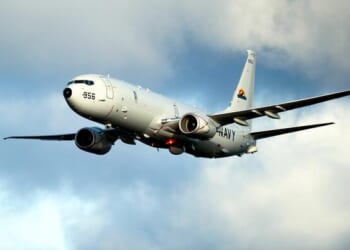
A U.S. official said Monday more than 15 ships were initially in place to enforce the naval cordon. Rather than positioning those ships at the narrow mouth of the strait, the U.S. is enforcing the blockade from a distance. “They’re going to do this not off the Iranian ports, but out in the Arabian Sea and in the Gulf of Oman,” Sal Mercogliano, a professor of naval history at Campbell University and the host of the “What’s Going on with Shipping?” YouTube channel, told TMD. “They’re getting away from the Strait of Hormuz, away from the Iranians.” From there, U.S. ships can carry out the boarding operations necessary to intercept suspicious vessels, aided by drone and satellite tracking, without being in range of direct Iranian fire.
The approach reflects a strategic calculation. The administration has “concluded that seizing Kharg Island is potentially too costly,” Kelly Grieco, a military analyst and senior fellow at the Stimson Center, told TMD, referring to U.S. military plans to use ground troops to seize the site through which Iran exports most of its oil. “One way of cutting off these exports is by blockading the strait.” That the U.S. is willing to begin blockading Iran at all suggests its leaders believe the Islamic Republic’s military is so degraded that it can no longer deny naval vessels access to the strait.
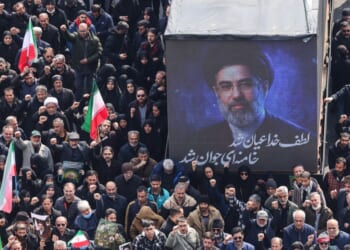
But whether the blockade can hold is a question. Iran has threatened military action in response. “NO PORT in the region will be safe,” the Islamic Revolutionary Guard Corps said in a statement. “If you fight, we will fight,” the speaker of the Iranian Parliament, Mohammad Bagher Ghalibaf, declared. The Iranian regime also accused the U.S. of violating international law, said the blockade “amounts to piracy,” and warned that U.S. naval vessels will encounter a “forceful response” in the Strait of Hormuz.
If serious combat resumes, U.S. forces will be stretched thin, RAND Corporation researcher and former Navy officer Bradley Martin told TMD. “We don’t really have a lot of small combatants that can go out there and just do VBSS [Visit, Board, Search, and Seizure operations],” he said. The U.S. is enforcing its blockade with larger vessels, such as the Arleigh Burke-class destroyers, and in the event of Iranian attacks, those ships would likely be forced to choose between enforcing the blockade and serving as the Navy’s primary air defense and long-range firepower.
There is also the domestic cost of the blockade, in oil prices. Brent crude spot prices reached $148.87 on Monday, breaking a record set in 2008. Still, prices are not as high as one might expect. “There’s some optimism from the market about the prospects for an off-ramp or a reopening of Hormuz,” Hunter Kornfeind, a senior macro energy analyst at Rapidan Energy Group, told TMD. “For a naval blockade of one of the biggest arteries for global energy markets and global trade in the world … I’m surprised it’s not higher,” he said.
The other major risk is with America’s biggest geopolitical rival: China. China is the world’s top oil importer, purchasing 80 percent of Iranian oil exports, and also the largest single destination for crude oil and condensate transiting the strait. According to U.S. Energy Information Administration data, China alone received roughly 38 percent of all oil exports passing through the waterway before the war—more than any other country by a wide margin. It is also among the small number of nations whose vessels Iran allowed to cross the strait during the war.
U.S. ships enforcing the blockade will face the prospect of interdicting Chinese vessels, which could trigger international repercussions. But Grieco said the chance of a standoff between Chinese and U.S. ships in the Arabian Sea was “remote.” Chinese leaders tend to shy away from major public risks, she said, and are “just much more cautious” than countries like Russia that frequently confront the U.S. and its allies. The White House doesn’t seem eager to spar with the Chinese either. Shipping data firms show that the Rich Starry, a Chinese-owned tanker previously sanctioned by the U.S. government, transited the Strait of Hormuz on the first day of the blockade. The tanker loaded its cargo at a United Arab Emirates port rather than an Iranian one, technically placing it outside of the blockade’s scope.
That doesn’t mean China isn’t getting involved in the war. On Friday, CNN reported that U.S. intelligence believed Chinese officials were preparing to ship new air defense systems to Iran, potentially resupplying its forces with shoulder-fired MANPAD rockets. Similarly, many Iranian weapons rely on ostensibly civilian technology, like batteries and internal navigation systems, that can be imported from China. Iran’s fleet of Shahed suicide drones, which could number in the tens of thousands, is built largely from such dual-use components, Grieco said.
Chinese leaders could be tempted to use the Iran conflict as a way to bog down the U.S. military. “China does have strong ideological and strategic incentives to enable Iran as the world’s most virulent U.S. hater, and the main source of the strategic distractions in the Middle East,” Miles Yu, the director of the China Center at the Hudson Institute, told TMD.